
Prepared for what lies ahead in tourism
Stay up-to-date with current, independent statistics and information on tourism in the Alpine region.
 Inspiration

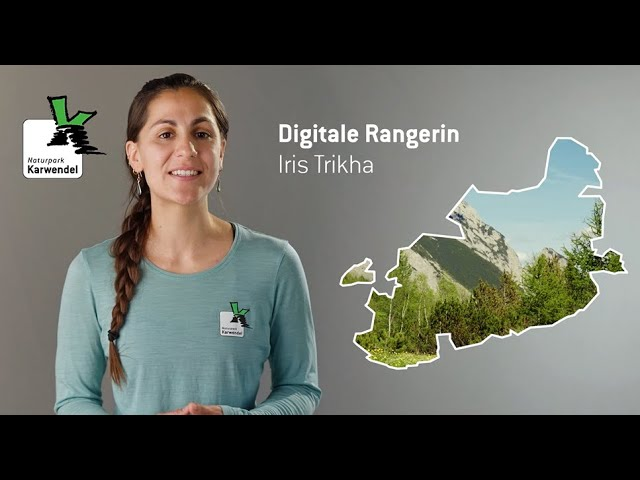
F.acT: You work as a digital ranger in the Karwendel Nature Park. That's a job profile that many of us are not familiar with. What does a digital ranger do?

Iris Trikha: A digital ranger helps to ensure that people go to the protected area well prepared, especially if they plan their tours online. So I make sure that the information that is put online clearly communicates to visitors how they can get out into nature safely and in an environmentally friendly way.
I got into this job by chance. The job was advertised at exactly the right time and my background in geography, adventure education and nature conservation meant that everything just fell into place.
F.acT: What does a typical week in your job look like?
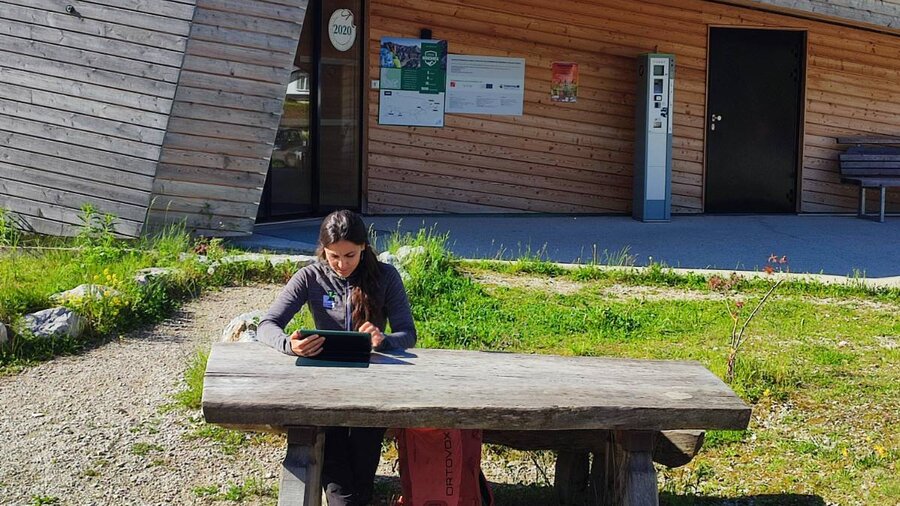
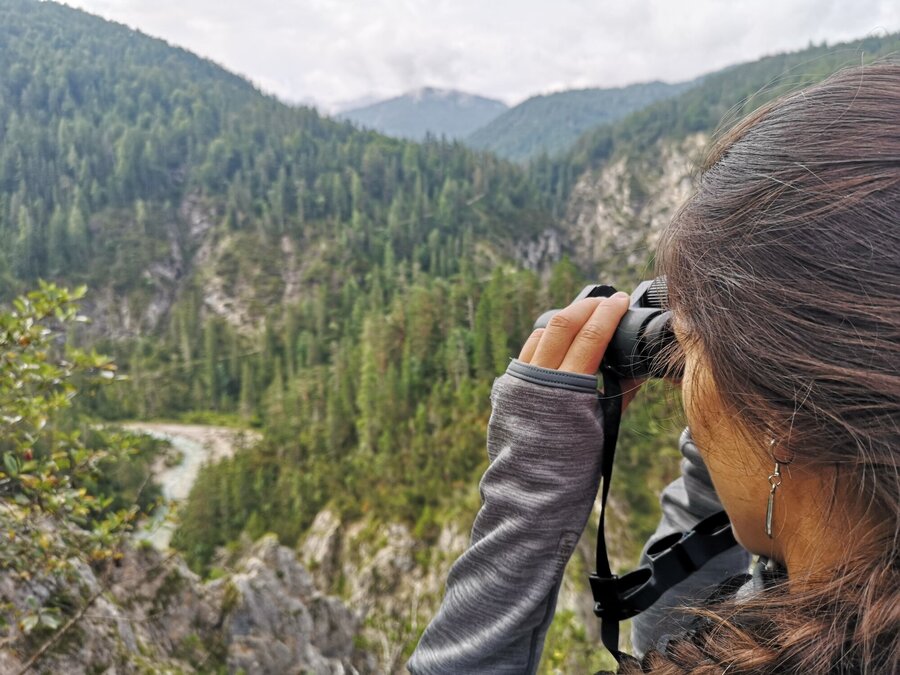
Iris Trikha : What my week looks like often depends on the time of year. Part of my work takes place outside in the field, just like the other rangers. The rest of the time, I take care of the digital tasks. For example, I'm on tour portals, on social media, on our website or on our interactive map.
F.acT: Digitalization is an important strategic pillar of the Karwendel 2028 programme. As a digital ranger, you are also a central component of this with regard to visitor management.
What programs and measures are being planned and implemented for the coming years? Where do you see the critical challenges for the digital initiatives?
Iris Trikha : Digitalization in the nature park in relation to the Karwendel 2028 programme was largely implemented and was made possible by the Digitalization in the Karwendel Nature Park lighthouse project of the state of Tyrol. Such funding allows us to implement a lot, and the progress often remains even after the end of the project and continues to develop, for example in my tasks and the implementation and further development of our ranger app. Nevertheless, it is a great challenge to find funding to support the continuation of such measures.
F.acT: What success of your work are you particularly proud of?
Iris Trikha: I think that my work over the last two to three years has raised awareness of digital behavior and shown the influence that each individual person has on how other people behave in nature. Even though there are always cases where problematic content for nature conservation is created, these are often commented on by other users. This gives me hope that my work will continue to have an impact in the future.
F.acT: Visitor management and imparting knowledge for a responsible approach to nature are very important in your work. This also includes social networks and community-based tour portals.
How do you see the development of social media and tour portals for protected areas? How do you work with municipalities, tourism, mountain sports associations and platforms?
Iris Trikha: We provide information on several platforms and work very closely with the tourism associations and other partners to disseminate this information well and present it clearly. Cooperation in this area works well, as it is in everyone's interest to provide this information. For example, the tour portals also work with us and ensure that the protected areas are well presented and that notices and closures are visible.
F.acT: What are the biggest hurdles?
Iris Trikha: I think the biggest hurdle is visitor acceptance. In the end, it often depends on the attitude of the visitors. In other words, whether they see the rules of conduct as an important contribution to nature conservation or rather as a restriction. In this case, public relations work in places like mine can have a big impact. It encourages visitors to think about their own behavior.
We are now increasingly seeing that other protected areas are focusing more on the nature conservation reasons behind the rules. This gives people a better understanding of why certain areas are sensitive or why paths should not be left. Protected areas and tour portals are also increasingly focusing on public access, and I hope that this will develop well over the next few years.
F.acT: What is your personal favorite place in the Karwendel Nature Park? And what should we bear in mind if we want to visit this place?
Iris Trikha: My favorite places in the Karwendel are those that are still very quiet and where you can really come to rest. There are quite a few of these places in the Karwendel, and when you discover them, it becomes clear why they should be protected. Then you also understand that we have to give these places peace and quiet ourselves, because the animals need such habitats for themselves, especially at dusk and at night. We can give them this peace and quiet by not being there during the sensitive twilight period and at night.