

Prepared for what lies ahead in tourism
Stay up-to-date with current, independent statistics and information on tourism in the Alpine region.
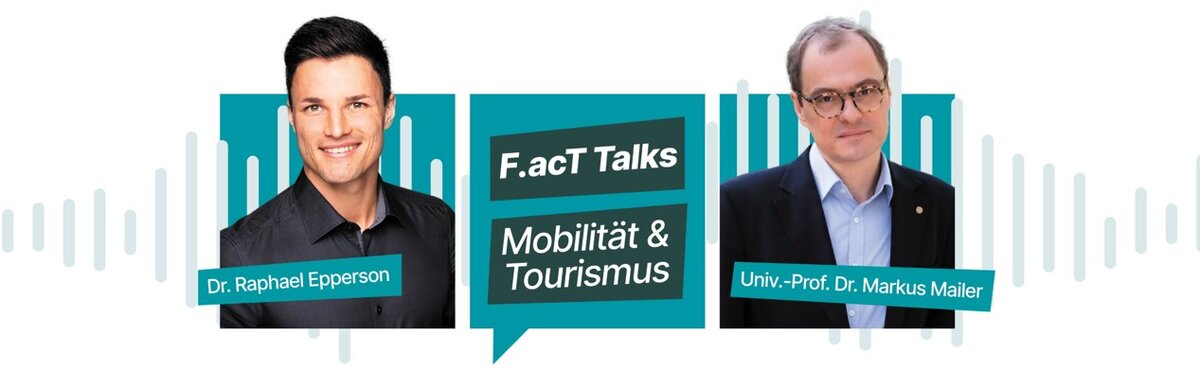
In cooperation with the state of Tyrol, the University of Innsbruck and MCI | The Entrepreneurial School, the premiere of the F.acT Talks was dedicated to a highly topical subject: "Mobility in tourism". Around 90 interested people from the fields of science, business and tourism accepted the invitation.
In his presentation, Prof. Dr. Markus Mailer, mobility expert at the University of Innsbruck, shed light on the status quo of tourism mobility and how to achieve more sustainable mobility behavior: "In our studies, we have found that there is a gap between awareness and willingness for sustainable mobility. Awareness is often present, but the willingness to make concrete changes in behavior, for example when it comes to air travel, is often not there - not even among younger generations. For a change in behavior to occur, target group-oriented offers and framework conditions are needed. It is also essential to tell emotional stories, which is one of the strengths of tourism. This can be an opportunity for sustainable mobility."
Dr. Raphael Epperson from ESCP Business School Paris focused on the perspective of behavioral economics. He showed which measures have the strongest influence on sustainable behavior. He emphasized: "Price remains one of the main deciding factors. Individuals incur costs for using sustainable mobility alternatives in the form of insufficient flexibility, unreliability and unpunctuality. These are all economic aspects that we see here."
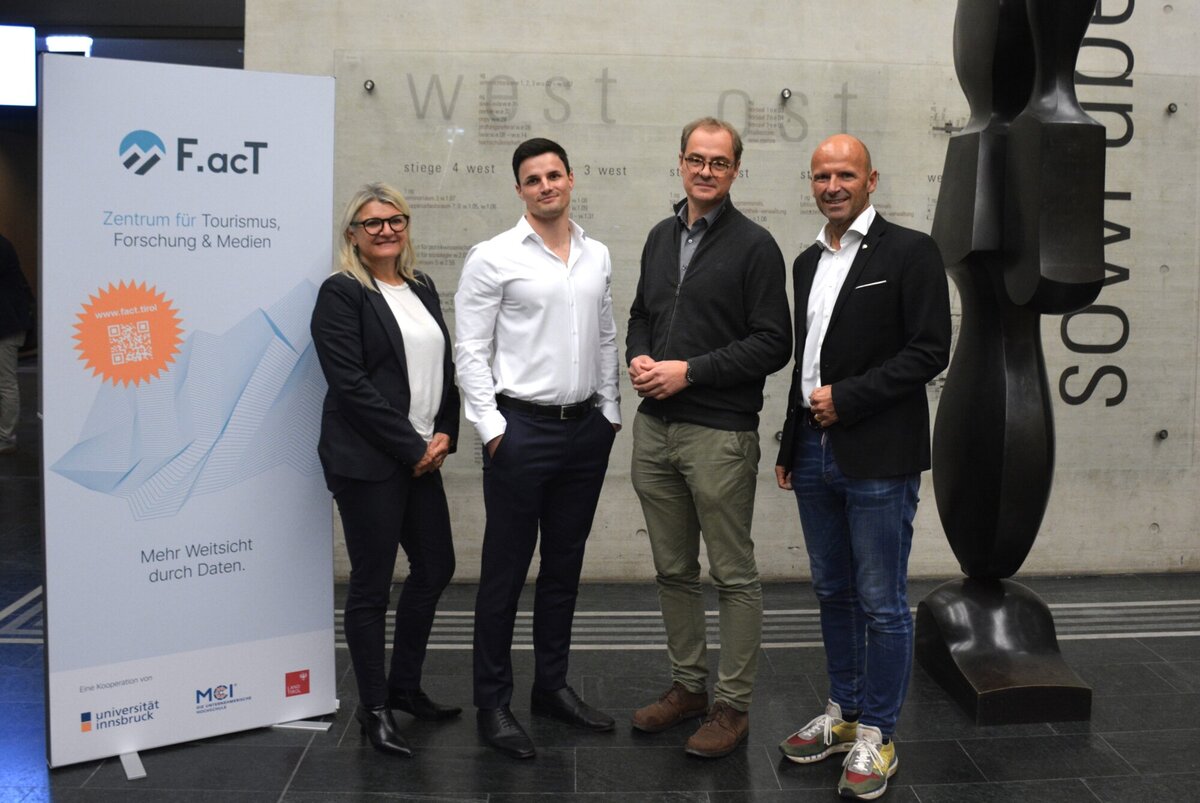
Interactive exchange provided food for thought
Following the two keynote speeches, an open discussion, supported by interactive opinion polls, provided space for an exchange between science and practice. Among other things, the participants discussed regional differences in mobility services in Tyrol and reflected on their own mobility behavior using a live survey of the guests present.
"The F.acT-Talks show how important it is to translate scientific findings into practice. We are delighted that the joint F.acT Talks got off to a successful start," says host Birgit Pikkemaat, Professor at the Research Center for Tourism and Leisure at the University of Innsbruck. Hubert Siller, Head of the Department of Tourism & Leisure Management at MCI I The Entrepreneurial School, adds: "We plan to continue the series of events every six months with further current topics and thus make science accessible to everyone, while also providing practical input for scientific work."