Prepared for what lies ahead in tourism
Stay up-to-date with current, independent statistics and information on tourism in the Alpine region.
 Inspiration
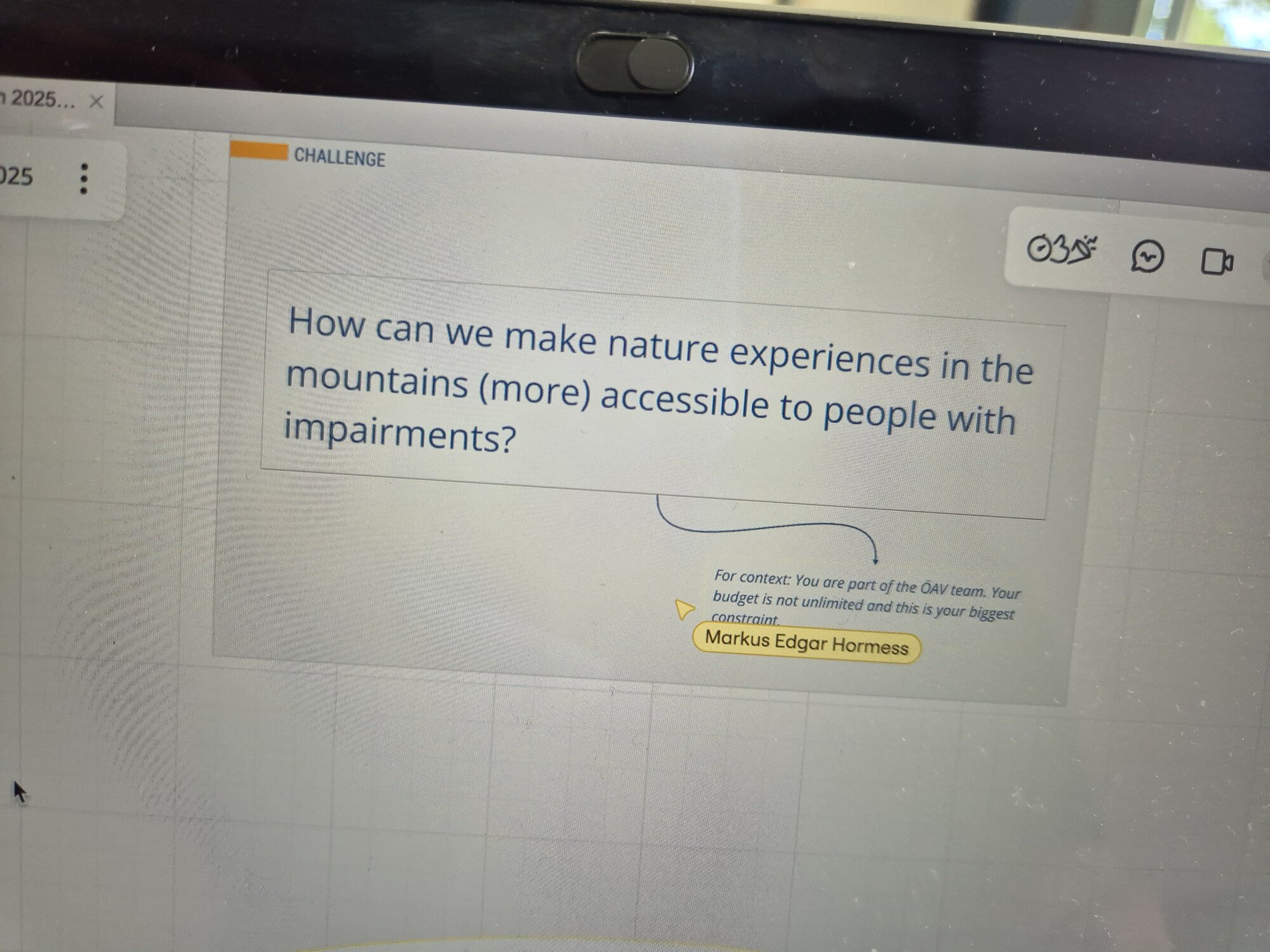
Accessibility is one of the central fields of action in sustainable tourism development. While discussions are usually limited to mobile impairments and general infrastructure measures, the aim of this service design sprint was to highlight the full breadth of the topic of accessibility from a holistic perspective and to develop solutions for barrier-free experiences in the mountains. The challenge derived from this was therefore: "How can we make nature experiences in the mountains (more) accessible for people with disabilities?
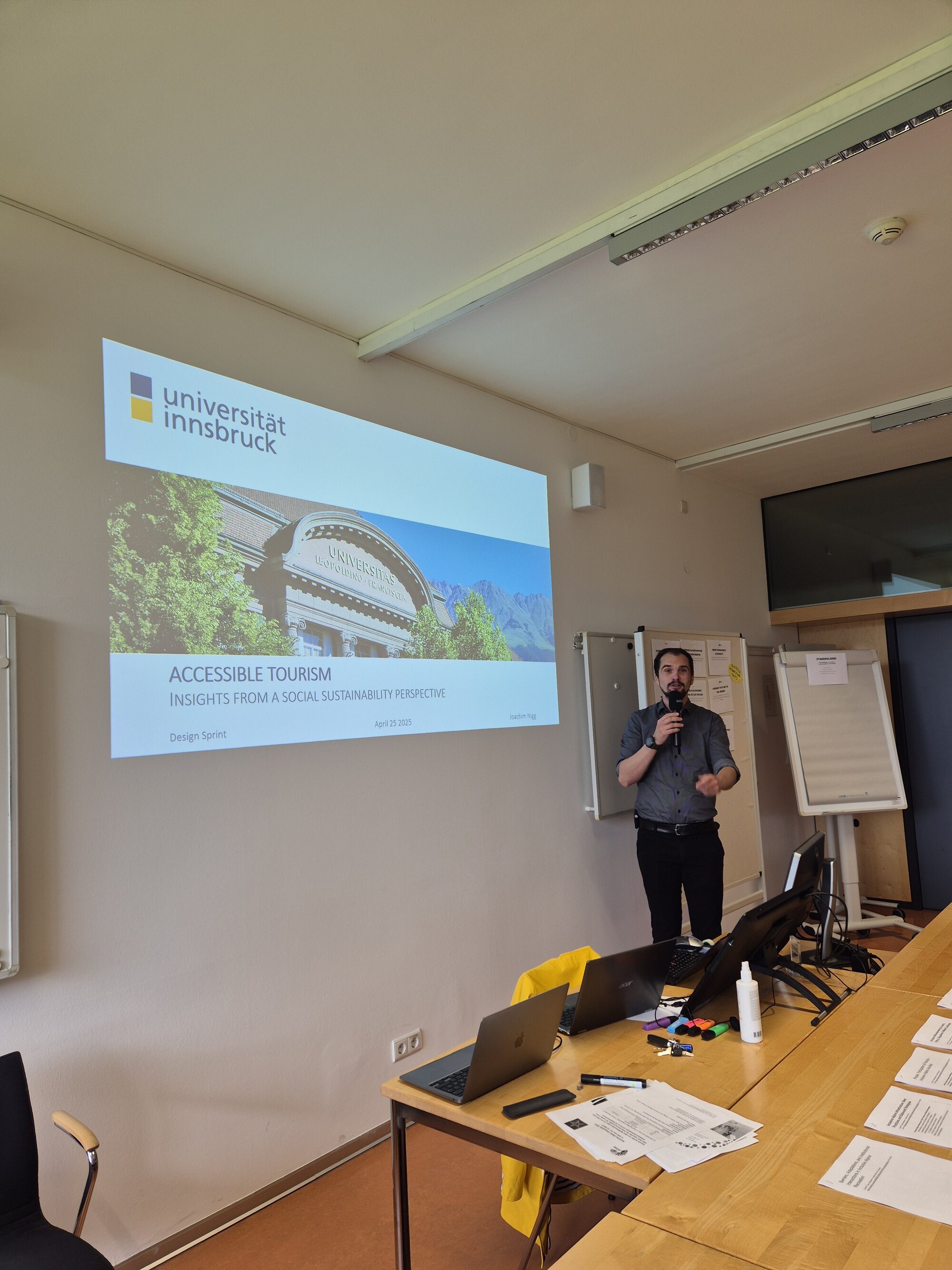
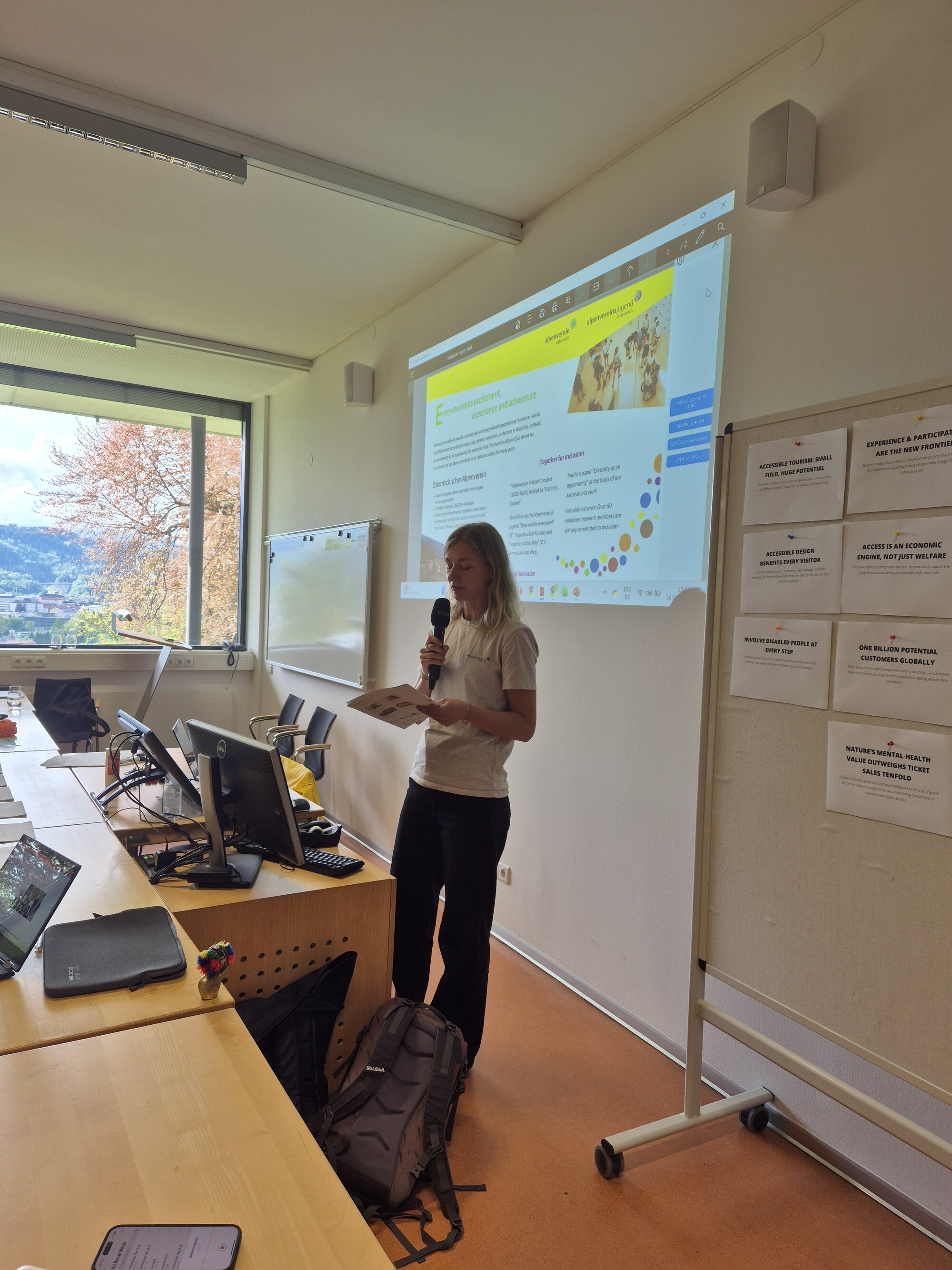
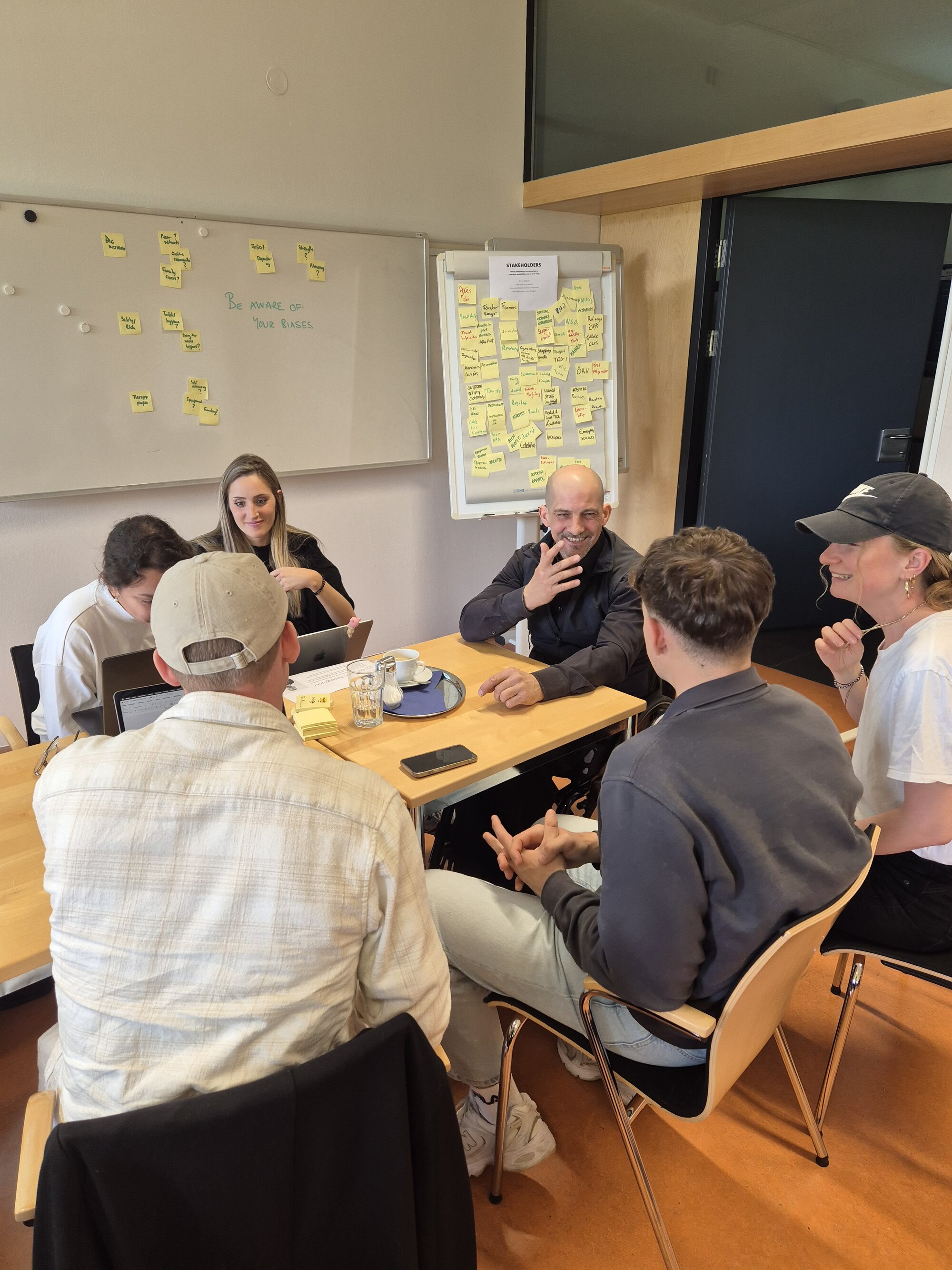
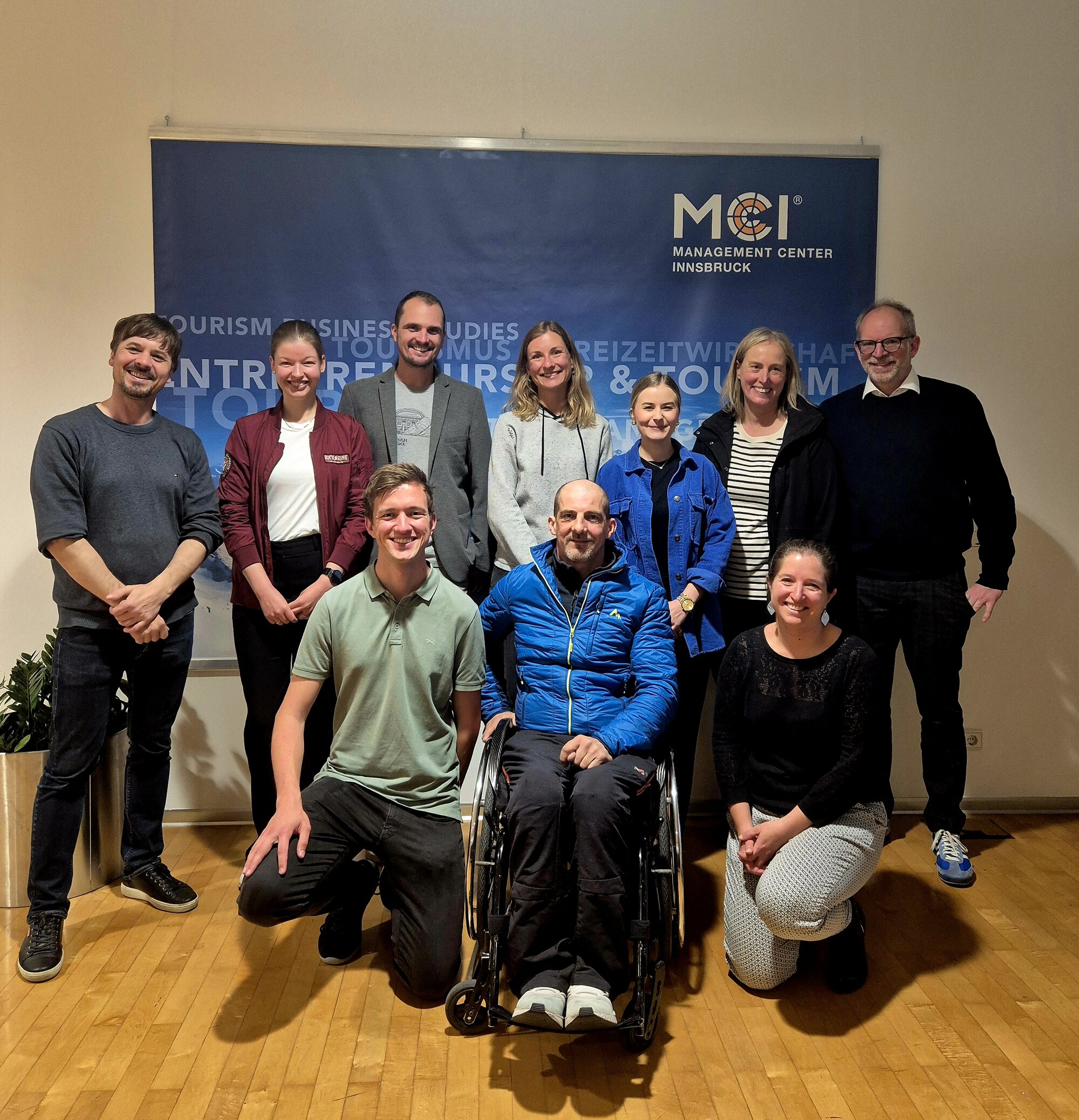
The three-day workshop began with a general introduction to the topic of accessibility in tourism by Joachim Nigg (University of Innsbruck). Solveig Meier from the Austrian Alpine Association as project partner then introduced the topic and existing projects. As part of a broad joint discussion, existing knowledge on the topic of accessibility in tourism was then queried in the plenary session in the form of a group puzzle. Three specific questions were discussed:
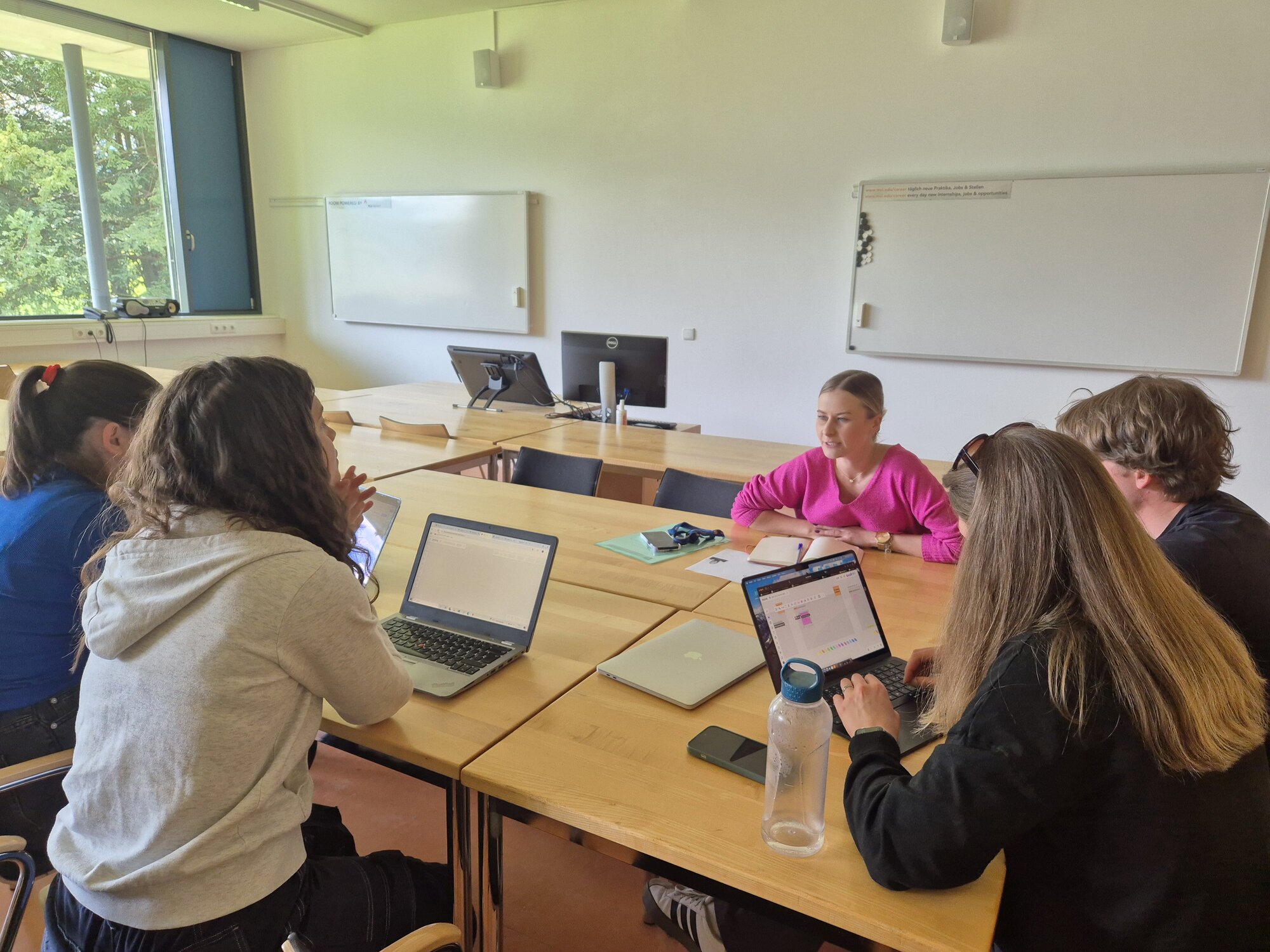
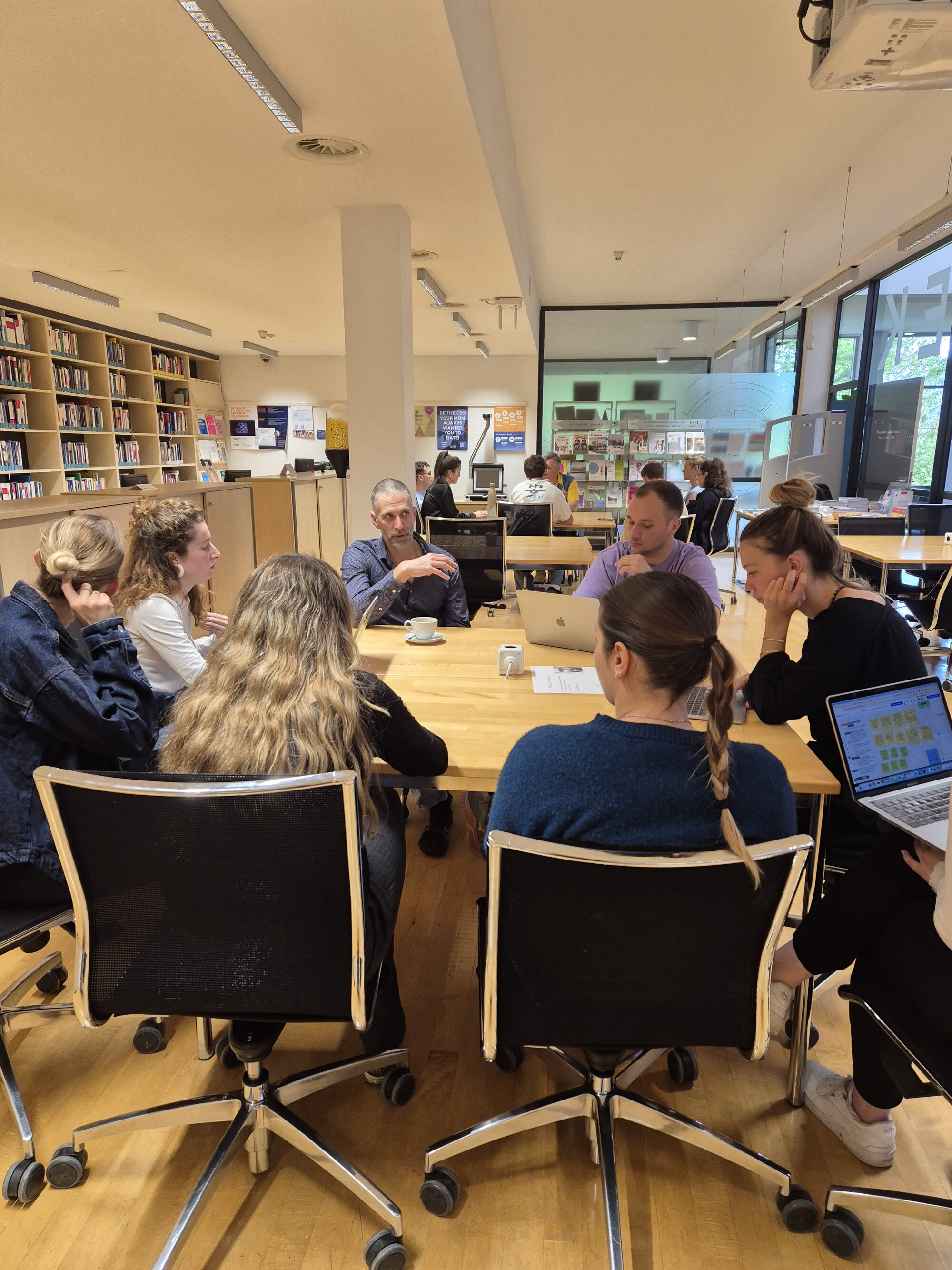
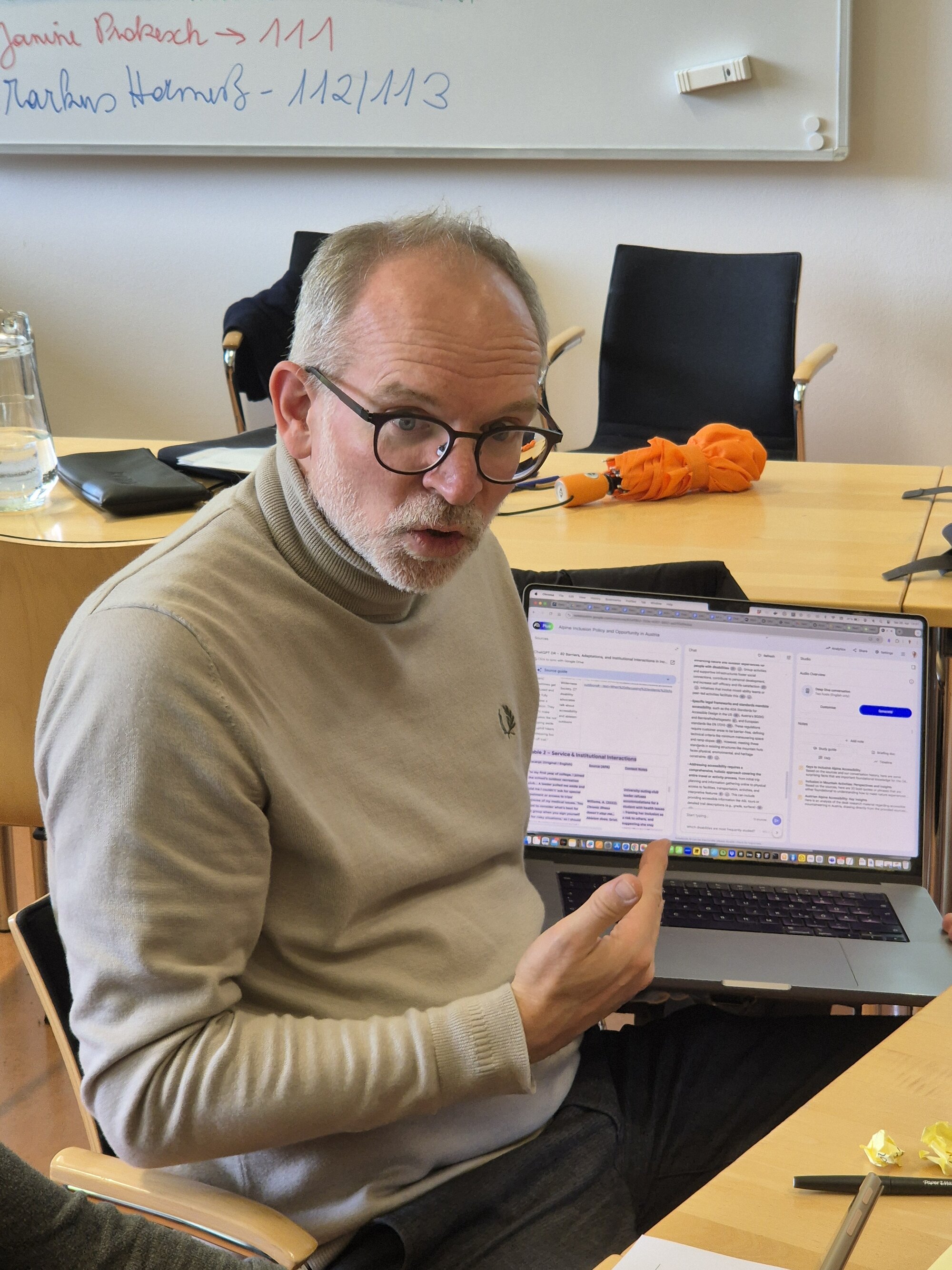
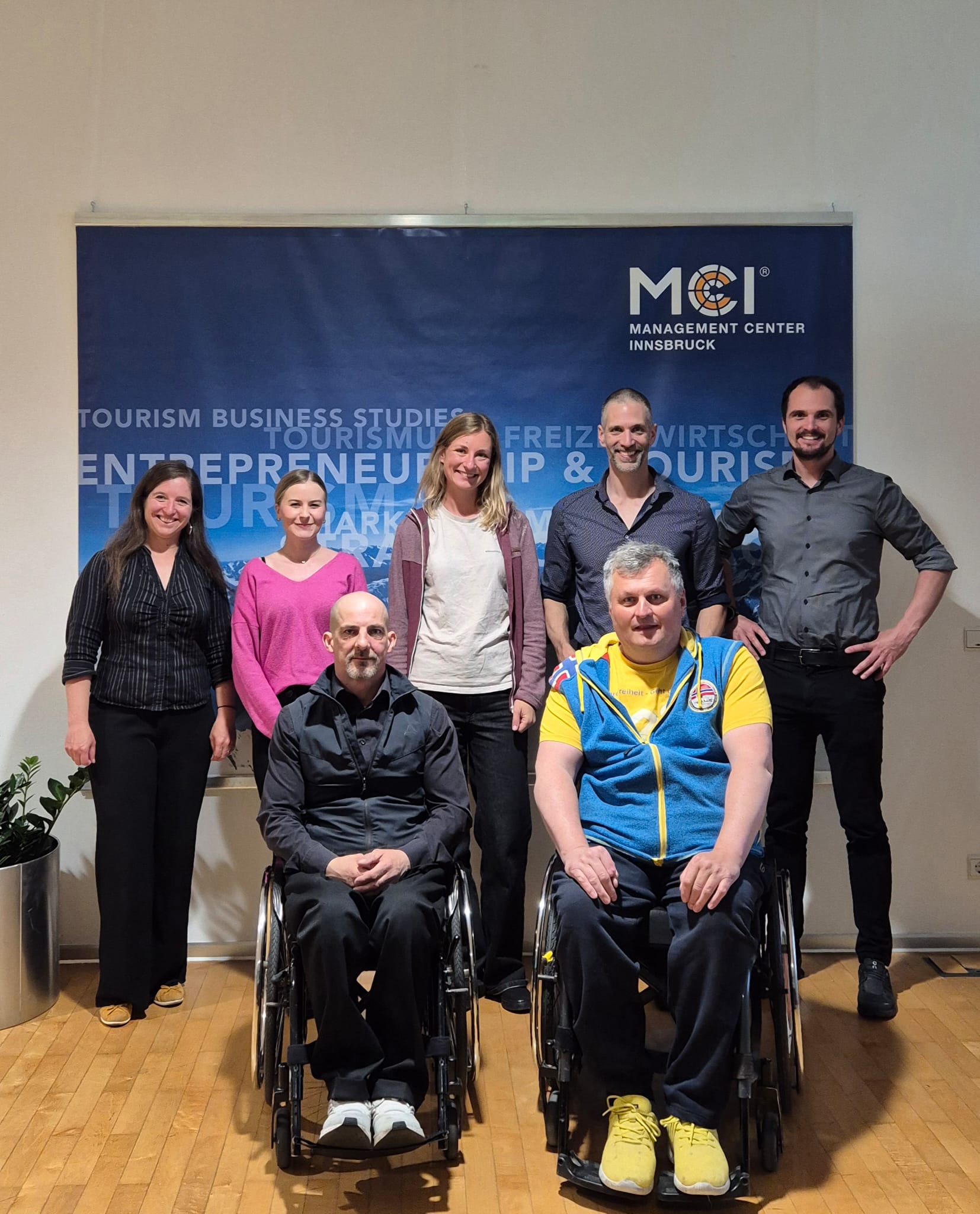
The students then had time to prepare for expert interviews. In addition to Solveig Meier and Joachim Nigg, Christian Haselgruber from the Innsbruck section as inclusion officer, Bernhard Gruber as expert for barrier-free planning and building and chairman of the association "Die Barrierefreien", Tobias Schmidhuber as communication expert and swimming instructor for the disabled at the USI, as well as Janine Prokesch as disability officer of the MCI were also available. Through the interviews with the various experts, the students were able to gain a deeper insight into the topic of accessibility and clarify specific questions.
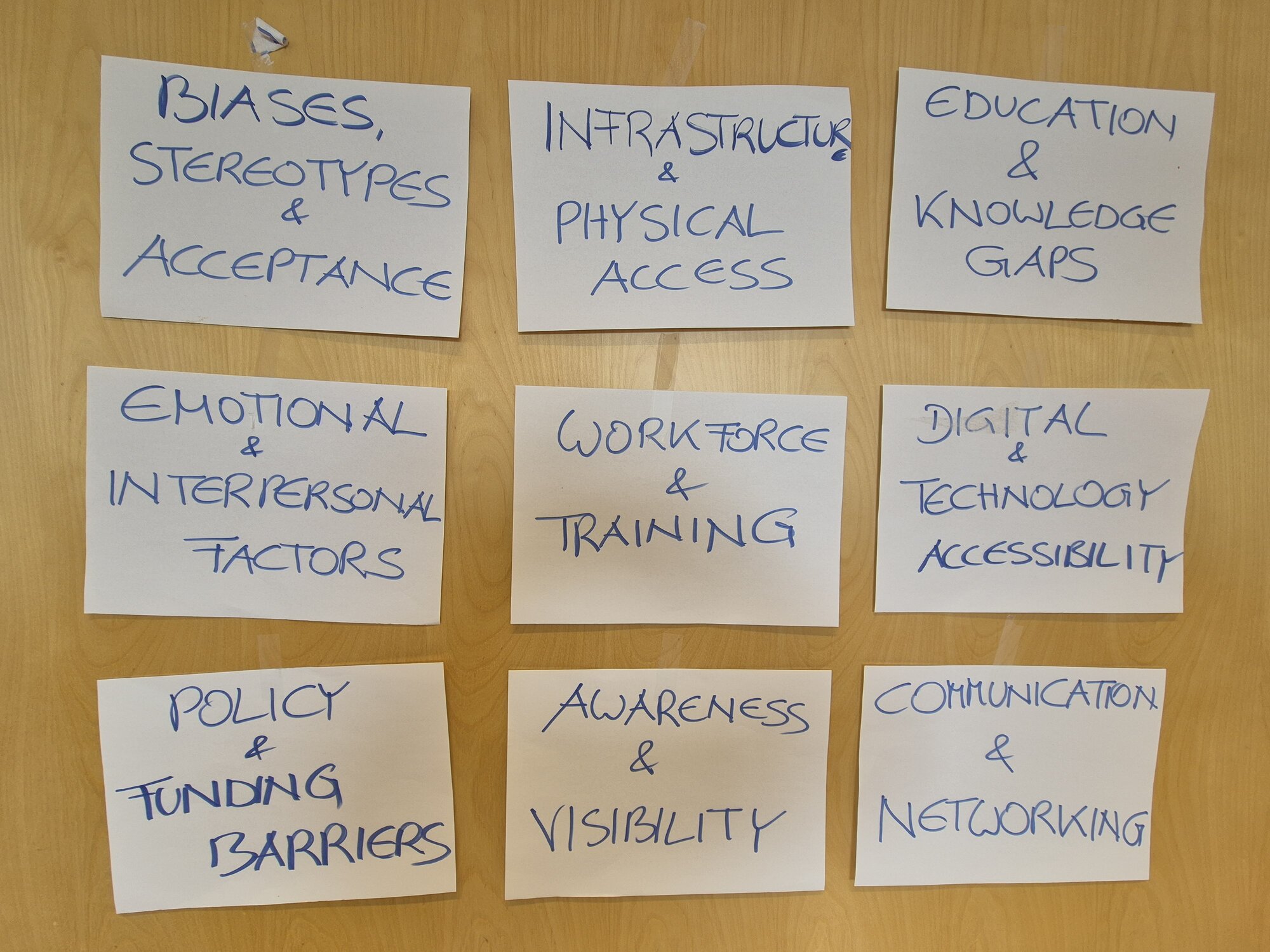
The information gathered from the project briefing and expert interviews was then compared with current findings from previously researched and selected specialist articles and served as the basis for AI-based topic clustering. This resulted in the following nine problem and action areas: (1) awareness and visibility, (2) education and knowledge gaps, (3) political and financial barriers, (4) infrastructure and physical access, (5) workforce and training, prejudice, (6) stereotypes and acceptance, (7) communication and networking, (8) emotional and interpersonal factors, and (9) digital and technological accessibility. The individual topics were divided into different student groups. Subsequently, the students had to conduct further interviews with affected persons.
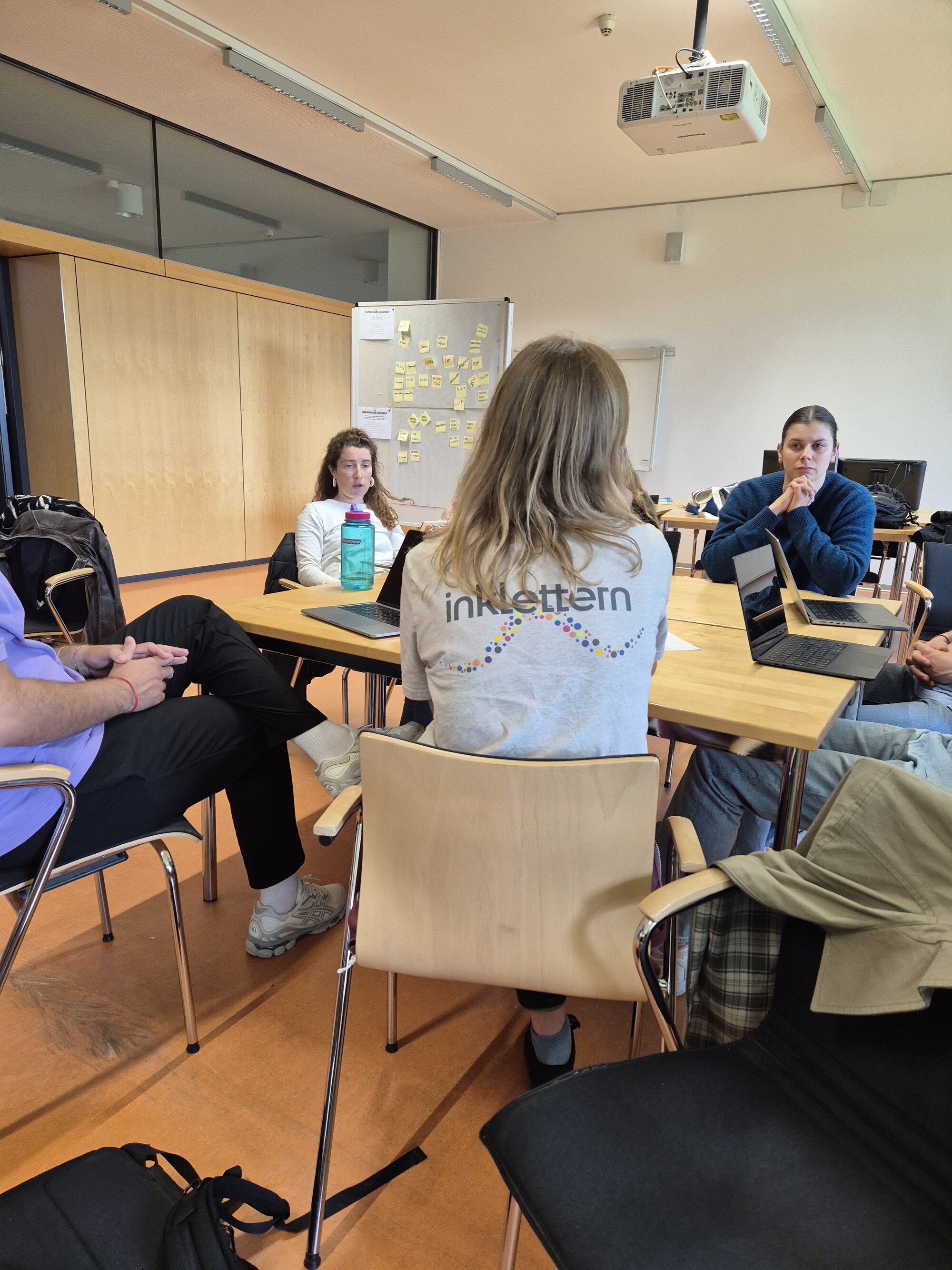
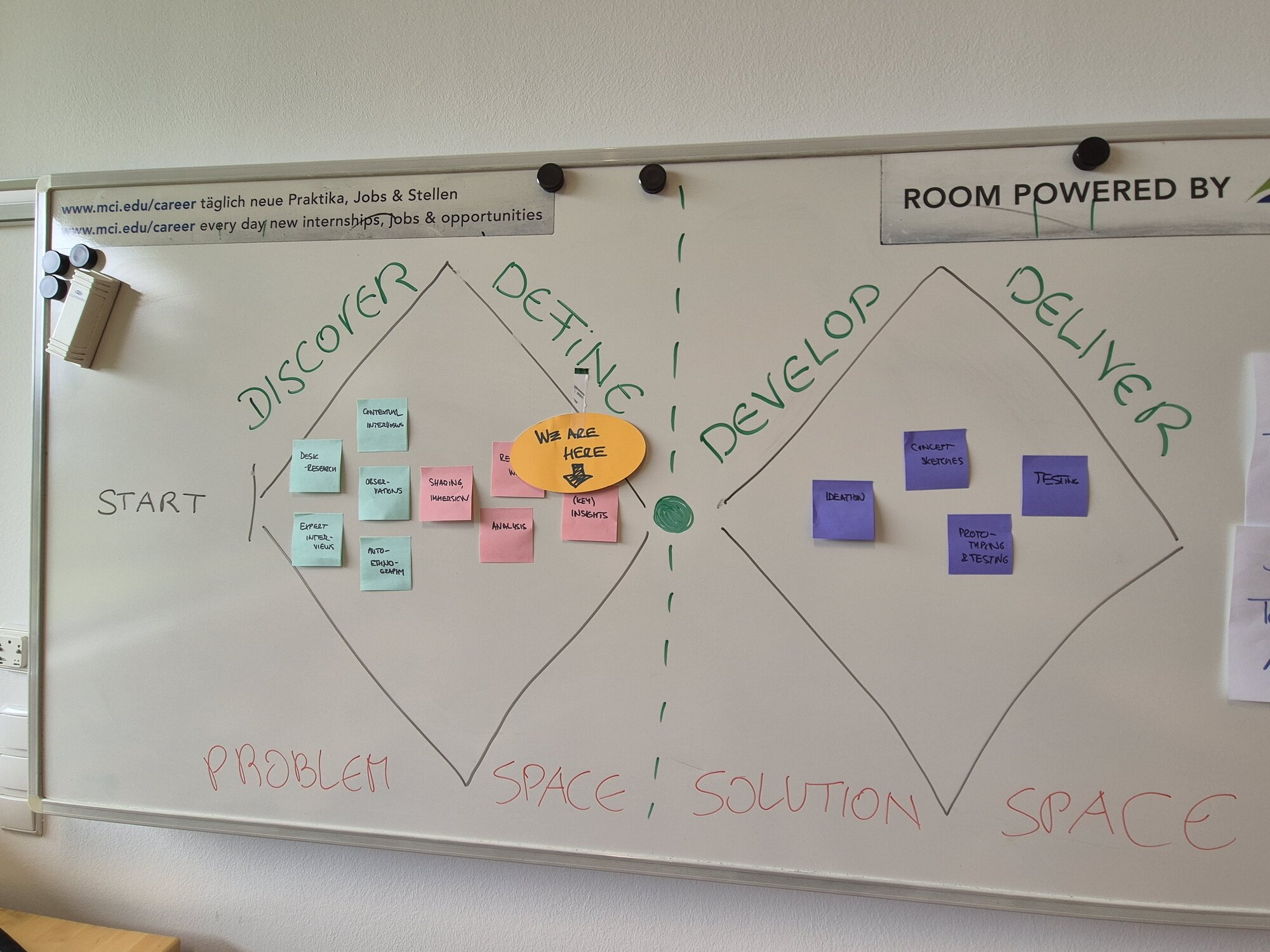
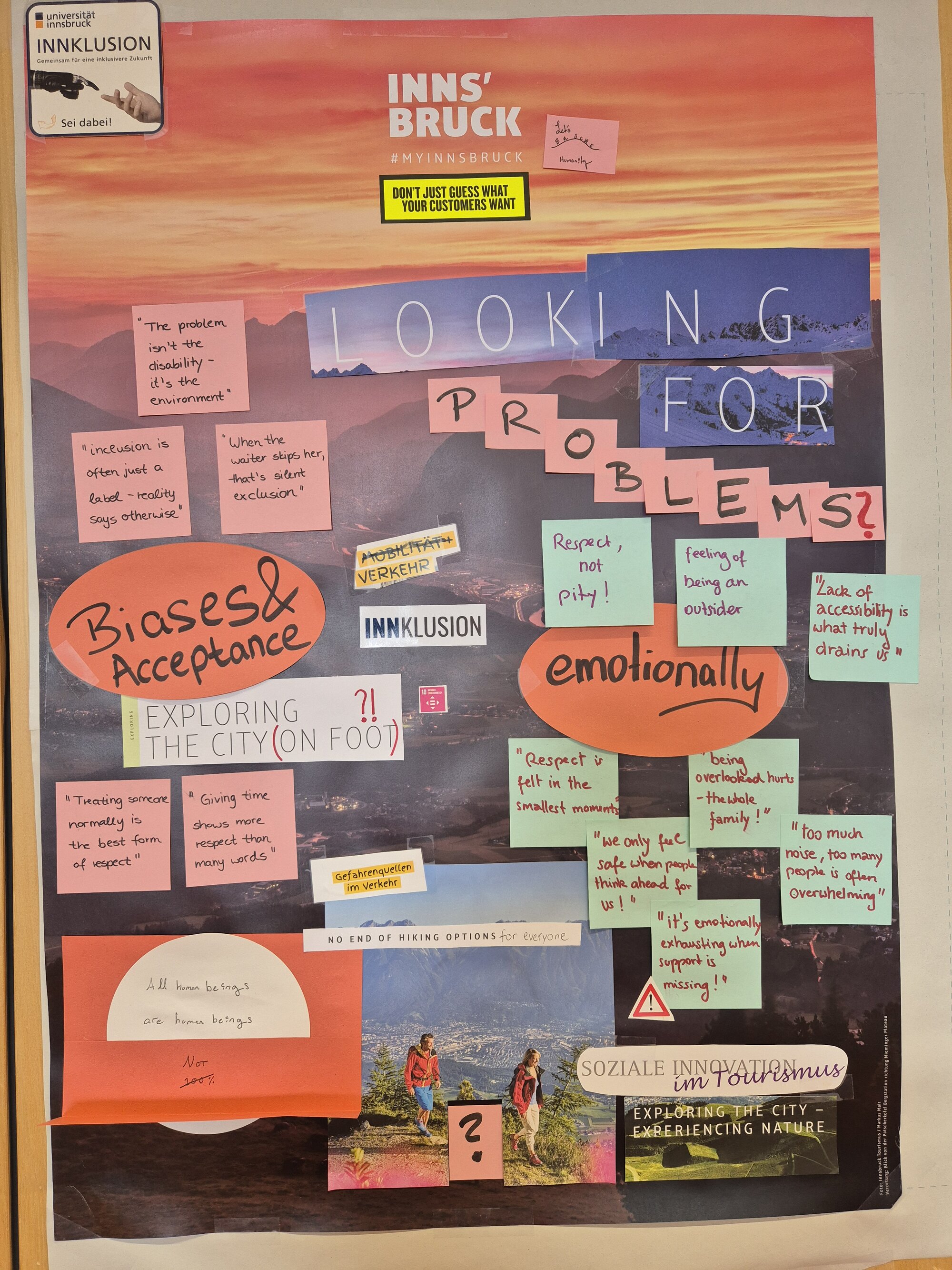
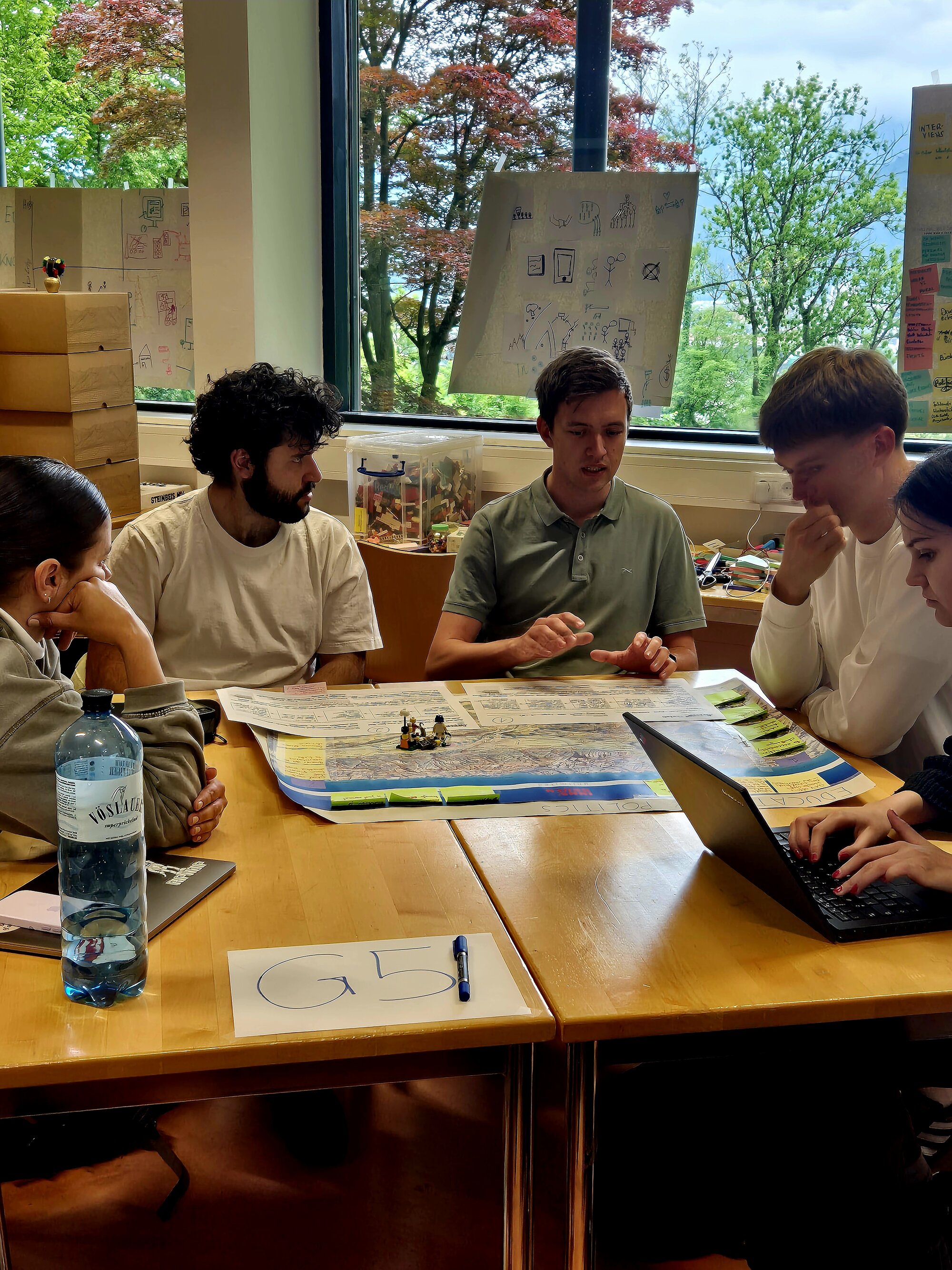
On the second day of the workshop, all previous information was summarized, structured and linked on a research wall. Initial findings were generated from this condensed knowledge base and, in a further step, five key insights were formulated for each student group. In a final consolidation step, three thematically different "How Might We" questions (concretely formulated research questions) were developed and prioritized in the group. In typical service design fashion, a lot of time was spent in the problem space to identify and understand the "right" problems. Only once the problem areas have been defined can we move on to the solution space and develop meaningful and useful solutions based on them.
Having finally arrived in the solution space, numerous solution ideas for the identified problems were conceived for the first time during the ideation phase using the Crazy Eight method and prioritized using an idea portfolio. After this relatively short ideation phase, the first proposed solutions were developed and visualized in the form of prototypes. Analog and AI-supported, various prototypes were developed in the form of initial advertising posters (service ads) and concept sketches as part of the development phase. These prototypes serve as an initial visualized and haptic basis for testing and iteratively developing the ideas developed. In the course of a gallery walk, the students presented their advertising posters and concept sketches to each other and received important feedback for the further development and refinement of the solution ideas for the first time.
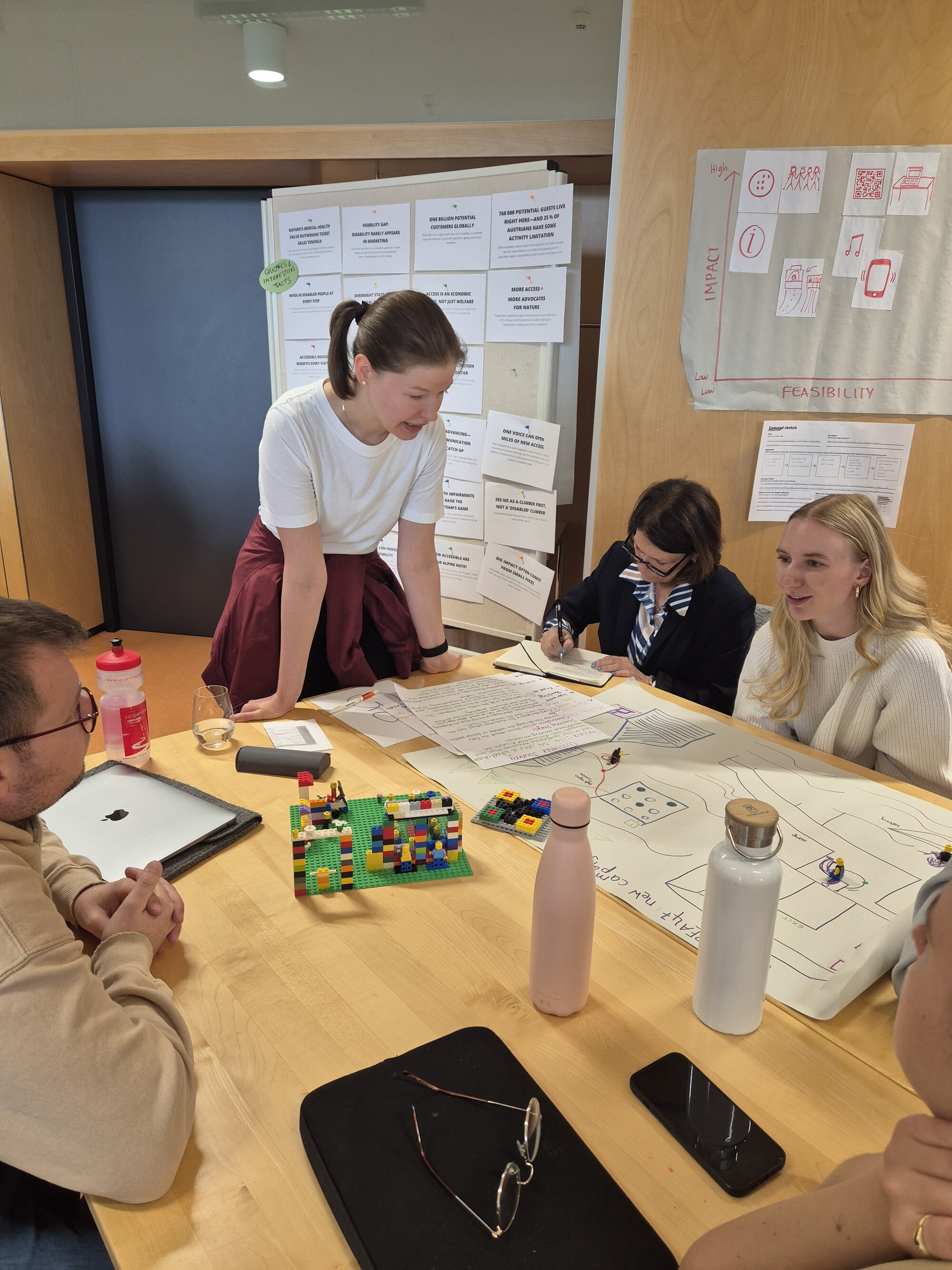
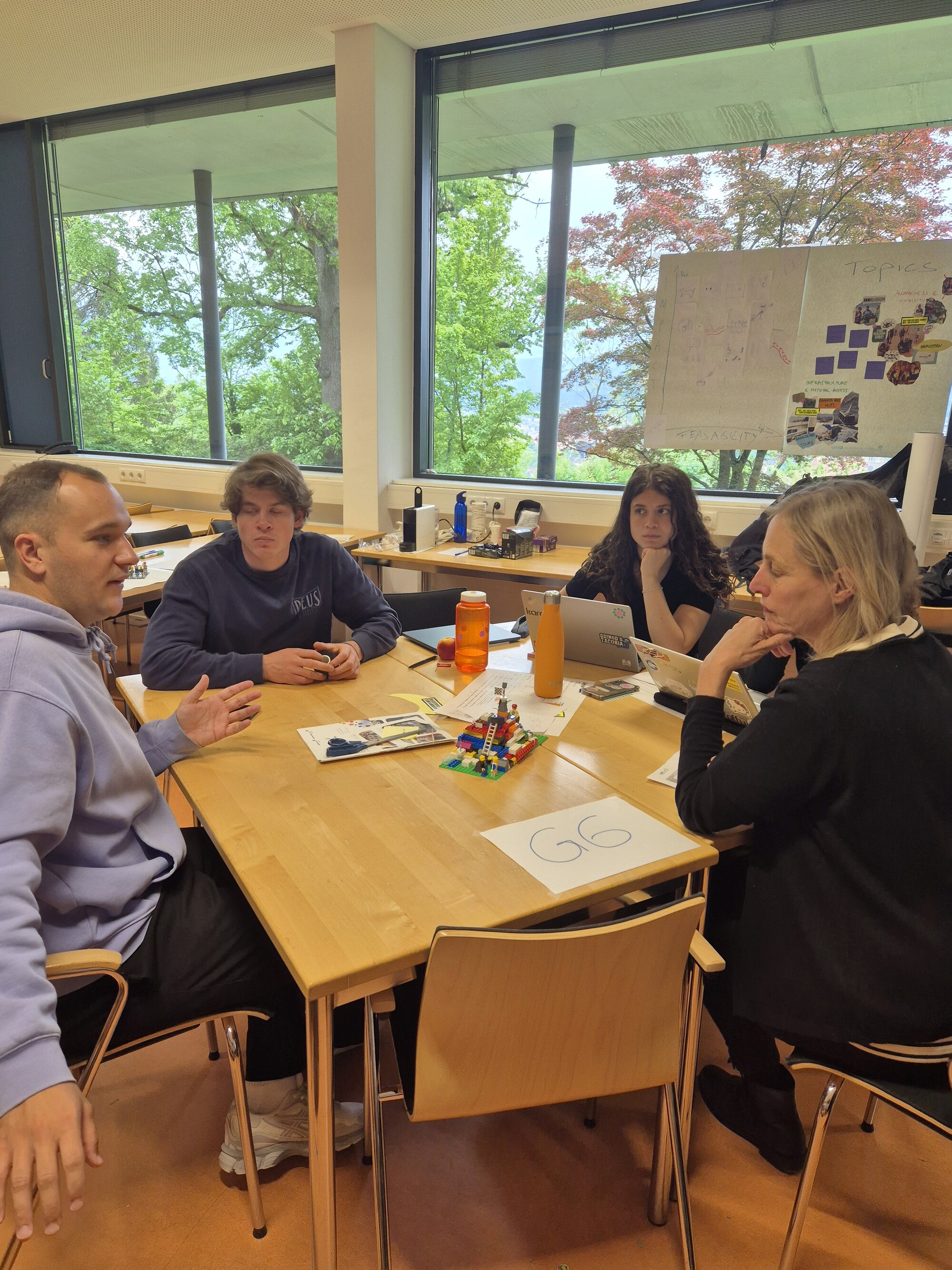
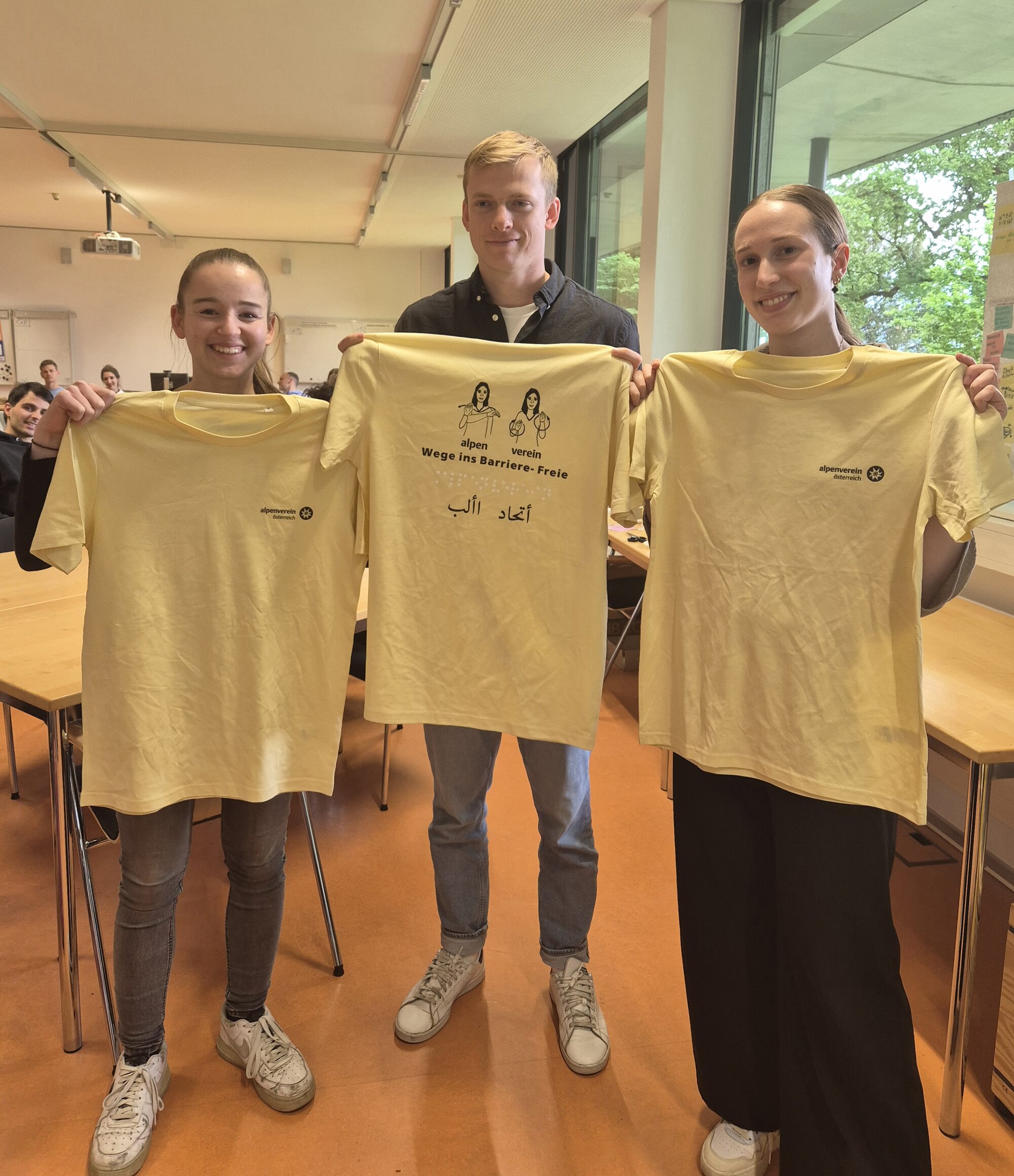
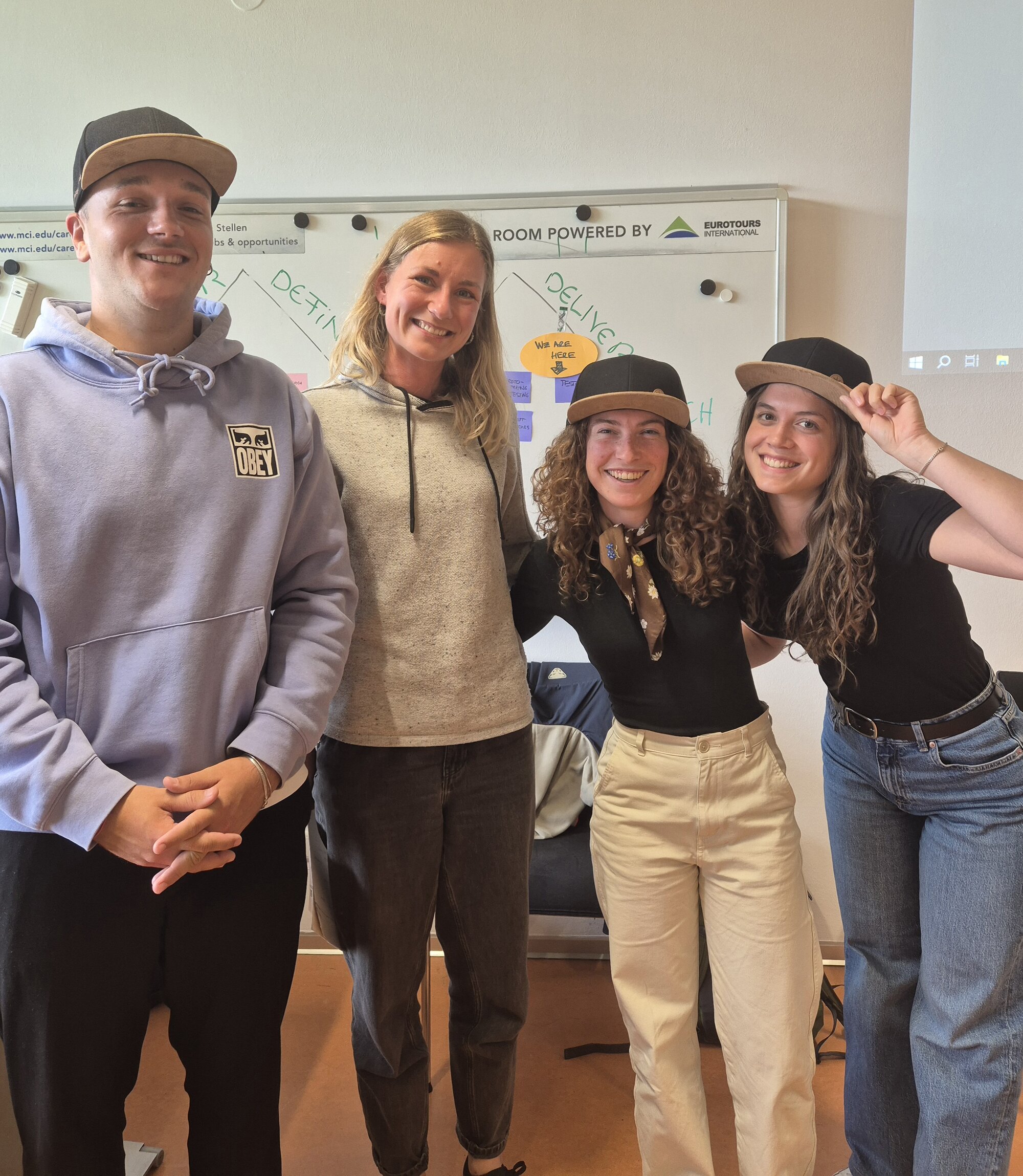
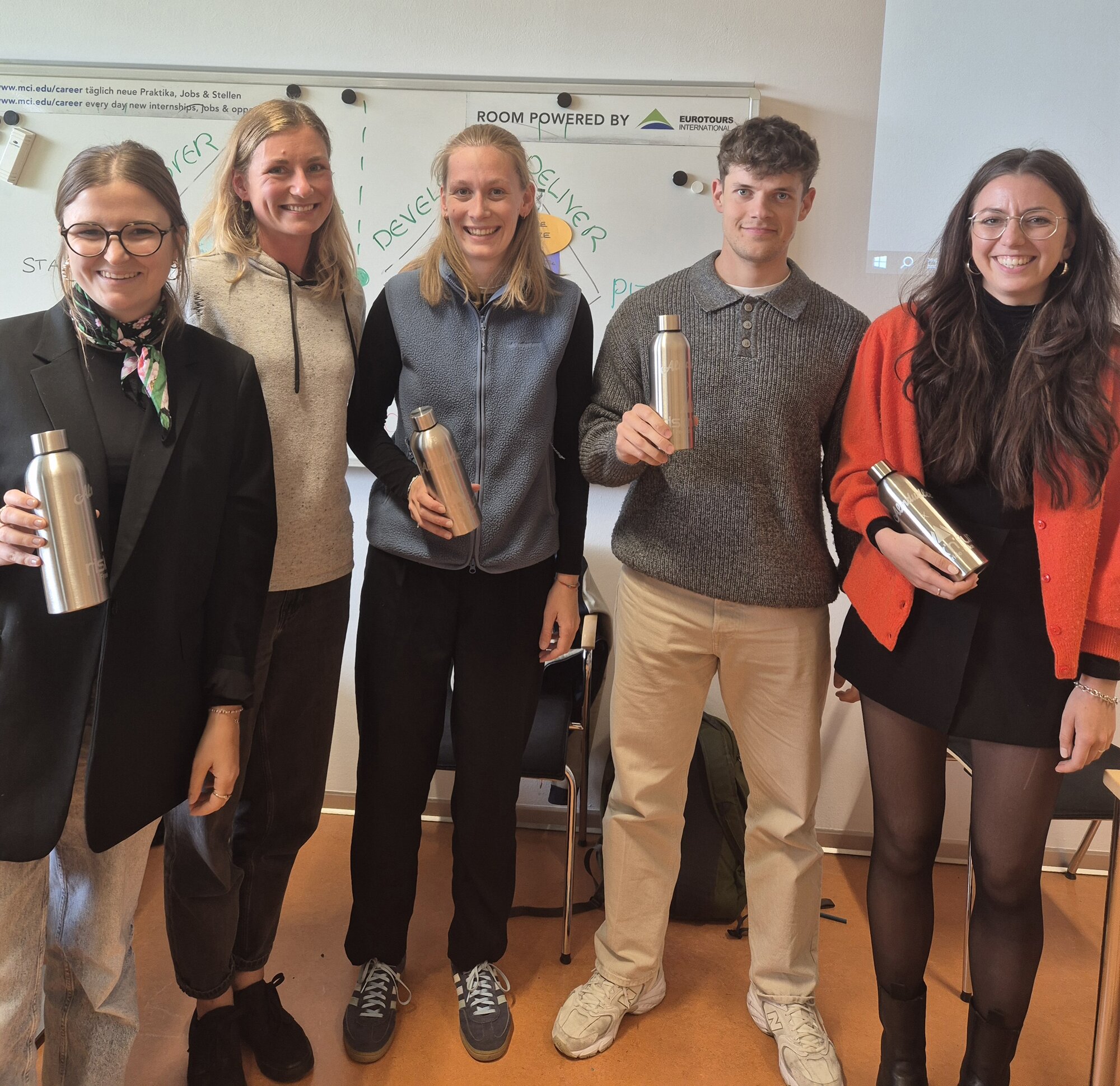
On the third day, physical prototypes (desktop walkthrough, Lego Serious Play, paper/cardboard, etc.) were developed based on the advertising posters and concept sketches, which had to withstand a close and critical examination in a final round of testing by the experts from the first day as well as Oliver Ott from the INNklusion project at the University of Innsbruck, Helga Mair from the PHT and Laura Wittkopp, TYSTO manager at MCI Tourism. After incorporating the final feedback, the final solution proposals were presented to the project partner and a critical jury using the prototypes created. First, all students were allowed to evaluate each other, give feedback and choose their favorites from all the ideas. The student prize went to the project entitled "Summit in Silence". The aim was to create an offer for people on the mountain with cognitive disabilities, from which a large number of other people can also benefit. In the opinion of the jury, headed by Solveig Mair, the best ideas included the "Inclusi" project, an inclusive training and certification program for tourism businesses, and the "Hit the rope, champ!" project, an idea that allows blind people to explore the mountains independently. The best ideas were honored by the Alpine Club with great recognition prizes.
Solveig Meier, Alpenverein: "The students tackled our question with a lot of creativity, a fresh perspective and great empathy. The involvement of people with disabilities as experts and the use of a broad network made the course very lively and practical - even if not all ideas could be implemented directly, they provided important food for thought and opened up new perspectives that will help us as a partner organization."
Feedback from students showed that the topic was not yet so firmly anchored in the minds of some and that - in line with the service design concept - perfect solutions are not always necessary:
"Participating in the Service Design course, which focused on improving the accessibility of mountain attractions for individuals with impairments, has been both eye-opening and deeply thought-provoking."
"The focus on inclusive tourism, particularly making mountain environments more accessible for people with impairments, introduced me to a topic I had not deeply engaged with before - and one that now feels incredibly relevant and important."
"One major learning was that initial ideas don't have to be perfect - in fact, starting with "shitty drafts" is better than not starting at all."