
Prepared for what lies ahead in tourism
Stay up-to-date with current, independent statistics and information on tourism in the Alpine region.
 Inspiration

Fac.T: Ms. Reitterer, you have transformed the Boutiquehotel Stadthalle into a sustainable flagship hotel. How did your journey towards sustainability begin and what challenges did you have to overcome?

Michaela Reitterer: When I took over the hotel in 2001, I had a clear vision: to run a sustainable hotel that not only conserves resources, but also focuses on social and economic sustainability. At that time, sustainability was not yet a big issue in the hotel industry and I had to do a lot of pioneering work.
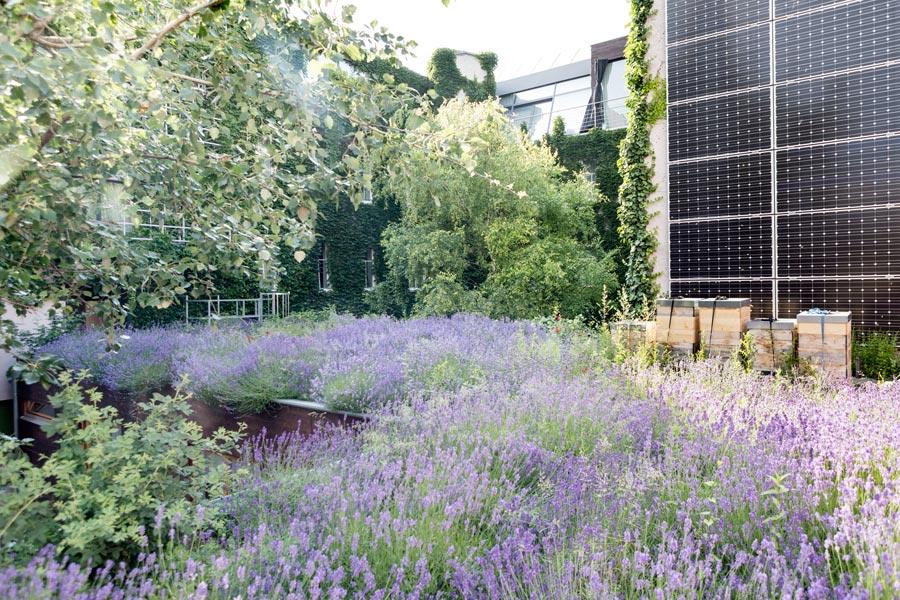
We extended our 140-year-old house in 2009 and added a passive house with a groundwater heat pump, a photovoltaic system and thermal solar panels. We also introduced various measures to reduce energy and water consumption, such as LED lighting, water-saving Ecowaterjets and the use of well water for toilet flushing. The decision to remove minibars from the rooms has also helped to save 21,000 kg of CO2 per year.
The biggest challenge was to push through my ideas in the face of skepticism and prejudice. Many people thought it was uneconomical to run a hotel with a sustainable concept. But with a lot of perseverance, optimism and a strong team, we succeeded in becoming the first Net Zero Energy hotel in Vienna and in all European cities.
Fac.T: You have introduced the concept of SDG rooms to integrate the 17 Sustainable Development Goals (SDGs). How did this idea come about and how do your guests react to it?
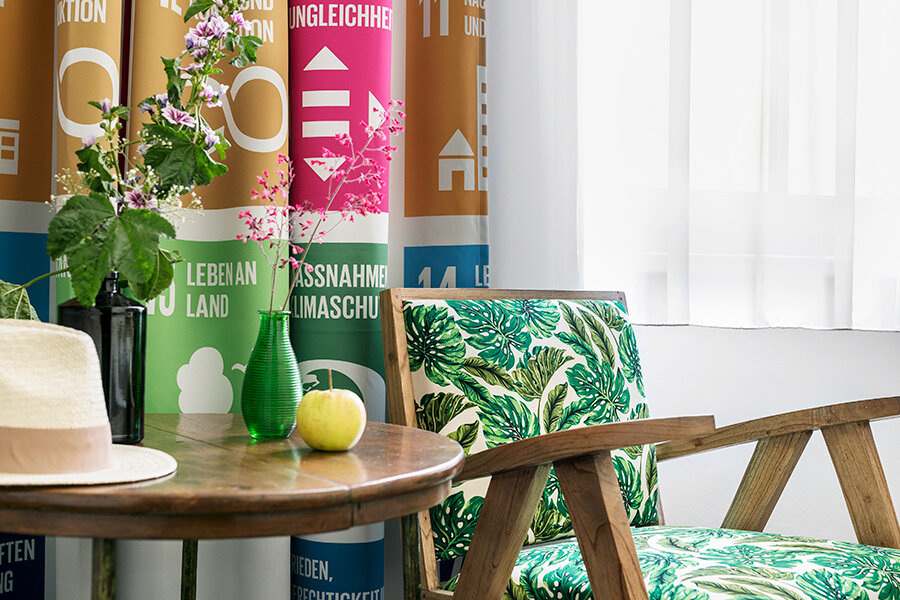
Michaela Reitterer: For us, sustainability means thinking and acting holistically. That's why we decided in 2020 to actively integrate all 17 SDGs into our hotel concept. In collaboration with the social organization "garbarage", we have created 17 rooms, each dedicated to one of the SDGs. We use upcycled furniture, such as lamps made from old pasta sieves or clothes racks made from e-charging stations. Our guests receive information about the respective SDG as soon as they enter the room and can call up further details via QR codes.
The feedback from our guests is consistently positive. Around 60-70% of our bookings are based on our sustainable concept. It's great to see that our vision of responsible tourism is being well received. I am particularly pleased that our employees are also actively involved and act as SDG ambassadors. The success of this concept has motivated us to design ten more SDG rooms.
Fac.T: What do you recommend to other entrepreneurs who want to integrate sustainable concepts into their companies?
Michaela Reitterer: My most important piece of advice is: just start! Sustainability is not a project with an end date, but a continuous process. The first step is often the hardest, but it's worth having the courage to break new ground. It is important that sustainability does not just remain a marketing tool, but is anchored in the overall corporate strategy. And the most important thing at the end: it must be authentic.
You should also not be discouraged if there are initial headwinds. I've learned that it's perfectly okay to make mistakes as long as you learn from them. Working with a committed team and involving employees is crucial, because only together can sustainable changes really be implemented.
Finally, it is also important to network with like-minded people and learn from each other. For example, we have set up a "Green Community" for sustainable companies in Vienna to support each other. After all, sustainable business is not only good for the environment, but also for the long-term profitability of a company.