
Prepared for what lies ahead in tourism
Stay up-to-date with current, independent statistics and information on tourism in the Alpine region.
 Inspiration
The world of work was already changing before Covid-19 (Capelli & Keller, 2013; Werther, 2021). Even before the crisis, the tourism industry had already reached a point where it was looking for change (Schwaiger et al., 2021). But who would have thought that a global pandemic that makes travel temporarily impossible would cause the world of work to travel?
Workation = Work + Vacation
The term workation is a combination of two English terms (Werther, 2021). Workation therefore describes a vacation stay or a trip that also includes work phases. These stays are often also referred to as "retreats". Unlike a pure coworking space offering, which provides a place to work during the day, workation also includes accommodation - and therefore also co-living. Workation can be used by both individuals and entire company teams. It therefore corresponds to a new form of MICE tourism. A further distinction from workation is digital nomads , who travel for longer periods of time and work in the meantime - in some cases now even with a special digital nomad visa.
Working at vacation destinations creates new places for innovation, creation and relaxation at the same time. New places where people can meet and network bring variety to dull working days and can stimulate an increase in productivity. Team workstations are also designed to strengthen cohesion among colleagues.
Working from home has been driven by the pandemic like never before. Some hotels have seized the opportunity and rented out hotel rooms as workspaces. This was a particularly helpful option for people who had to open their laptops in the same room as their partner/family during lockdown.
Management consultant and trainer Simone Stargardt explains in an interview with Deutschlandfunk that the strict separation of vacation and work should no longer be so strict: "If only because this extremely stressful time before the vacation is gone, when you spend a week desperately trying to empty everything so that you can go away with a clear conscience. And also the really bad day after the vacation, when everything piles up and there are 150 emails in your account. So the time before the vacation is relaxed, the time after the vacation is relaxed and so is the vacation itself."(to the full interview)
Working at your vacation destination should therefore bring more relaxation to your work and reduce stress on vacation. Of course, workation is not possible in every profession. Nevertheless, the home office surge during the pandemic has shown that it is possible in many more areas than previously assumed.
What are the needs of workationers? According to the Travel Trends Study 2021 by Simon, Kucher & Partners (2021), these are the most important features for the workation workplace:
1. stable and fast WI-FI connection
2. separate workstation
3. large screen that can be connected to the laptop
4. additional electronic devices for lending
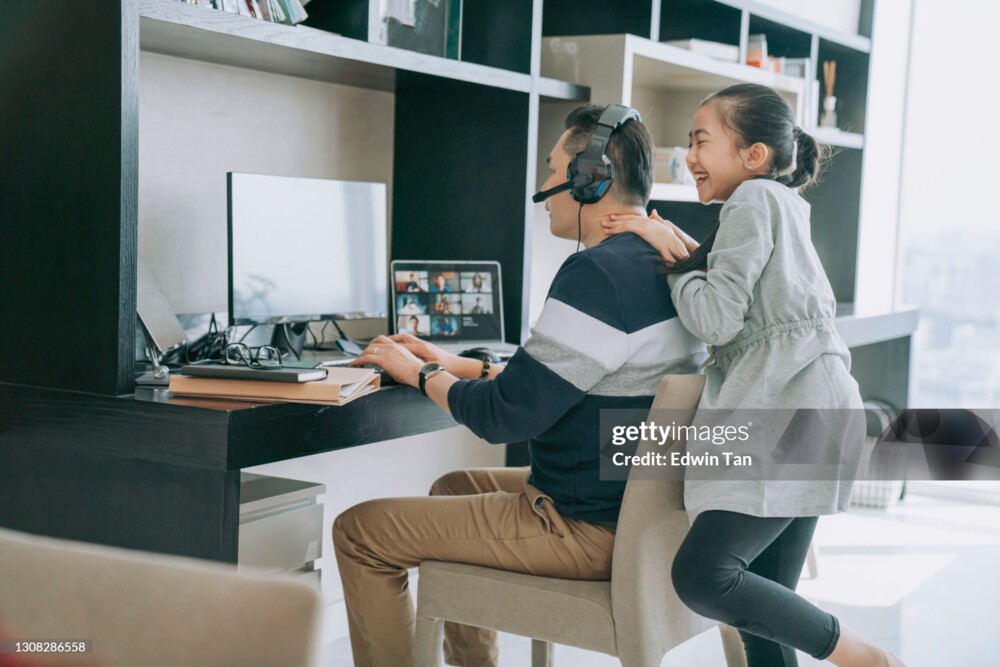
A well-developed infrastructure for both work and leisure plays an important role for workationers. Easily accessible recreational offers as well as sports and leisure activities for experiencing the destination are just as important for workationers as the equipment of the workplace for secure work.
Workation often takes place in rural areas. Workation accommodation is therefore particularly suitable for regions with a lower intensity of tourism. Nevertheless, a certain infrastructure is required for workationers. Although there are also successful self-catering accommodations in remote areas, these concepts have so far tended to be a niche market.
In the off-season, workationers can fill empty beds and benefit from a quiet atmosphere and concentrate on their work. Networking co-working spaces with retailers and experience providers also increases the economic and social value creation potential in the destination. Further potential and tips for using workation can be found here.
Not only beaches and palm trees, but also the Alpine region and Tyrol in particular offer great potential for coworking spaces and workation. For this reason, partners from Tyrol, South Tyrol and Bavaria have joined forces across borders and founded the CoWorkation Alps association. In addition to accommodation providers, regional partners and destinations are also members of this umbrella organization in order to support the development of workation opportunities in the Alpine region.
Several workation spots have already been created in Tyrol:
Workation providers have also become creative in other Austrian federal states:
Creative workation hosts can also be found across national borders in Bavaria (e.g. Allgäu) and South Tyrol. An overview of offers in Germany, Austria, the Netherlands & Indonesia can be found here.
The largest international professional provider to date is Selina - their slogan: Come for the sun, sand, or surf, stay for the spirit and community.
Open workations à la Open House are organized by Realizing Progress. The team invites you to spend two weeks living, exchanging ideas and working with them in a spacious vacation home. After open workations in the Algarve and Sicily, the team will travel to northern Italy in October 2021.
The study by the Federal Ministry of Labor (Bachmayer & Klotz, 2021. p. 39) has shown that working from home "will remain the standard for many Austrian employees even after the end of the pandemic". In the form of coexistence between the traditional workplace and home office, it increases satisfaction in terms of work results and compatibility with private life. The study conducted by the Fraunhofer IAO in cooperation with the German Association for Personnel Management DGFP e.V. (Hofmann et al., 2020, p. 4) also comes to the following conclusion: "The "new normal" will be characterized to a much greater extent by a coexistence of virtual and office-based forms of work."
Mobile working opens up new opportunities for tourism to make use of empty times and spaces. Offering workation stays should always be well thought out and tailored to the customer journey.
Bachmayer, W. & Klotz, J. (2021). Home office: Distribution, design, opinion and future. Vienna. Federal Ministry of Labor. https://www.bma.gv.at/Services/News/Homeoffice-Studie.html
Cappelli, P., & Keller, JR (2013). Classifying work in the new economy. Academy of Management Review, 38(4), 575-596. https://doi.org/10.5465/amr.2011.0302
Hofmann, J., Piele, A. & Piele, C. (2020). Working in the Corona Pandemic - On the way to the New Normal. Stuttgart, Frankfurt am Main. Fraunhofer Institute for Industrial Engineering -IAO-; German Society for Human Resource Management -DGFP-. https://www.iao.fraunhofer.de/de/forschung/forschungsbereiche/organisationsentwicklung-und-arbeitsgestaltung/befragungsreihe-arbeiten-im-new-normal.html
Schwaiger, K., Zehrer, A., & Spiess, T. (2021). The influence of symbolic and instrumental attributes of employer image on perceived industry attractiveness: Differences between business owners and employees. Journal of Hospitality and Tourism Insights, ahead-of-print(ahead-of-print). https://doi.org/10.1108/JHTI-12-2020-0234
Werther, S. (2021). Coworking as a revolution in the world of work. Springer Berlin Heidelberg. https://doi.org/10.1007/978-3-662-62657-3