Prepared for what lies ahead in tourism
Stay up-to-date with current, independent statistics and information on tourism in the Alpine region.
 Inspiration

F.acT: Why is the topic of comprehensive accessibility not only relevant for people in wheelchairs?

Bernhard P. Gruber:
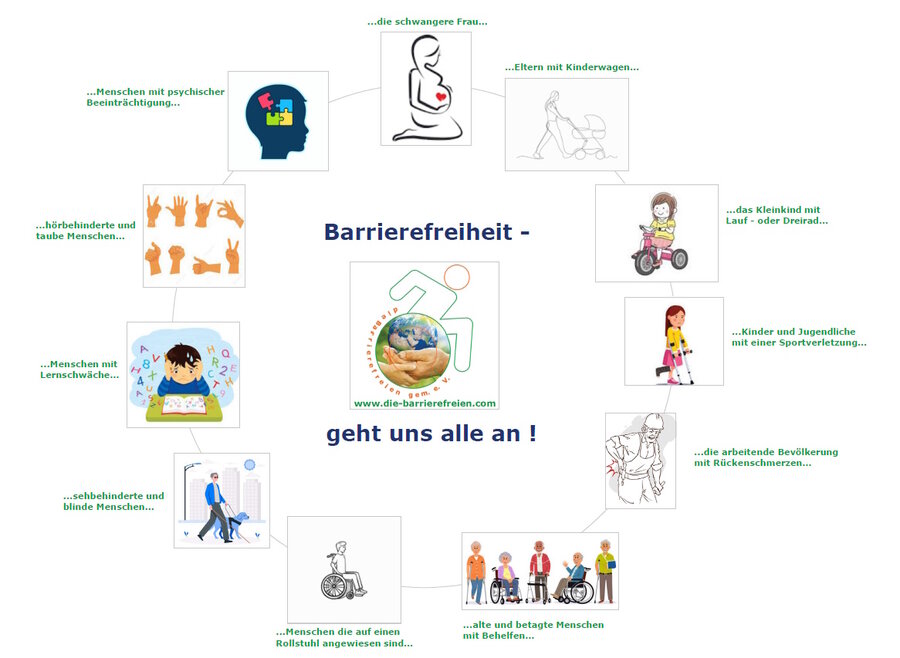
Accessibility concerns us all - the pregnant woman, parents with a baby in a baby carriage, the toddler on a walking bike or tricycle, the teenager with a leg in plaster, the working person with back problems, the elderly person in old age and, of course, disabled people in all known forms. Healthy today, dependent on an aid tomorrow - no one is immune. The term comprehensive accessibility refers to all structural measures such as elevators, ramps, handrails, tactile guidance systems, flooring surfaces, wet rooms, silent rooms, etc., but of course also barrier-free access to information such as information boards, the Internet or other information options in all areas of daily life. These things are generally required in the various building laws such as TBO and OIB 4. However, each individual case needs to be assessed by experts who are themselves affected as far as possible. In Austria, we have a situation where the experts for flora and fauna have to submit mandatory reports in the various civil engineering and building construction procedures. In the area of comprehensive accessibility, the expert for barrier-free planning and construction is not mandatory, which I have been calling for for many years.
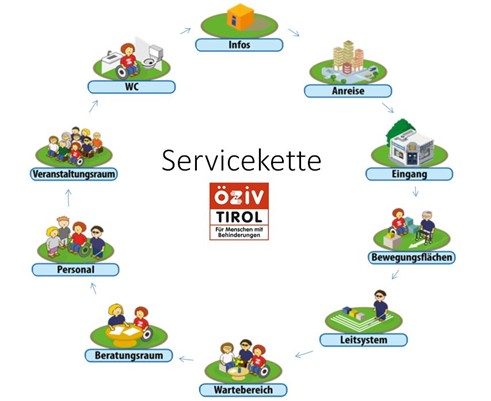
In the various disability equality laws and the UN CRPD, the core requirement is unrestricted participation for all people. This means that a person with a disability can demand that they have the same opportunities in everyday life and also in the leisure and tourism sector as a healthy person. There is the possibility of legal action, but this always results in an agreement being reached in the conciliation procedure at the Ministry of Social Affairs, where a compensation payment is negotiated. However, the reason for the complaint, namely the barrier, does not have to be removed. The principle for every barrier-free measure/project must always be the closed barrier-free service chain. If one link is missing, the offer is not barrier-free!
F.acT: Why should tourism in particular focus more on this topic?
Bernhard P. Gruber: Accessible tourism offers generate high added value for a tourist region. People with disabilities usually come accompanied or with family and, if there are accessible rooms, are happy to stay for a few days to explore the region. People with disabilities are financially well-endowed guests, are aware of the additional effort required and are happy to pay a few euros more if the offers are also perfectly accessible. Austria is a country in which every region can offer different, but differently unique natural beauties. Especially for people/&guests with disabilities, the opportunity to experience moving nature experiences, despite limitations, is a life motor.
Such experiences recharge the human battery for months and create a positive attitude towards life despite limitations. Try to imagine how a wheelchair user from a large city feels when he/she is suddenly able to move around in his/her wheelchair at 1700m above sea level in the Hahnenkamm mountain world in Reutte and looks out over the Zugspitze while sitting at the barrier-free reservoir. Another example is the feedback from visitors to Ehrenberg Castle, who visited Highline 179 for the first time again after his husband was in a wheelchair: "My husband was as happy as a little child when he crossed the bridge in his electric wheelchair. What a gigantic experience that was for him. It was so nice for me to see how happy he was and how much he enjoyed the freedom on the bridge." These examples show how profound these vacation experiences can be.
What's more, spending time on vacation together with healthy and disabled people creates a very special atmosphere and breaks down fears and barriers between people. I advised the hotelier Hardy Marolt from Hotel Orchidee on Lake Klopeiner on the subject of accessibility and initiated the first barrier-free access to the lake with a hydro-lift. The Hotel Orchidee is now an excellent hotel for inclusion, where healthy and disabled guests with and without dogs spend their vacation together. I can report from several of my own vacations with my family and our dogs what an incredibly humane atmosphere prevails there.
Q.acT: What are the best practices for accessibility in the tourism and leisure industry?
Bernhard P. Gruber:
In addition to the examples already mentioned in Reutte with Ehrenberg and the Bergwelt Hahnenkamm, which score with 7 barrier-free wheelchair hiking tours, the Grünberg in the Dachstein Salzkammergut region should also be mentioned. Here, people with limited mobility can enjoy the idyllic views over Lake Traunsee. The Hotel Weisseespitze in Kaunertal is also a model hotel for best practice.