

F.acT: The "Bergwelt Tirol-Miteinander Erleben" program celebrated its 10th anniversary last year. Please explain the background to the program and what goals it pursues:
Klaus Pietersteiner: The "Bergwelt Tirol - Miteinander Erleben" program was launched by the Tyrolean state government in 2014 to actively counteract the increasing conflicts of use in Tyrol's natural environment. With the growth of outdoor sports, many people have become increasingly active in nature - be it hiking, mountain biking, ski touring or other nature sports. At the same time, there are numerous interests of landowners, forestry, hunting, tourism and nature conservation that need to be reconciled with these leisure activities. The central aim of the program is to facilitate respectful coexistence between all user groups through dialogue, awareness-raising and targeted steering measures. In doing so, "Bergwelt Tirol - Miteinander Erleben" relies on a participatory concept in which all stakeholders are involved.
A key principle is that no general exclusion zones are created, but that conflicts are avoided through positive offers and targeted visitor guidance. Through regular evaluations, scientific monitoring and the use of digital technologies, such as visitor censuses or digital information platforms, the program is constantly evolving to meet current challenges.
The program partners are:
- Austrian Alpine Association
- Tyrolean Chamber of Agriculture
- Tyrolean Chamber of Commerce
- Tyrolean Advertising
- Tyrolean Hunters' Association
- Tyrol Mountain Rescue Service
- Province of Tyrol (various specialist departments)
Depending on the topic and project, other institutions are also involved
F.acT: So regulating conflicts through sport in the natural environment is at the heart of your efforts. Which types of sport create potential for conflict in the natural environment and how does this manifest itself?
Klaus Pietersteiner: Conflicts generally arise when different interests clash - be it between different types of sport or between athletes and other stakeholders such as agriculture, forestry or hunting. There is usually a lack of information or mutual understanding. This is where "Bergwelt Tirol - Miteinander Erleben" comes in with targeted measures.
Conflicts are particularly likely to arise:
- Mountain biking vs. hiking/forestry:
- Mountain bikers often use trails that are traditionally used for hiking. Differences in speed, riding style and expectations of the nature experience often lead to conflicts.
- Due to current legislation in Austria, cycling is only permitted on designated roads and paths in the forest. However, this regulation is often disregarded, with even barriers in restricted forest areas, where there are considerable dangers due to logging work, being ignored.
- E-mountain biking in particular has exacerbated the problem due to its greater range and higher speed.
- Ski touring vs. nature conservation/hunting/trail grooming:
- In sensitive habitats, wild animals are disturbed during their hibernation, which can not only lead to damage in the forest, but in some cases also has critical effects on the animals' physical condition.
- Ski tourers who do not ascend at the edge of the slopes or use the slopes outside of operating hours endanger themselves and others. In addition, the costly preparation of the slopes is made more difficult.
- Climbing vs. nature conservation/property owners' interests:
- Especially when bouldering and sport climbing, conflicts sometimes arise with nature conservation or landowners when routes are located in protected areas or meadows at the base of the wall are damaged and polluted.
F.acT: Can you give us some examples of the measures taken by the "Bergwelt Tirol - miteinander erleben" program to reduce conflicts in the natural environment?
Klaus Pietersteiner: The program relies on a combination of visitor guidance, awareness-raising and infrastructure measures. Some concrete examples:
- Uniform signposting & route guidance:
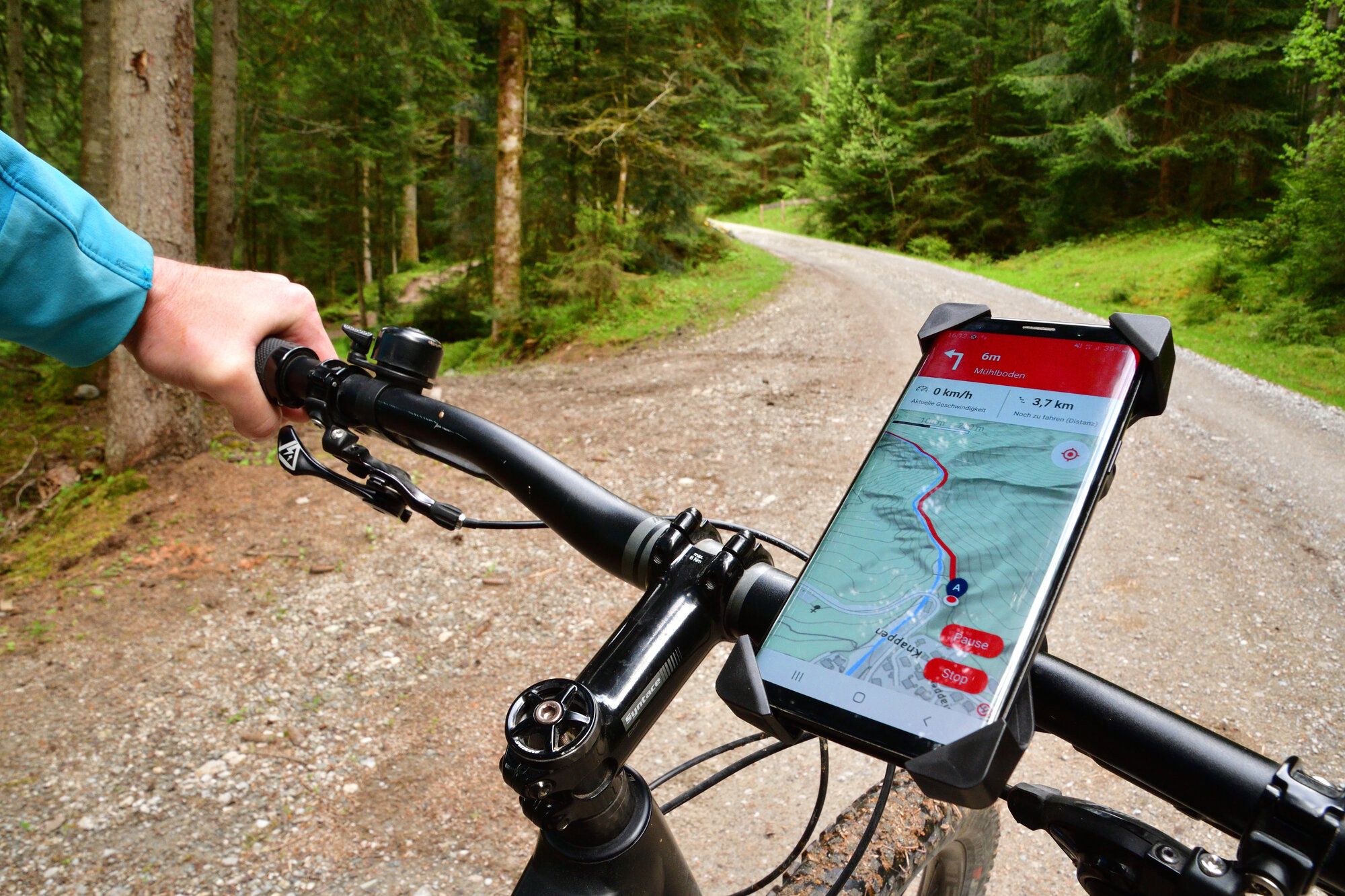
- All MTB routes and single trails are signposted uniformly throughout Tyrol. Digital information about the legal MTB offer is made available as Open Government Data (OGD).
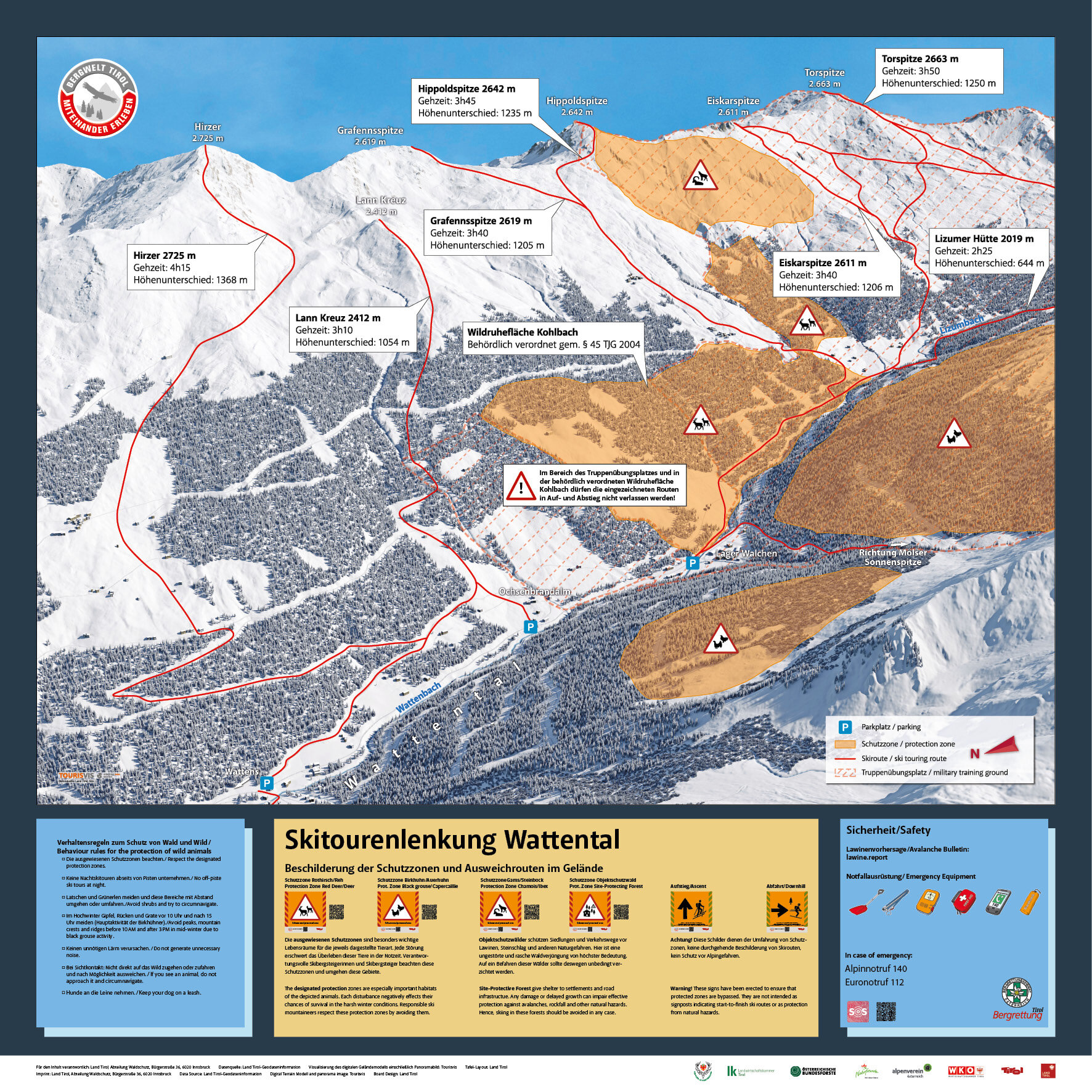
- Ski tour guidance with route recommendations helps to relieve the pressure on forest and wildlife conservation areas.
- Digital information platforms & visitor counting:
- Tour suggestions on popular platforms are regularly reviewed with regard to the objectives of "Bergwelt Tirol - Miteinander erleben". If necessary, the authors are contacted with suggestions for changes.
- There is active collaboration on the OpenStreetmap (OSM).
- Up-to-date information about mountain bike route closures is made available to nature users.
- Automatic counting stations record visitor flows and help with the targeted planning of guidance measures.
- "Safe & fair" piste tour model:
- Introduction of piste touring evenings in ski resorts where ski tourers can be out and about safely without coming into conflict with piste grooming.
- Development of a guidance system for piste tours to separate the flow of skiers.
- Cooperation with landowners and local interest groups:
- Climbing conflicts are defused by creating parking spaces, renovating paths and concluding contracts with landowners.
F.acT: Looking back on the past 10 years of the program. What is the recipe for success of "Bergwelt Tirol - miteinander erleben"?
Klaus Pietersteiner: The secret of success is that "Bergwelt Tirol - Miteinander Erleben" does not resolve conflicts with bans, but with positive alternatives that are supported by all stakeholders. The program relies on dialogue, cooperation and fact-based visitor guidance. The most important success factors are
- Involvement of all stakeholders:
- Instead of one-sided regulations, solutions are developed jointly with sportspeople, tourism, landowners, hunting and nature conservation.
- The regular working groups and steering groups ensure acceptance and feasibility of the measures.
- Positive incentives instead of bans:
- Instead of restricted zones, the program focuses on attractive alternatives, such as single trails for mountain bikers or specially marked ski touring routes.
- Modern technology & data analysis:
- Digital tour platforms such as radrouting.tirol communicate real-time information for athletes.
- The provision of open government data, membership of Digitize the Planet and participation in OpenStreetMap enable platform operators to integrate relevant information. As a result, users can be sensitized to environmentally friendly and conflict-free sports activities as early as the tour planning stage.
- Visitor flows are recorded by automatic counting stations, enabling fact-based planning of control measures.
- Sustainable measures:
- The program focuses on long-term solutions that take into account both nature conservation and the interests of recreational athletes.
- Ongoing evaluation and adaptation of the measures ensures continuous improvement.
- Promotion of the measures
- Projects and measures that are in line with the objectives of "Bergwelt Tirol - Miteinander erleben" can be funded by the province of Tyrol. It is therefore also financially advantageous for service providers and tourism associations to pay attention to nature compatibility and conflict minimization.
Q.acT: Finally, how do you see the future development of sport in the natural environment and where can outdoor sports enthusiasts obtain information on correct behavior in the natural environment?
Klaus Pietersteiner: The importance of outdoor sports will continue to grow - also due to the trend towards sustainable leisure activities and society's focus on health. This poses major challenges for the natural environment.
It will be crucial to continue to strike a balance between different interests. The future will be characterized by:
- More digitalization, e.g. through apps with real-time information.
- More dialogue and awareness-raising in order to sensitize users on their own responsibility.
- More innovative infrastructure, such as targeted routes for different types of sport.
Outdoor sports enthusiasts can find information at:
- www.bergwelt-miteinander.at and the channels of our program partners.
The Austrian Alpine Association's "RespektAmBerg" campaign is particularly worth highlighting here. - For mountain bikers, we recommend radrouting.tirol and Radapp Tirol
- On some digital outdoor platforms, information can be displayed by activating certain map layers (e.g. Alpenvereinaktiv, Outdooractive, Skitourenguru).