
F.acT: What was the problem that gave rise to the "equal pay netz" project and what are its objectives?
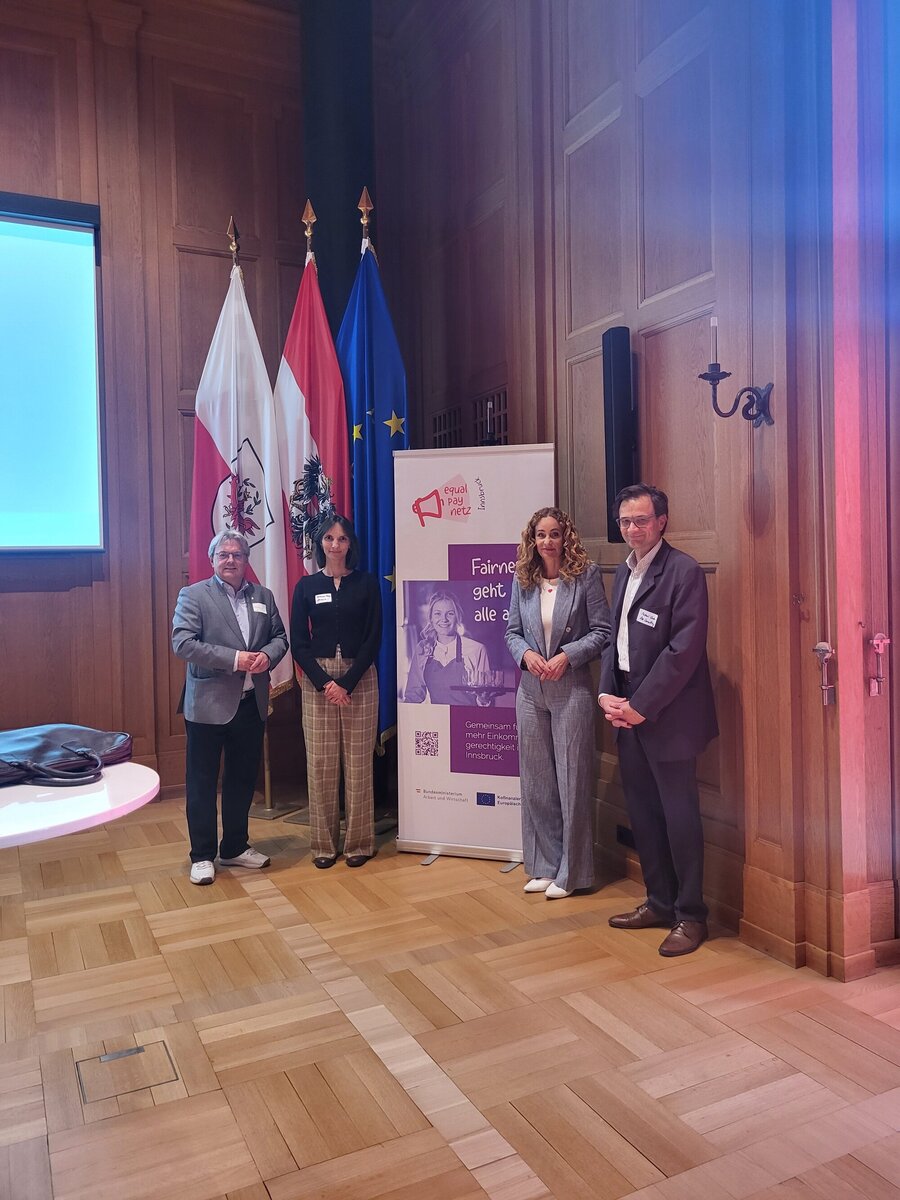
Christian Putzer : Based on statistical evaluations in the EU and in Austria, the 2023 project was initiated in Austria with the support of the ESF (60%) and the Federal Ministry of Labor and Economic Affairs (40%) - since March 2025 the Federal Ministry of Labor, Social Affairs, Health, Care and Consumer Protection - and publicly awarded to ÖSB Consulting GmbH, Vienna, through a tender.
The problem is characterized by the following circumstances to varying degrees in the EU countries:
- Low-wage sector tourism and industry in all EU countries
- Many part-time workers in these sectors, particularly characterized by a high proportion of women in these sectors
- In most countries, the majority of care work (childcare, elderly care) is carried out by women
- This means that women lose insurance periods for their own pension, threatening dependence on their partner or poverty in old age due to insufficient pensions
To counteract these circumstances, the Ministry has launched this initiative with the following objectives:
- Raising awareness in society and, above all, in companies in the tourism sector (for Tyrol and Carinthia) and in industry (for Upper Austria and Styria)
- Analysis of the circumstances in these pilot regions based on an online survey, interviews and focus groups
- Research into the drivers (circumstances: care work) that motivate women to work in these sectors
- To find solutions from affected persons in the industry
- To initiate measures for the women concerned and improve working conditions
F.acT: In a first round of data collection, secondary data was collected and supplemented with a survey of management and employees in tourism as well as network partner interviews and focus groups at the beginning of the year. Based on these results, what are the most urgent fields of action that you were able to define?
Christian Putzer: Key findings from the Innsbruck region in tourism:
- The tourism industry in the Innsbruck region is perceived ambivalently. There are flexible working hours and additional company benefits, but the image is family-unfriendly and offers a working environment with few opportunities. Part-time work is often not self-selected, but rather due to care obligations. Seasonal employment makes reliable career planning difficult.
- 19% of tourism employees work full-time and 81% part-time. 56% of men are employed full-time, 44% of women. Reconciling work and family life remains a challenge.
- Equal opportunities in recruitment are generally positive, but there are structural barriers such as language skills and foreign qualifications, which lead to lower grades.
- Men are more frequently represented in higher salary ranges for gross annual salaries than women. Men have more personnel responsibility and are paid more. Additional benefits are often awarded informally without comprehensible criteria.
The most important fields of action/suggested solutions:
- Mentoring and further training programs for women: Expansion of mentoring opportunities for women as well as targeted further training measures to promote equal opportunities in management positions.
- Awareness-raising and training: Regular training for managers and employees on topics such as unconscious bias, equality and fair negotiation.
- Flexible working models: Promotion of flexible working hours and part-time models to ensure equal opportunities for employees with different life situations.
- Transparent promotion and salary increase processes: Clear criteria for promotions and salary increases that are openly communicated.
- Cooperation with industry associations/existing networks: Cooperation with tourism associations and trade unions to develop industry-wide standards and best practices.
- Support for parental leave and care periods: Flexible solutions and fair pay during extended absences to ensure equal opportunities even during family phases.

F.acT: How are concrete solutions for these problem areas being developed?
Christan Putzer: Based on the results of the study and the priorities we have set for the Innsbruck region, the steering group will develop 22 measures that will be implemented by the members of the steering group over the next two years. National and international experts will also be invited to the activities in order to support the exchange of knowledge. Existing organizations, networks for women and initiatives will be invited to implement these events together with the regional management. The range of activities can be very broad, e.g. information events, seminars for women, cooperation with network partners of existing organizations, integration of scientific findings, presentation of best practice examples for interested companies from the tourism industry.
The first events for 2025 are currently being planned by the steering group. It is intended that the first events will start in September/October 2025. An interim evaluation will be carried out at the halfway point in June 2026. The project itself will conclude with a final event in Salzburg in May 2027. The long-term objective is that the established network will continue to exist beyond 2027 and independently carry out further activities to achieve the objectives.