Research

Future viability of scientific congresses

The example of Congress Messe Innsbruck GmbH
Dorothea Boltenhagen interviewed both participants and hosts of various congresses.
Thesis: Dorothea Boltenhagen (2023)

F.acT: Why is this topic relevant for the Tyrolean tourism industry?

Dorothea Boltenhagen: The global COVID-19 pandemic has hit the event industry hard. Holding congresses in virtual and hybrid formats has taken on a new dimension. During my literature research on the topic, I came across both the opinion that the pandemic should be used as a restart and the opinion that in the future there will only be a return to the familiar formats from the times before the COVID-19 pandemic. As Tyrol is also a unique and important destination for national and international congresses, clarifying this difference of opinion is also relevant for the Tyrolean tourism industry. In my master's thesis, I examine the value of the three formats "virtual, hybrid and present" based on their advantages and disadvantages, using the example of Congress und Messe Innsbruck GmbH. From this, it can be deduced in which format scientific congresses should be held in the future. In this way, Tyrolean congress organizers can react quickly and up-to-date to the new requirements that have arisen.

F.acT: What are the core results of your work and what significance do they have for tourist destinations and businesses?

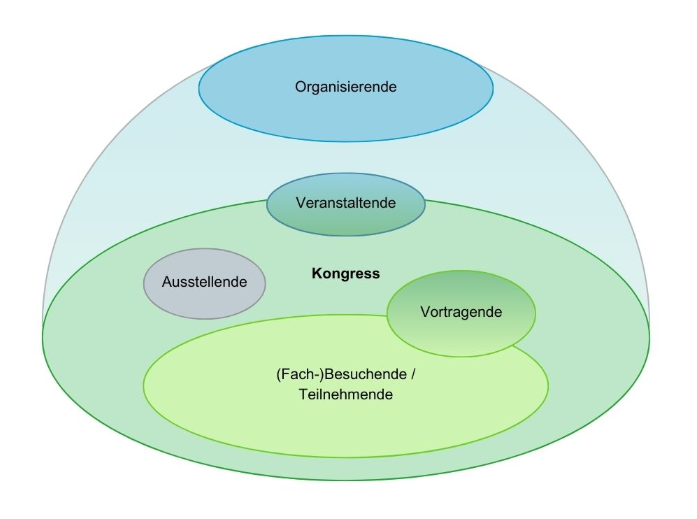
Dorothea Boltenhagen: In order to develop a sustainable congress format, all those involved in a congress were surveyed.

In the first part of the empirical study, I conducted personal in-the-moment interviews with almost 60 representatives from the group of participants. The aim here was to find out the advantages and disadvantages of the three different formats, virtual, hybrid and face-to-face. The clear result was a negative attitude towards the virtual component.
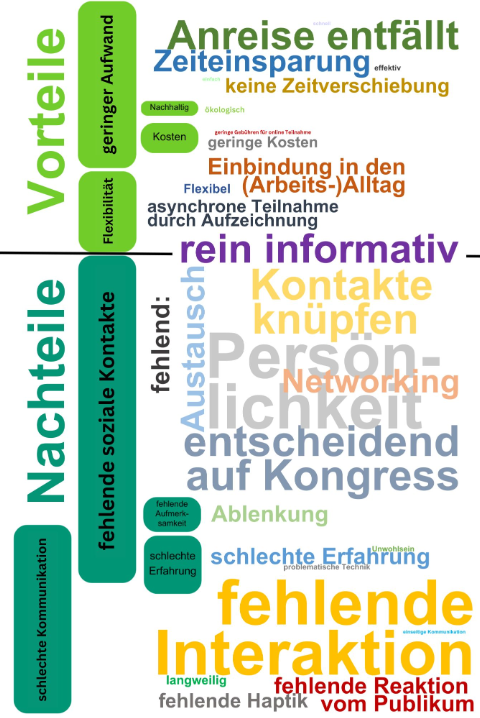
Based on the results of this survey, I then conducted expert interviews with organizers and event hosts to discuss possibilities for virtual and hybrid events. Here, too, a critical attitude towards purely virtual events emerged. This contradicted the results of my literature research. Hybrid events were also viewed skeptically, mainly due to the high effort and costs involved. The most sustainable format is therefore the face-to-face event. However, individual elements of the virtual component should be taken into account in order to be able to support motivational factors of underlying motivation theories (autonomy, competence, social integration; expectations and instrumentality) more consciously.

Recommendations for action derived from these results provide approaches for making scientific congresses more attractive and motivating interested parties to participate. Existing business models of congress venues can thus be reconsidered.

TTR: What specific recommendations for action do you make in your Master's thesis?

Dorothea Boltenhagen: My recommendations are aimed at organizers and hosts of scientific congresses. I can recommend the face-to-face format, as a virtual component is not or only marginally accepted by participants - both at national and international scientific congresses. However, the presentations should be recorded and made available online afterwards. A live broadcast is not necessary. If it is not possible for speakers to be on site, online feeds can be maintained to promote the transfer of knowledge. A key recommendation is to consciously promote the opportunity to network. Specifically, I recommend publishing a list of participants in advance in real time using an app. Individually created profiles make it easier to search for interesting contacts and a meeting on site can already be arranged in the chat. A final recommendation for action is the sustainable design of the event on site. Although I did not discuss this topic specifically in the paper, it became clear that the sustainability aspect is not relevant for visitors. It is therefore up to the organization to make an event as sustainable as possible. What financial options are available in this regard must be investigated in further research.

Dorothea Boltenhagen

During a longer stay abroad, Dorothea Boltenhagen developed a strong interest in tourism. Her path eventually led her to the MCI in Innsbruck, where she focused on strategic management as part of her Master's degree in Entrepreneurship and Tourism. During her dual bachelor's degree, she already accompanied the company Meine Welt Reisen GmbH and gained valuable knowledge and experience. She has been with the company since it was founded and is now fully dedicated to sales and strategic management.

Dorothea Boltenhagen on LinkedIn

Master thesis supervision: FH-Prof. MMag. Raphaela Stadler, PhD

Thesis
MICE0
MCI Tourism

Prepared for what lies ahead in tourism