

Prepared for what lies ahead in tourism
Stay up-to-date with current, independent statistics and information on tourism in the Alpine region.
 Research

F.acT: Why is this topic relevant for the Tyrolean tourism industry?

David Plaseller: I think we are all aware of the huge impact tourism has on the Tyrolean economy. The pressure to invest and innovate in the industry was already high before the pandemic and is likely to intensify as the market consolidates. In a highly competitive environment, business model innovations offer a great opportunity to break out of the intense competition where product or process innovations can be easily copied over time. With my master's thesis, I would like to show that innovation in tourism does not always have to go hand in hand with large investment budgets.
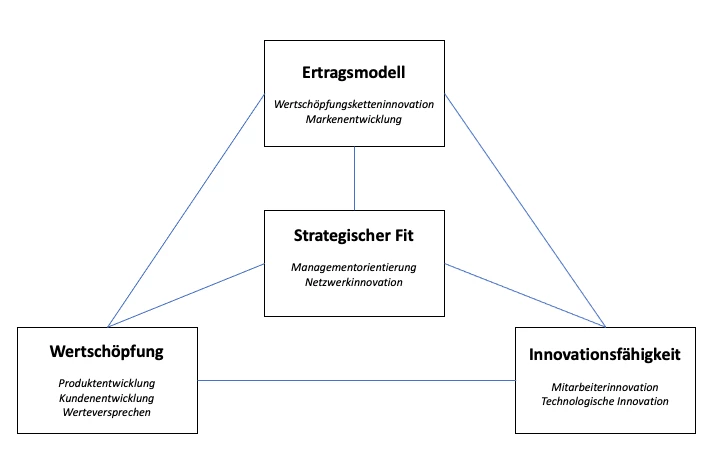
First, I would like to briefly explain what is meant by business model innovation. Put simply, business models explain the business logic of a company. They explain how companies are able to create value for their customers and subsequently monetize it. In contrast, business model innovation is about the so-called reconfiguration of tangible and intangible assets (resources) and the capabilities to use them (competencies). In other words, business model innovation consists of a group of organizational variables that are interconnected to support the intended strategy. To explain these variables, I have developed a model to capture and measure business model innovation. The model consists of four core variables that are constantly interrelated.
F.acT: What are the core results of your work and what significance do they have for the hotel industry?
David Plaseller: The study underlines that business model innovations can be a decisive success factor for companies in the hotel industry. In the area of value creation, the continuous development of new products and services should be emphasized. Interestingly, the choice of revenue model has the least influence on perceived success. The introduction of new pricing strategies even has a rather negative effect. In the area of innovation capability, the exchange of ideas and open and cross-departmental communication are desirable. Those companies that are able to adapt quickly to new conditions and are well networked within the destination consider themselves to be particularly successful. Recognizing and seizing opportunities have the greatest influence. The results also confirm that the hotel industry tends to be risk-averse.
F.acT: What specific recommendations for action do you make in your Master's thesis?
David Plaseller: The construct of business model innovation can be very abstract. However, it is not necessary to focus on all variables. A mix of methods from the measures mentioned below, which are defined top-down and checked for their implementation, is sufficient to successfully implement business model innovations.
In the area of the revenue model, it is strategically wiser to focus less on potential cost savings, the identification of new revenue sources or the development of new pricing strategies and invest more in guest loyalty and regular customer management. In addition, a clear brand strategy and positioning should be pursued.
Extrinsic motivational factors such as a balanced reward system or training opportunities do not have a positive impact on success. This finding suggests that the focus must be on promoting a positive corporate culture. A corporate culture should be created that encourages the exchange of ideas and open, cross-departmental communication.
In times of complexity, it makes sense to create an agile organizational structure that can react quickly to change. An organization with a high transformation capability consistently implements determined renewal activities by assigning responsibilities, providing resources and ensuring that employees have the new knowledge they need.
In conclusion, it must be said that entrepreneurship is not linear and that unexpected opportunities often arise that could not have been planned for beforehand. Opportunity intelligence is the ability to recognize, exploit and create opportunities. To do this, old thought patterns must be discarded. Entrepreneurs should not frantically try to maintain control over their company, but allow chance to happen. Opportunities can only be recognized if the company is aware of its goals and strengths. Companies develop opportunity intelligence on their own initiative by keeping up to date with promising offers and technologies and regularly observing and evaluating customer needs.