
Prepared for what lies ahead in tourism
Stay up-to-date with current, independent statistics and information on tourism in the Alpine region.
 Inspiration
Podcasts have been growing in popularity for several years now - and in many different segments, such as true crime, comedy, leisure & lifestyle, reports and current news formats. According to Statista, one in four people in Austria and Germany regularly listen to podcasts. The increasing number of listeners also makes podcasts interesting as advertising platforms. In 2019, advertising revenue amounted to 71 million euros in Germany and 503 million US dollars in the USA - and the trend is rising.
But why is listening so popular? And how can you listen to a destination? Let's start here with findings from research.
More than 10 years ago, Jham et al. (2008) defined podcasts as "media files that are distributed over the internet and can be played on computers or portable devices such as iPods or other digital audio players." Nowadays, however, the most popular playback devices for podcasts are by far smartphones. But why do we "only" listen when we also have visual media at our disposal? McClung and Johnson (2009) see the key factors as being very similar to other media: entertainment and uncomplicated listening at the touch of a button, whenever and wherever you want. In a study on Nobel Prize Talks, Swiatek (2018) describes the podcast as an "intimate bridging medium". The podcast medium creates intimacy between listeners and thus bridges physical distance. This effect has also been researched in a tourism context. Kang and Gretzel (2012) describe the human voice as particularly suitable for creating social proximity and presence and thus creating positive tourist experiences.
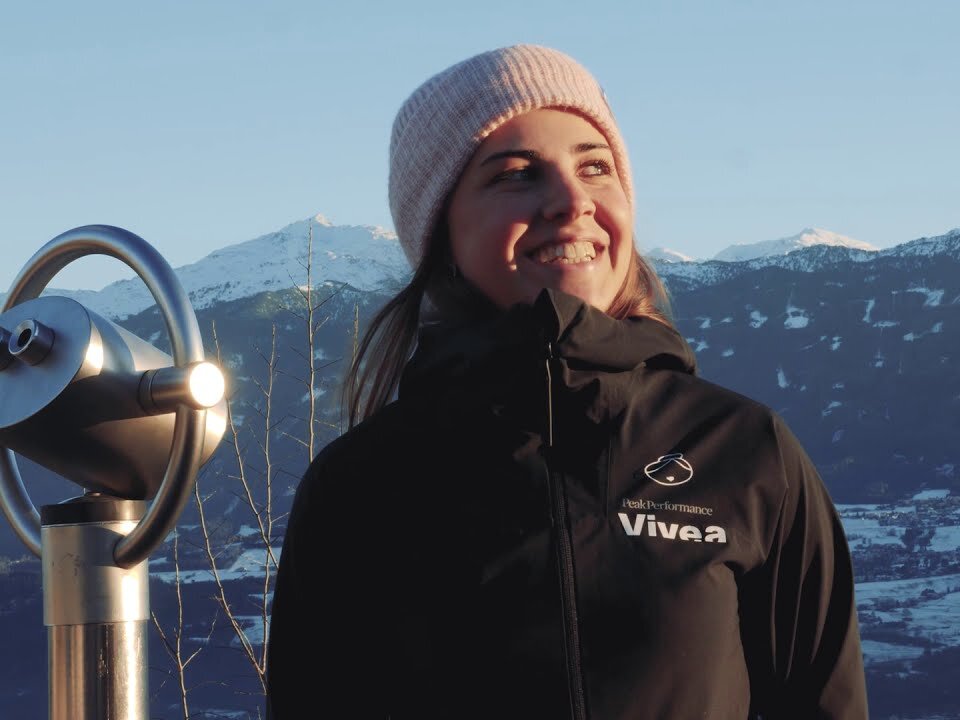
But how can you listen to a tourist destination? We asked around in the truest sense of the word and paid a virtual visit to the team behind the podcast "How to..." from Innsbruck Tourismus: Christopher Steger, Head of Digital Communication & Online Marketing at Innsbruck Tourismus, Matthew Clark, Blog and Social Media Manager at Innsbruck Tourismus, Sabrina Engl, speaker and co-founder of the podcast, and Christian de Zottis from "Stubnhockern", who is on board with podcast know-how and the technical implementation.
"In the beginning, the podcast was almost a transfer of ideas between me and Christopher," says Sabrina. "Christian and I had already talked about it and we wanted to implement the ideas with a strong brand in the region." In the editorial meeting at Innsbruck Tourismus, the idea of a podcast was also already in their heads. It was important to everyone that the added value remained in the region and was not outsourced. And so the idea quickly became a podcast.
The podcast's motto is no coincidence, but a well-considered mixture of podcast and destination marketing. "How to become..." invites personalities from Innsbruck to talk. This combines the original form of the podcast, a stimulating conversation and exciting discussions, with the love and authenticity of the region. Each guest's "favorite place" also provides an insight into the region - without any advertising or sponsorship.
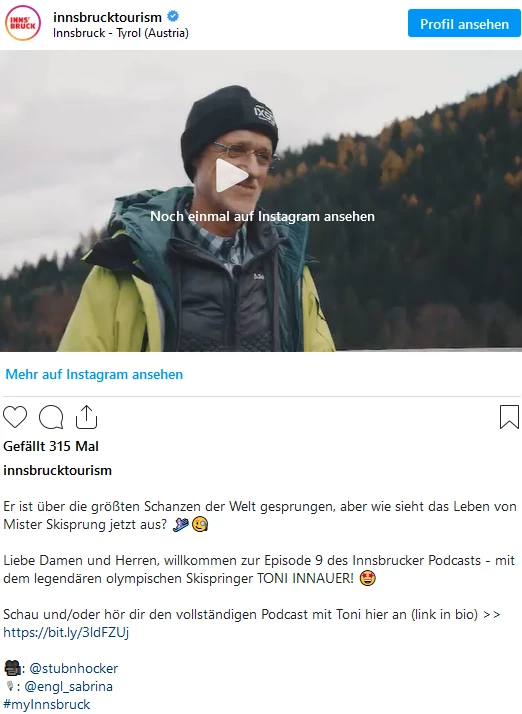
You can find the video on Instagram here.
"Multipliers, such as well-known personalities from the region, are important for reaching the target group and regular listeners," says Christian. The target group is primarily the German market due to the linguistic proximity. However, the local population can also get to know new facets of the region. "It was important to us not only to include the tourist aspect in a striking way, but also to make it authentic and take the locals with us. Our channels appeal to tourists, but the locals are also a big part of it," says Christopher.
However, if you want to start a podcast, you also need resources. "Someone has to take care of it to keep it running. You need the food, the content and the time to make it happen," emphasizes Christopher.
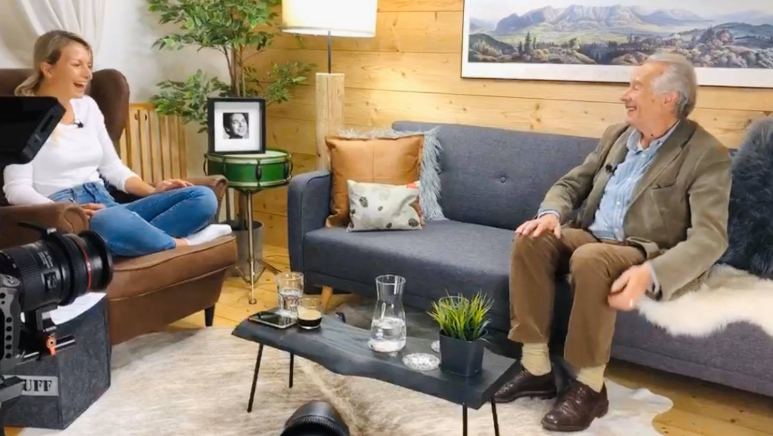
But how is a podcast like this created? "In principle, it's a lot of organization and networking at the beginning," says Sabrina, "but most of the guests were immediately on board and motivated because it's a slightly different interview than on ORF or in other media." The personalities were selected at the beginning of the concept and testimonials from Innsbruck Tourismus were also included. "It is important to us to convey a feel-good atmosphere. Not because we're afraid of offending, but we don't want to convey any political discussions or controversies," says Christian. Felix Mitterer from the Piefke saga was allowed to come anyway. The aim of the podcast is to have a conversation and not an interview. This usually works quite well and is always very spontaneous. "There's always a bit of small talk beforehand to get people talking. But you have to be careful that the good stories don't already come," smiles Sabrina. The set is a very cozy room where you can only feel comfortable. "Part of the concept is that there is no briefing. We can cut things out afterwards if something goes wrong. This gives guests an atmosphere where they can feel safe and comfortable," says Christian. "But we've only actually cut a small part twice in new episodes," he recalls.
The "How to become..." podcast is not only available to listen to, but also to watch. This adds value to the diversity of marketing channels. In addition to audio platforms such as Spotify, it can also be used on platforms and channels that focus more on visual formats, such as Facebook, Instagram or YouTube. In addition, guests can not only describe their favorite places, but also show them off. This is a great advantage, especially in destination marketing. "We in the online team also tend to be more visual ourselves, so it's also closer to us personally. And the moving image simply provides us with good traffic to Innsbruck Tourismus and to the podcast itself," says Christopher, explaining Innsbruck Tourismus' perspective. "We can also use it to address an additional target group, but of course that also leads to problems," explains Christian. "It's also an advantage with the personalities. You then have a face for the personality and can immediately imagine more," adds Sabrina.
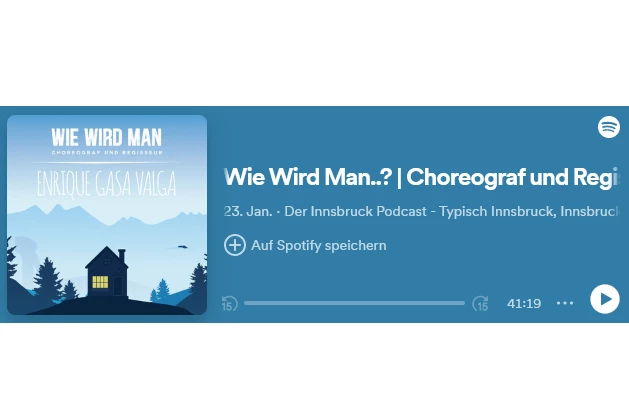
You want to listen to the "How to become ..." podcast yourself? Then click here:
Click here for the podcast.
Sources:
Jham, B. C., Duraes, G. V., Strassler, H. E. & Sensi, L. G. (2008). Joining the Podcast Revolution. Journal of Dental Education, 72(3), 278-281. doi.org/10.1002/j.0022-0337.2008.72.3.tb04493.x
Khang, M. & Gretzel, U. (2012, April 1). Effects of podcast tours on tourist experiences in a national park. ScienceDirect. linkinghub.elsevier.com/retrieve/pii/S0261517711001075
McClung, S. & Johnson, K. (2010). Examining the Motives of Podcast Users. Journal of Radio & Audio Media, 17(1), 82-95. doi.org/10.1080/19376521003719391
Statista. (2020). Podcasts.de.statista.com/statistik/studie/id/50128/dokument/podcasts/
Swiatek, L. (2018). The Podcast as an Intimate Bridging Medium. Podcasting, 173–187. doi.org/10.1007/978-3-319-90056-8_9