

Prepared for what lies ahead in tourism
Stay up-to-date with current, independent statistics and information on tourism in the Alpine region.
 Inspiration
Megatrends differ from other trends such as socio-cultural trends, technology trends, consumer trends or zeitgeist and fashion trends, even if they are assigned to the other trend categories. They play a decisive role and have a strong, epochal character.
Megatrends can be recognized and defined on the basis of four criteria:
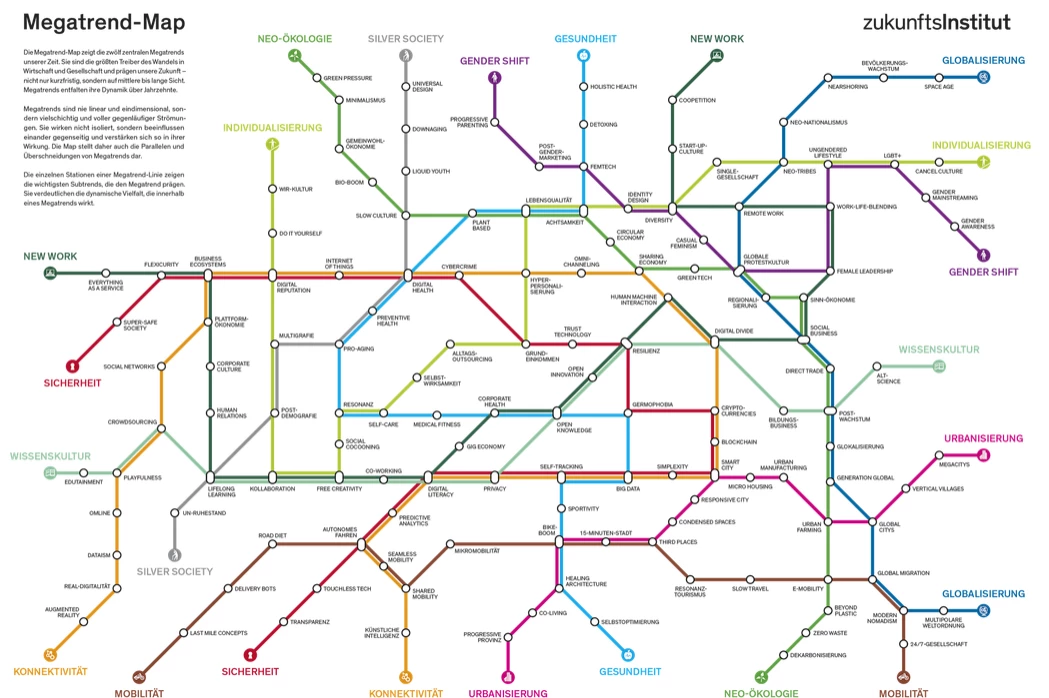
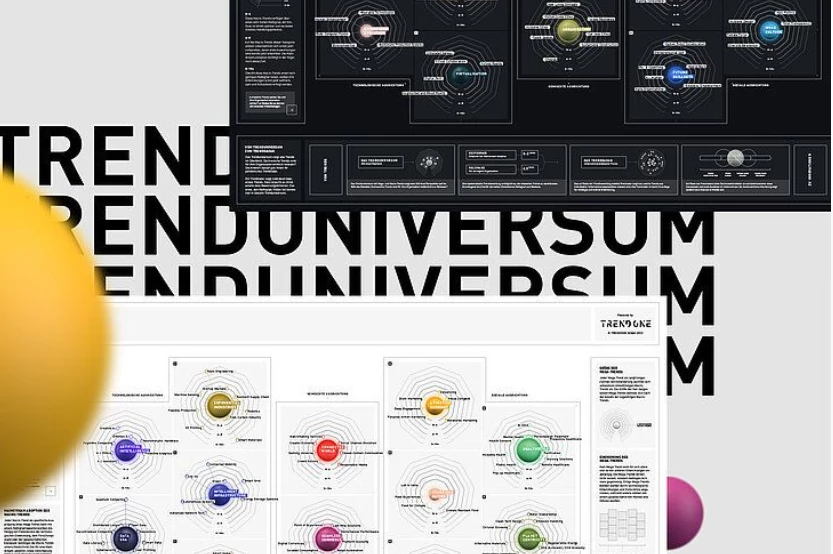
Zukunftsinstitut GmbH from Frankfurt and TRENDONE GmbH from Hamburg have each summarized the current megatrends in a map. The Zukunftsinstitut has summarized the current developments into a total of 12 megatrends and TRENDONE into 17.
Here you can download the 12 megatrends summarized by the Zukunftsinstitut in a map.
The following is an initial impression of individual megatrends:
Urbanization:More and more people around the world are being drawn to cities, making them one of the most important living spaces of our future. Cities are much more than just places, they are complex, dynamic systems, essential problem solvers for global challenges, connecting points of a globalized economy and powerful political players.
The coronavirus pandemic has intensified the desire for a decelerated urbanity. People are longing for the "rural idyll" and increasingly intend to integrate it into the urban space. The aim is to combine the best of both worlds in the "new urbanity". A megatrend in constant motion.
More details on the urbanization megatrend here.
Individualization
The megatrend of individualization clearly reflects the central cultural principle of our time: Self-realization within a uniquely designed individuality. The relationship between "I" and "we" will take on a new shape in the future. Communities will become increasingly important and reshape individualization.
At the same time, identity design will remain a central feature of individualization. The formation of a personal identity is the prerequisite for a self-confident individual capable of making decisions.
The development of individualization is in full swing and some questions remain unanswered: How far can individualization go? To what extent can a social culture differentiate itself - into more and more lifestyles, values, sub- and sub-cultures?
More details on the megatrend of individualization here.
Mobility
The future theses on the mobility megatrend predict the following:
Shared mobility is also changing land use, for example by reducing the amount of space required for parking. In a city where infrastructures are shared, speeds are also being equalized - the trend towards slow travel. Mindfulness is also the focus of the future of travel and increasingly demands more sustainability and quality of life. The trend towards mindful resonance tourism, on the other hand, demands more and more intensive travel experiences and transformative vacation experiences. Travelers want to enter into a relationship with the local and the environment. This leads the tourism industry back to its core business, hospitality - a friendly offer of quality of life and successful relationships.
More details on the mobility megatrend here.
Neo-ecology
Environmental awareness and sustainability are increasingly changing from an individual lifestyle to a social movement and thus to a central economic factor that has a strong influence on all industries. The neo-ecology megatrend is establishing a new set of values.
People should be seen as part of nature. In this view, too, humans intervene in the natural system. In order not to weaken it further, but to make it more resilient, we must learn to shape nature in a meaningful way. The aim is to secure the future, for example by demanding completely sustainable forms of tourism.
The trend is moving towards a higher quality of life. "Better instead of more" is becoming the guiding principle of future strategies.
More details on the neo-ecology megatrend here.