

Michaela Gasser-Mark is an expert in the field of sustainability and tourism. She works primarily on projects that promote the sustainable development of destinations and regions, with a particular focus on environmentally friendly mobility concepts, resource conservation and the integration of regional values. Her aim is to find a balance between economic success and ecological responsibility and to integrate local stakeholders into sustainable change processes.

F.acT: The majority of emissions in tourism are caused by mobility. What potential do you see for Alpine tourism regions to make a positive contribution here?

Michaela Gasser Mark: Mobility is not only the biggest source of emissions in tourism, but also the area with the greatest potential for savings. Measures such as the promotion of public transport by bus and train or low-emission mobility options can make a significant contribution to reducing CO₂ emissions. For example, it is important that businesses or destinations promote environmentally friendly travel options, promote active on-site mobility, expand alternative e-mobility (e-bikes, scooters, e-car sharing) and possibly also consider car-free villages and seasons. Across the country, it is important to consider traffic optimization through better connections to the tourist valleys, as well as bike and park & ride systems.
A good example of how destinations can start with low-emission travel is the direct winter train "Snälltaget" from Malmö to Zell am See. Calculated on a fully occupied train with 600 winter sports enthusiasts, the savings potential here is 180 tons of CO2 - the equivalent of the annual electricity consumption of 50 households.
F.acT: What are the main challenges in the development of sustainable mobility concepts in rural areas?
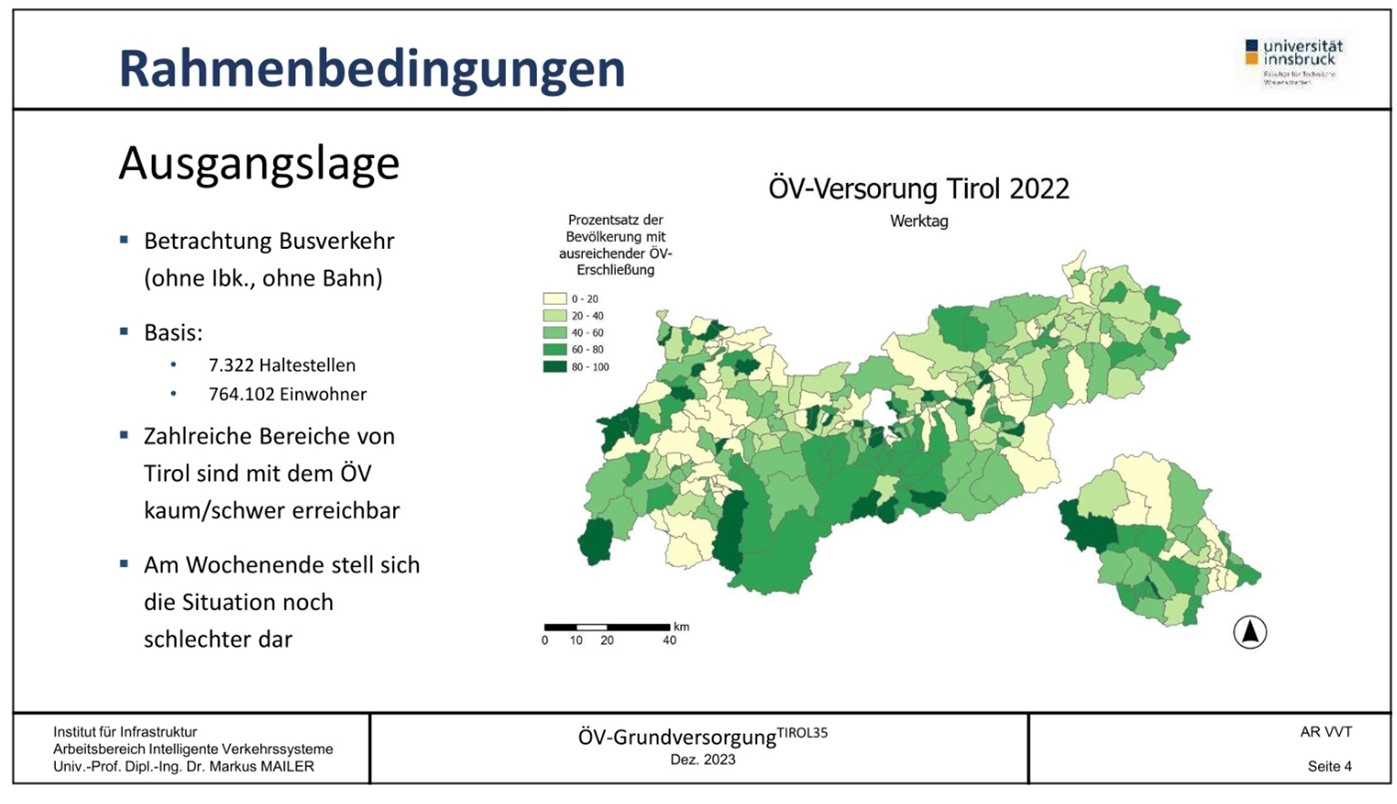
Michaela Gasser Mark: Rural areas, especially the Alpine region, have experienced strong economic development thanks to tourism. However, many tourist destinations are located in remote valleys without direct rail connections, which is why well-developed local public transport is essential. Creating such connections poses major financial challenges for municipalities, tourism associations and regions. At the same time, a good connection not only increases accessibility for guests, but also the attractiveness for the local population. However, in addition to the costs, there are other challenges: low demand, seasonal fluctuations, topographical restrictions (e.g. dedicated bus lanes or cycle paths), long distances and a lack of connections make efficient planning difficult. In addition, many people are used to using their cars and it takes time to change their mindset. All in all, these challenges make the economic viability of public transport more difficult. While a frequent service is easy to implement in cities, an hourly connection over 30 kilometers in an alpine valley requires considerable investment and additional innovative solutions such as on-demand transport or smart mobility concepts.
F.acT: As mobility coordinator for the Landeck district, you have taken measures to meet these challenges. Can you give us some examples?
Michaela Gasser Mark: First of all, it was important to record the status quo at the central hubs, particularly at Landeck railroad station and at bus terminals and transfer hubs in the Upper Court. Through numerous discussions with mayors, tourism associations and local decision-makers, two projects have already been initiated.
The first project, "Mobile Prutz", aims to reconnect the village center to public transport and at the same time promote active mobility. A traffic planning office is currently working on a comprehensive analysis in order to develop optimization options and concrete measures. The concept should be ready for implementation by the beginning of summer.
In the second project, the digitalization of the Zams/Landeck bus station, the focus was on rapid improvements for passengers. In order to provide better orientation, e-paper displays will be installed on the bus platforms over the next few weeks and a large digital display board for departure times will be implemented. It is crucial that not only the local municipality but also all tourist regions in the district contribute to the funding. In a next step, the entire station area is to be further upgraded in order to sustainably increase its attractiveness for all users.
F.acT: How do you see the future development of public mobility in Landeck and Tyrol and what measures should still be taken?
Michaela Gasser Mark: Tyrol is on the right track as far as public transport accessibility is concerned. Nevertheless, there are still major challenges in the Landeck district that require more attention. Improvements are needed above all in better timetabling right into the remotest valleys, making junctions and stops more attractive and giving greater priority to walking and cycling. The expansion of the rail network, which is often desired but still a long way off, also remains a key issue. Leisure mobility is particularly close to my heart, as the local population in particular still needs to change its mindset in order to make greater use of sustainable alternatives to the car.