
Prepared for what lies ahead in tourism
Stay up-to-date with current, independent statistics and information on tourism in the Alpine region.
 Project
Leisure time means relaxation, activity, adventure and a balance to everyday working life. In order to meet these needs, it is particularly important for people with disabilities to obtain reliable and detailed information in advance. Over the years, the advent of digitalization has opened up various possibilities for providing comprehensive information, which we are addressing with the "NOLIMITStirol" project.
As part of the research work at the University of Innsbruck, it was found that although there were various platforms for inclusive tourism in Tyrol, these were mostly set up by the various operators in isolation and without consultation. This in turn led to a lack of uniform and consistent evaluation. In Tyrol, there was a lack of clear and comprehensible quality criteria for barrier-free alpine infrastructure such as hiking trails, walking paths, cycle paths, etc., which enable guests with disabilities to assess the (current) suitability of the offers for their personal requirements and needs.
Aim: Combining different perspectives with the inclusion of local knowledge
In cooperation between the University of Innsbruck and four tourism associations in Tyrol, the development of a trustworthy, comprehensive tour portal for people with disabilities was promoted. This initiative was supported by ÖZIV Landesverband Tirol, Austria's largest organization for people with disabilities. NOLIMITStirol pursued the basic idea of making it easier for guests and locals with disabilities to plan tours in Tyrol using digital aids. In contrast to previous digitalization measures, this project was characterized by close cooperation between a wide range of interest groups and was designed to create great added value for people with disabilities by providing the most dynamic information possible (logging, trail conditions, seasonal changes, etc.). The "current, local situation" factor therefore also played a central role in this project. The "NOLIMITStirol" project deliberately took a new approach and, in addition to sound scientific support, focused primarily on standardization, central data provision, the use of the latest technologies and the inclusion of local knowledge. Thanks to the collaboration between the university, a digitalization expert, five tourism associations, a national marketing institution, an organization for people with disabilities and a wheelchair user as an expert, a wide variety of perspectives contributed to the successful development of the project.
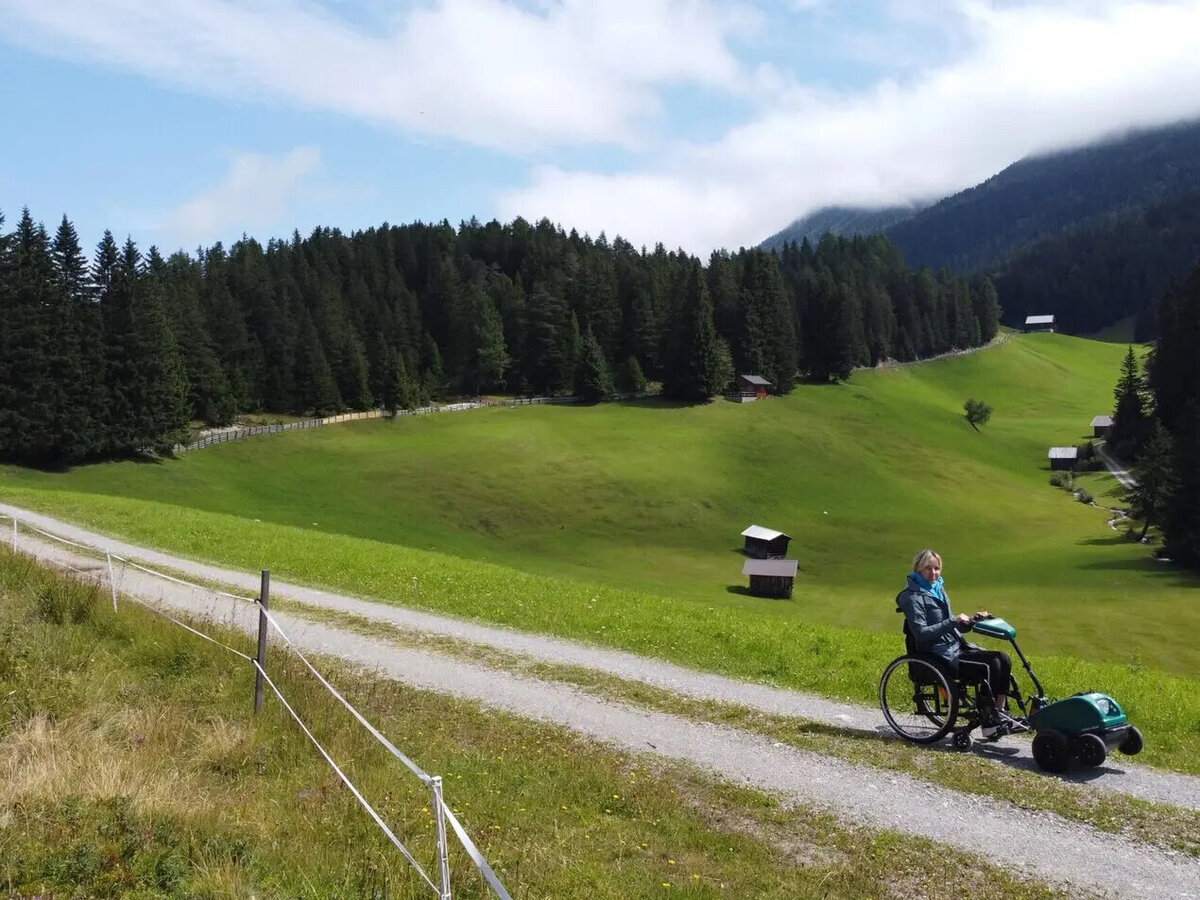
Once the interests of all those involved had been ascertained, an initial prototype of the innovative information platform was created. This was equipped with an exemplary tour and presented. During a two-day workshop of all project participants, the platform was evaluated, suggestions for improvement were made and the creation of the most objective possible survey of hiking trails in the various regions of Tyrol was pushed forward. Once all the tours had been entered into the final platform, the new, innovative "NOLIMITStirol" platform was presented. This project provided a good basis for further work, particularly for the partner TVBs "Wildschönau", "Innsbruck", "Pitztal" and Kaunertal. A variety of implications for the presentation and evaluation of potential hiking destinations for people with mobile disabilities were derived from the project.