

Research

Sensory design for events

What role do the different senses play at events?
As part of her Master's thesis, Johanna Bolter interviewed 24 visitors to four different events about their sensory experiences on site.
Thesis: Johanna Bolter (2024)

F.acT: Why is this topic relevant for the Tyrolean tourism industry?

Johanna Bolter: The Tyrolean tourism industry is characterized by a variety of events, ranging from major sporting events to cultural festivals and culinary experiences. The five senses - sight, touch, hearing, smell and taste - play a decisive role here. By catering to the individual senses of visitors, event organizers in Tyrol can create a stronger connection between visitors and the venue. This not only contributes to a positive perception of the event, but also to a positive image of the Tyrol region as a whole.

F.acT: What are the core results of your work and what significance do they have for tourist destinations and businesses?

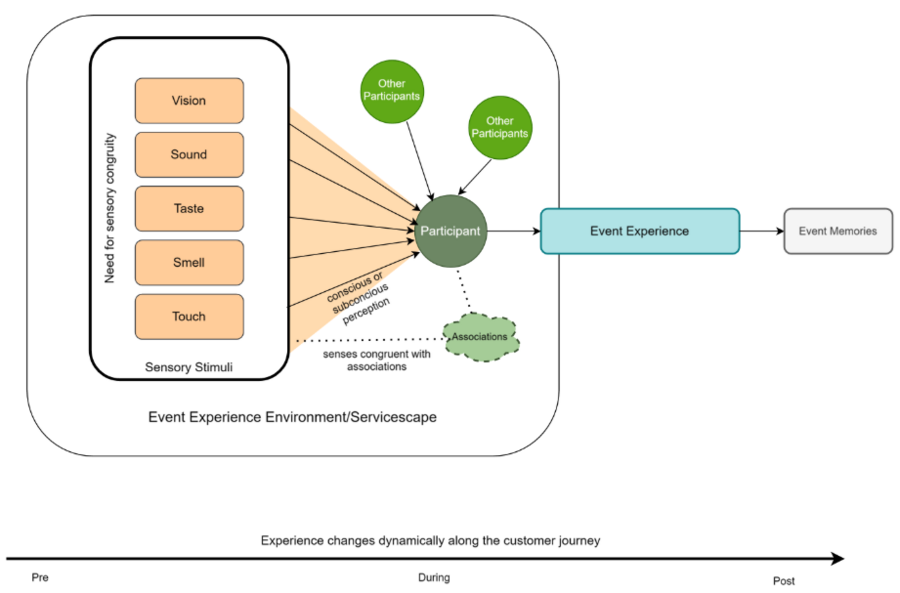
Johanna Bolter: The results of the work have shown that sensory perception has a significant influence on the perception of events. All five senses - sight, touch, hearing, smell and taste - play a role here, although the importance of the individual senses can vary depending on the type of event. A key finding is that a congruent design of the sensory elements ensures an authentic and coherent experience. This means that all sensory stimuli should be coordinated and match the event theme and location. For example, the combination of atmospheric music, impressive panoramas and regional delicacies can create an unforgettable atmosphere. These findings are of great importance for tourist destinations and businesses. The targeted design of sensory perception can turn events into a real highlight and increase visitor numbers. This also contributes to the positive perception of the destination and its offers.

The research results made it possible to summarize and illustrate the sensory experience of event participants in a graphic:

F.acT: What specific recommendations for action do you make in your Master's thesis?

Johanna Bolter: To increase the quality of the event experience, organizers should take the following aspects into account:

  • Holistic design: all five senses should be harmonized to create a coherent overall experience.
  • Customization: The design should be tailored to the specific event and target group.
  • Emotional connection: Events should arouse emotions and leave visitors with memories
  • Interactivity: Visitors should be actively involved in the event.

By implementing these recommendations, event organizers can create unforgettable experiences and increase the satisfaction of their visitors.

F.acT: What special features emerged in your research work?

Johanna Bolter: The empirical part of the master's thesis used the so-called photo-elicitation method, which integrates visual elements into the research. Interviews were conducted with 24 event visitors who attended one of four different events. By combining photos and interviews, the method was able to stimulate the participants' ability to remember in order to obtain detailed information about their perceptions. Compared to traditional interview methods that rely solely on verbal recall, the photo-elicitation method was able to minimize distortions caused by memory errors and articulation difficulties. The use of this method shows great innovation in sensory research in the event industry.

Johanna Bolter

Johanna Bolter, born in the Bregenzerwald town of Alberschwende, moved to Innsbruck for her studies. There, she first obtained a Bachelor's degree in "Business Management in the Tourism and Leisure Industry" and then completed her studies with an English-language Master's degree in "Marketing Management and Tourism", also at MCI Tourism.

Parallel to her Master's degree, Johanna worked as an event manager at the Tyrolean event agency "eventfactory". Here she organized numerous incentives and other corporate events. After two live assignments at Austria House at the Olympic Games, most recently last summer in Paris, Johanna decided to immerse herself further in the Olympic world and will now start working in marketing for the Austrian Olympic Committee in November 2024.

Johanna Bolter on Linkedin

Thesis supervisor: FH-Prof. MMag. Raphaela Stadler, PhD

Thesis
Events
Sensory Design
MCI Tourism

Prepared for what lies ahead in tourism