Prepared for what lies ahead in tourism
Stay up-to-date with current, independent statistics and information on tourism in the Alpine region.
 Research

F.acT: Why is this topic relevant for the Tyrolean tourism industry?

Alexander Ziwes: The tourism sector in general and Alpine winter tourism in particular are in a state of flux. This change has accelerated in recent years in particular, due to climate change and other problem areas. As the home of alpine skiing - and therefore a predestined skiing destination - Tyrol benefits enormously from ski tourism. It is therefore all the more important for the Tyrolean tourism industry to deal with these changes and find appropriate solutions. My research primarily surveyed stakeholder opinions in order to record not only the ecological and economic effects, but also socio-cultural effects and the associated attitudes towards the development of ski tourism. Especially in the Alpine region, where living and tourism areas often merge, it is all the more important to maintain and promote a positive attitude towards tourism in order to ensure sustainable and long-term tourism success.
F.acT: What are the core results of your work and what significance do they have for tourist destinations and businesses?
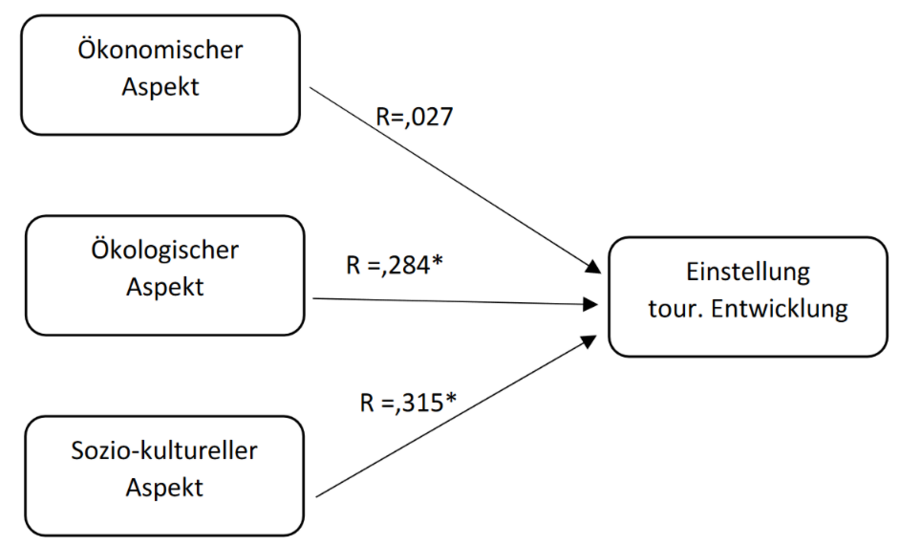
Alexander Ziwes: As briefly outlined above, economic, ecological and social factors in particular were surveyed on the basis of two groups - locals and guests. The results showed that attitudes towards the development of ski tourism are significantly more dependent on socio-cultural and ecological aspects than on economic ones. This is the case for both groups surveyed. In other words: the better the socio-cultural effects of ski tourism are assessed, for example, the more positive the attitude towards the development of ski tourism, regardless of whether they are guests or locals. This finding is also confirmed by the underlying theory (see Raworth's doughnut model; see model). This in turn means that tourism service providers and businesses should focus more on these aspects in order to ensure sustainable success.
F.acT: What specific recommendations for action do you make in your Master's thesis?
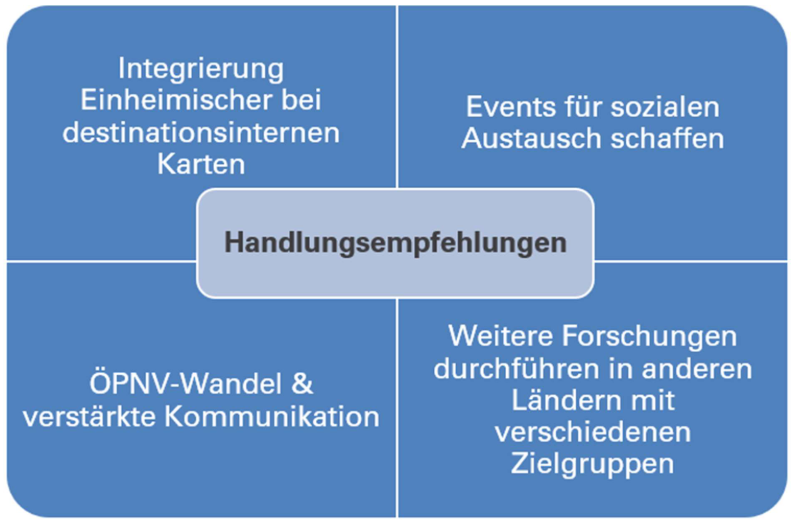
Alexander Ziwes: As socio-cultural and ecological aspects have a significant influence on attitudes towards tourism development, the focus is on recommendations for action regarding these factors, some of which are briefly presented here. Uniform communication on sustainability makes sense for different target groups, regardless of origin, gender or age. Negatively connoted effects should be taken into account in communication and strategies to minimize them should be proposed. The awareness of DMOs about the negative effects of local tourism and their minimization are crucial for the development of a destination. Social interaction between locals and guests should be encouraged as it has a positive impact on tourism development. Events that bring guests and locals together could promote this exchange. The choice of transport shows that the majority travel by car, which emphasizes the need for more resource-efficient mobility solutions. The expansion of environmentally friendly measures such as electric buses and the inclusion of the local population in destination maps could have positive effects. Marketing measures should emphasize ecological and socio-cultural aspects in order to create a positive mood.