Prepared for what lies ahead in tourism
Stay up-to-date with current, independent statistics and information on tourism in the Alpine region.
 Inspiration

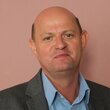
F.acT: ÖZIV Tirol stands up for people with disabilities with the motto "Diversity connects". What services are offered by this organization?

Hannes Lichtner: We try to be the point of contact for various challenges in connection with the topic of disability. To this end, we offer a wide range of advice and support services, such as
Our aim is to work together with and for people with disabilities or chronic illnesses to find solutions to various issues in the interests of independent and self-determined participation in society.
F.acT: How does ÖZIV Tirol differ from other organizations for people with disabilities in the state?
Hannes Lichtner: It is not the only characteristic, but from the very beginning, when it was founded in 1961, self-representation was an important basic principle of ÖZIV Tirol. In concrete terms, this means that all board functions in the ÖZIV Tirol regional association and in our eight district associations are predominantly occupied by people with disabilities, who set the goals of our organization.
A large part of our work is therefore also supported by the voluntary work of people with disabilities themselves. Our full-time team of currently 15 employees also consists of an inclusive team of colleagues with and without disabilities. Our approximately 2,200 members with various disabilities throughout Tyrol form an important basis.
F.acT: What is your assessment of the current status of inclusion of people with disabilities in Tyrol? What is going well and in which areas is there still room for improvement?
Hannes Lichtner: Austria's ratification of the UN Convention on the Rights of Persons with Disabilities in 2008 provided us with an important guideline for inclusive developments, which in certain areas has led to greater importance and engagement with the topic of inclusion, such as through the development of national and now also state-specific action plans to implement the UN CRPD.
However, we still have a lot of catching up and development to do in many areas, such as inclusive education, barrier-free environmental design and the development of inclusive employment opportunities
F.acT: What are the biggest challenges in the planning and implementation of inclusive facilities?
Hannes Lichtner: In addition to our individual support work, it is also important to us as an interest group to communicate structural problems that we are aware of from our daily advisory work to society and politicians. In addition to our awareness-raising work, we therefore work in various committees and action plans to improve the overall living situation of people with disabilities.
We don't just want to criticize, but also provide expertise and concrete solutions. For example, through our Accessibility Advice Center, where we not only offer specialist advice on barrier-free solutions, but also work on various innovative projects in the field of inclusion, such as the current Community Action Plan on Disability or, together with the University of Innsbruck, in the field of inclusive tourism research.