

Prepared for what lies ahead in tourism
Stay up-to-date with current, independent statistics and information on tourism in the Alpine region.
 Inspiration

F.acT: What is ASTER and what problem is your project trying to solve?

Jasmin Baruck: The sports and outdoor industry is of great economic importance in the Alpine region. Major European brands and manufacturers rely on plastics in clothing, equipment and infrastructure. During production, but especially at the end of the life cycle of these products, considerable amounts of waste are generated. Only a small proportion can be recycled and kept in the cycle as secondary raw materials.
The Standortagentur Tirol is a partner in the Interreg Alpine Space project ASTER, which is co-financed by the European Union and started in September 2024 with a term of three years. ASTER stands for "Alpine Solutions for the Transition of the textile and plastic Equipment industry and the harmonization of interregional 5R strategies" and aims to promote the transition to a resource-conserving circular economy in the Alpine outdoor industry. On the one hand, outdoor textiles and equipment made of plastics are to be made more sustainable and, on the other, the textile and plastic waste generated by outdoor activities in the Alps is to be reduced and better recycled, building on the principles of the circular economy (5R).
In order to achieve this goal, the geographical, legal, technical and political framework conditions for the prevention and management of textile and plastic waste in the Alps are first analyzed (waste management framework conditions, availability of secondary raw materials and the presentation of actors in the circular economy for textiles and plastics).
Furthermore, a cross-regional pilot action was designed, which is led by the Standortagentur Tirol, to support manufacturers and retailers of alpine outdoor textiles in the introduction of circular economy models and the reduction of waste. On the one hand, sustainable, recyclable prototypes of outdoor clothing are to be developed in a collaborative process. On the other hand, new circular business models for repair, reuse, rental models (PaaS) and return systems, which will then be tested on the market, will be designed. This process is being supported by the University of Innsbruck with an interdisciplinary team from the fields of waste management, resource management, materials science and textile research.
In addition, information and networking events as well as training for manufacturers and retailers are intended to raise awareness, build up know-how and strengthen the players in the implementation process.
ASTER thus aims to facilitate the creation of transnational value chains for textiles and plastics, promote the development of business and skills, create knowledge and influence policy and practice towards a circular economy in the Alpine region. The knowledge gained will be made available to the industry.
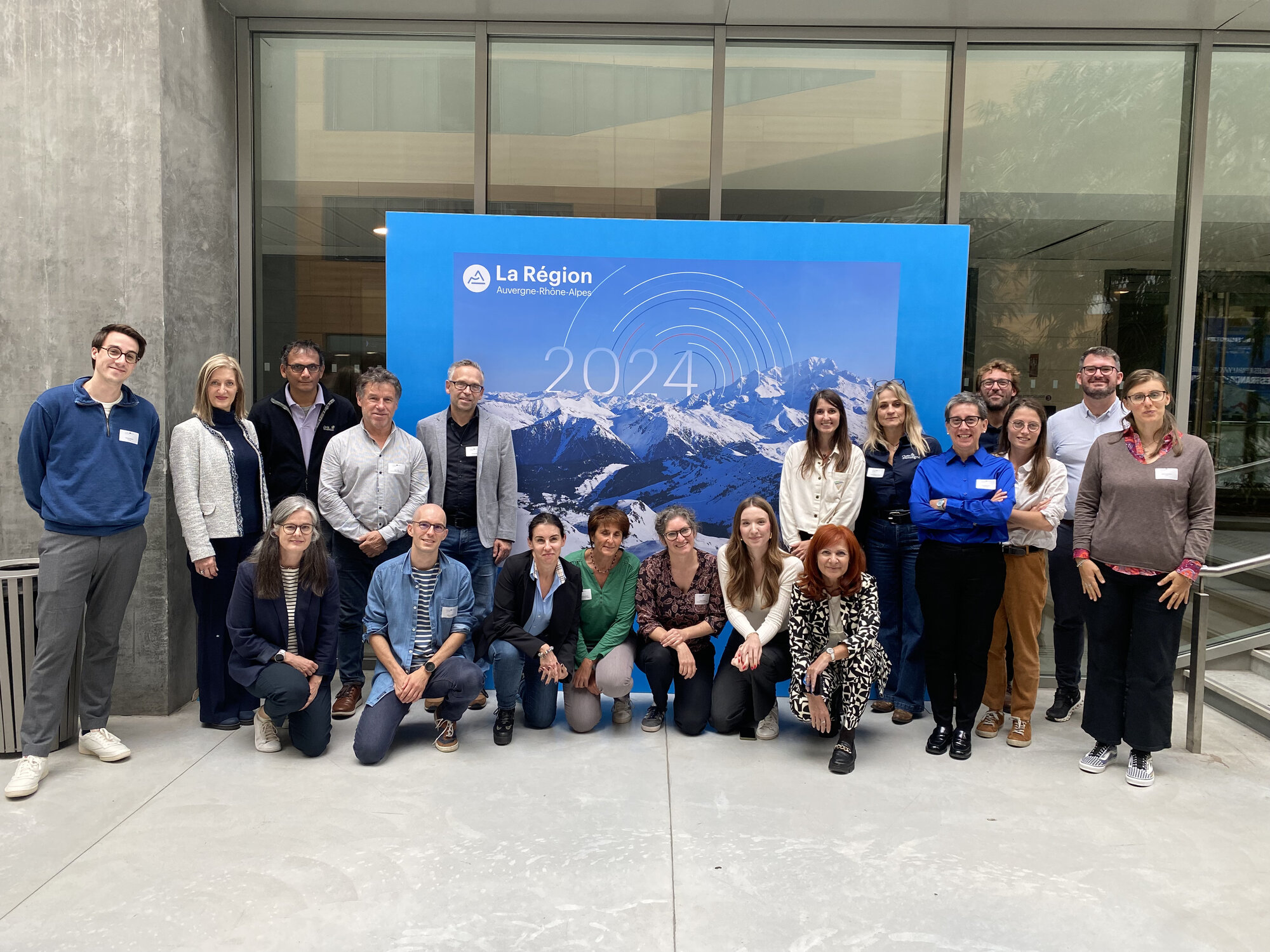
A total of 11 partner organizations from France, Italy, Germany, Slovenia and Austria are participating in the project, which is coordinated by the Auvergne-Rhone-Alps region.
Observers such as the Austrian Association of Sporting Goods Producers and Retailers (VSSÖ), the Austrian Alpine Association, the province of Tyrol (Department of Environmental Protection) and the Tyrolean Re-Use Network noamol are also involved in the pilot project.
F.acT: How is the principle of the circular economy implemented in detail with ASTER for the outdoor and sporting goods industry?
Jasmin Baruck: In order to counteract the problem of waste volumes and their material recycling, the project partners are comparing regional solutions for waste prevention and waste management. They are also analyzing the implementation of framework conditions that support the development of a resource-conserving circular economy in the outdoor industry. Relevant material and waste streams are recorded both quantitatively and qualitatively and geographically in order to assess their potential for the extraction of secondary raw materials. The knowledge gained is used to formulate recommendations for the regional design of suitable framework conditions.
The principles of the circular economy are applied in practice as part of the development of model prototypes for specific products. Manufacturers of outdoor textiles are invited to participate in a collaborative development process that is scientifically supported and includes open innovation formats. As part of this process, not only new products but also circular business models will be developed and tested on the market with customer feedback. The practical application of the 5 R principles - Rethink (Circular Design), Reduce, Reuse, Repair and Recycle - plays a central role here. These principles of the circular economy are intended to reduce resource consumption, avoid environmental pollution and waste and increase value creation and resource efficiency.In addition to avoiding textile waste containing plastic, scalable solutions for the outdoor industry with high customer acceptance are also to be developed.
F.acT: What challenges do you see in implementing the circular economy?
Jasmin Baruck: The circular economy works best when many stakeholders work together. Starting with the questioning of material needs and the design of products through to the recycling of materials, there are challenges that can usually only be solved sustainably in partnerships. The ten so-called R-principles of the circular economy, from Refuse to Recover, offer good guidance here. It is important that entrepreneurs understand how they can earn money and generate added value with the principles of the circular economy. Sometimes this does not require the sale of material things, but rather a service that leads to a positive customer experience.
Designing products to be recyclable requires expertise that is not always available, because it is necessary to look at the entire product life cycle. Framework conditions such as the new Ecodesign Regulation, which also includes a digital product passport, may be perceived as new hurdles. However, they also enable equal opportunities on the European market and offer planning security, as these framework conditions will increase the demand for recyclable products and repair services in the long term. Establishing a circular economy and consumption model is a transformation process. We are only at the beginning in many areas. With the Circular Hub Tirol and its involvement in projects such as ASTER, the Standortagentur Tirol aims to support companies on their path towards a circular economy.
F.acT: What links do you see between your project and the tourism industry? Where are there overlaps or synergies?
Jasmin Baruck: The circular economy is an important aspect for the positive development of tourism, which thrives above all on Alpine culture and nature. Sustainable outdoor textiles enable a special experience of nature. In ASTER, we also want to learn from practices already established in tourism. The "renting instead of buying" business model has proven very successful, for example, in the rental of ski equipment or textiles in the hotel industry. Taking this idea further and offering outdoor clothing and equipment as well as equipment for rent at the vacation destination would conserve resources and make it easier to travel by train, for example. This approach is not entirely new, but the niche for such models is still small at the moment. Our aim is to develop them further and make them scalable. A pilot project in a region would make sense here.