
Prepared for what lies ahead in tourism
Stay up-to-date with current, independent statistics and information on tourism in the Alpine region.
 Inspiration

F.acT: What is the objective of the Compass Snow project, and what key data, assumptions, and models form the basis of the Kompass Schnee project?

Berno Stoffel: The goal of the project is to provide winter tourism stakeholders with a fact-based tool for making strategic decisions regarding climate change, one that supports them in planning future winter sports activities, investment decisions, product development, and marketing strategies.
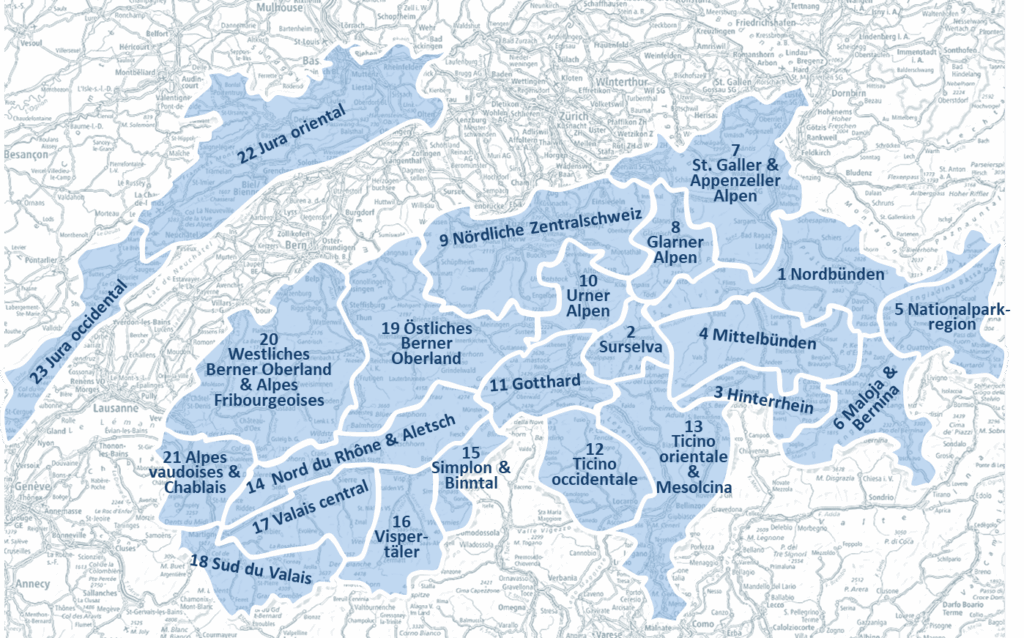
The Snow Compass includes scientific analyses and forecasts from the WSL Institute for Snow and Avalanche Research SLF in Davos (WSL/SLF) on the development of the natural snowpack in 23 different meteorological regions of Switzerland, at various elevations and with different slope orientations. Furthermore, the SLF forecasts the number of hours with sufficient wet-bulb temperature that will be available in these regions for artificial snowmaking, based on data from 280 measuring stations and projecting forward to the year 2050. For its projections of future changes, Kompass Schnee relies on the Klima CH2025 climate scenarios (Klima CH2025).
F.acT: What specific insights and strategic options for action have you drawn from this project to adapt your tourism offerings in the future?
Berno Stoffel: Winter tourism based on snow will still be possible in most regions in 2050, but it will change. Switzerland continues to enjoy favorable natural conditions, with many ski resorts above 1,800 meters above sea level that will still have reliable snow conditions in 2050. Ski resorts at lower elevations will have to cope with greater uncertainty and winters with less snow. This requires proactive planning and adaptability: reorganizing offerings, targeted investments, and differentiated market positioning.
The Snow Compass highlights three clusters of adaptation strategies, all of which are already being implemented in several regions:
F.acT: How exactly are the results from Compass Snow used by ski resorts, destinations, and policymakers?
Berno Stoffel:Many mountain railways and destinations have been working on adapting to climate change for years. Compass Snow supports them with forecasts based on scientific data. In addition, the Compass Snow website features a wide range of good examples of various adaptation strategies to serve as inspiration. Most opt for a combination of different measures across multiple strategies.
Cantons use this data to adapt their funding policies for tourism infrastructure and offerings.