
Prepared for what lies ahead in tourism
Stay up-to-date with current, independent statistics and information on tourism in the Alpine region.
 Research

TTR: Why is this topic relevant for the Austrian tourism industry?

Carolin Scharfenstein: The demand for recreation in natural areas has grown in recent years in particular. Among the ten most frequently cited reasons for a summer vacation in Austria are motives such as mountains, landscape/nature, availability of hiking trails and, for 13 percent, the presence of nature and national parks (WKO, 2021). Sustainable tourism or ecotourism is one of the most sought-after sectors in tourism (Hultman et al., 2015). Even though overtourism has so far been increasingly associated with cities, the increased demand for ecotourism, especially in protected areas, can upset the balance between nature conservation and tourism use (Valdivieso et al., 2015). In addition to ecological sustainability, the satisfaction, loyalty and well-being of visitors can also be influenced by the number of visitors, i.e. crowding. For this reason, I used a questionnaire in my master's thesis to ask visitors to the Hohe Tauern National Park how perceived crowding affects visitor satisfaction.
TTR: What are the core results of your work and what significance do they have for tourist destinations and businesses?
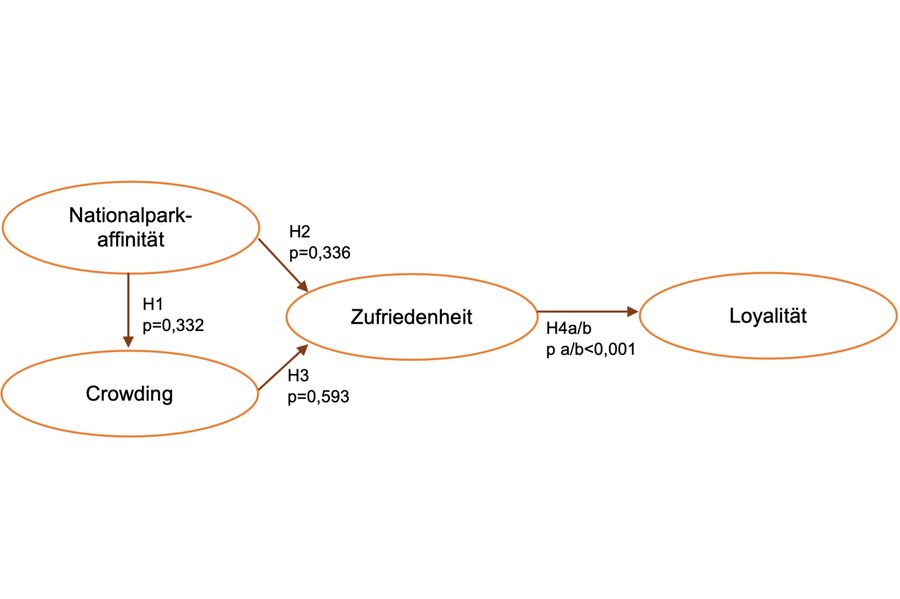
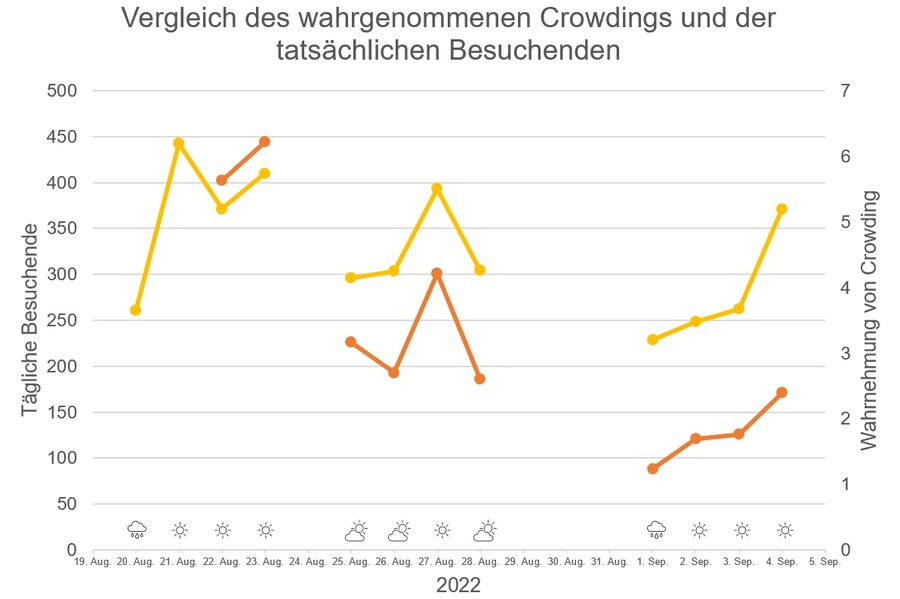
Carolin Scharfenstein: In order to measure visitor satisfaction, the expectations before the visit can be compared with the actual experience. In the Hohe Tauern National Park, visitors' expectations are at least confirmed, if not exceeded. The data collection and evaluation have shown a high level of guest satisfaction with the stay as a whole, but also with all sub-aspects, such as the range of hiking trails. This is also reflected in a high level of loyalty. These results confirm the success of the national park administrations' work to date. In the context of this study, no factors influence overall satisfaction. The influence of crowding and national park affinity, as well as demographic factors and travel behavior were examined. With regard to the number of visitors, other visitors are registered by the guests at the three study locations, but the operation with regard to other visitors is not rated as above-average crowded and therefore not disturbing. This also becomes clear when looking at the feeling of well-being.
TTR: What specific recommendations for action do you make in your Master's thesis?
In practice, it is useful to compare the actual visitor numbers measured with the perception of crowding in order to be able to recognize a possible turning point, which can also have an impact on satisfaction, at an early stage.
Even though national park affinity had no influence on the perception of crowding and satisfaction in this study, it is important for characterizing visitors. National park affinity reflects the awareness of the protected area and the associated goals. In addition, the relevance of the designation as a national park for the choice of vacation destination is shown.
The master's thesis was written as part of a research grant from the Hohe Tauern National Park, and the data was collected at three locations in the national park. I am very grateful for the support.