
Inspiration

Rural development in the district of Kufstein

Melanie Steinbacher from KUUSK regional management shows how rural development and climate protection go hand in hand - with innovative projects, EU funding programs and a clear focus on cooperation, mobility and sustainable tourism strategies.
Interview: Melanie Steinbacher, Managing Director KUUSK, Regionalmanagement Kufstein und Umgebung, Untere Schranne

F.acT: As Managing Director of the KUUSK regional management (Kufstein), you pursue the goal of sustainable further development of the region. Can you give us a few insights into your activities and the funding programs in the region?

Melanie Steinbacher: Our task in KUUSK regional management is to identify social challenges, develop suitable solutions and implement these in the form of concrete projects at regional level. The models developed should not only strengthen the region itself, but also serve as examples of best practice for the state and federal level.

Various programs are available to promote such initiatives. The EU's LEADER program, which provides targeted support for rural development projects, is particularly important. In addition, our region can draw on EU funding programs such as ERDF-IBW or INTERREG, which enable cross-border and innovative economic projects.

In addition to project implementation, KUUSK also plays an important role as a networking platform and innovation agency for the region. We bring together stakeholders from various sectors, initiate cooperation and support new developments that contribute to the sustainable further development of our region.

F.acT: What are the central goals of KUUSK and what strategies are being pursued to achieve them?

Melanie Steinbacher: The KUUSK regional management aims to strengthen the sustainable development of the region through cooperation, innovation and targeted support for local stakeholders. The focus here is on three key areas:

Promoting cooperation - Cooperation is a key principle of our work. Projects only receive financial support if they are the result of cooperation between different partners. This strengthens regional networking, creates synergy effects and enables sustainable solutions to common challenges.

Establishing a culture of innovation - KUUSK specifically aims to promote a culture of innovation in the region. Creative and committed people who want to implement bold projects receive our support. As a result, new ideas are realized and innovative impulses are set for the entire region.

Strategy for achieving goals - In order to implement these goals in the best possible way, KUUSK sees itself as a service center for municipalities, citizens, facilities and institutions. Our strategy is based on three main approaches:

  • Advice & support: We accompany project developments, help with funding applications and offer technical expertise.
  • Networking & platform building: We create spaces for exchange and bring relevant players together.
  • Initiation & implementation of projects: In addition to supporting external projects, we also implement innovative initiatives ourselves that can serve as model projects for the region.

Q.acT: What climate change and tourism projects have already been implemented in your region?

Melanie Steinbacher: An important milestone was the state's CLAR program, which specifically supports sustainable measures in tourism regions. The following initiatives were implemented within this framework:

Education & awareness-raising:

  • Development of a visitor management concept for the nature reserve to protect sensitive areas and manage visitor flows sustainably.
  • Training for hotel employees to raise their awareness of climate-friendly measures in their establishments.
  • Development of new heating concepts for hotels and restaurants to increase energy efficiency and reduce fossil fuels.

Sustainable mobility:

  • Implementation of a mobility officer to oversee specific implementation measures.
  • Introduction of a bike sharing system to promote cycling as a sustainable alternative.
  • Expansion of the VVT zone across the border to improve cross-border public transport.

Certification of the Kufsteinerland region as an "eco-label destination":

  • Introduction of a sustainable lighting concept to reduce light pollution.
  • Implementation of waste reduction and air pollution control measures to improve environmental quality.

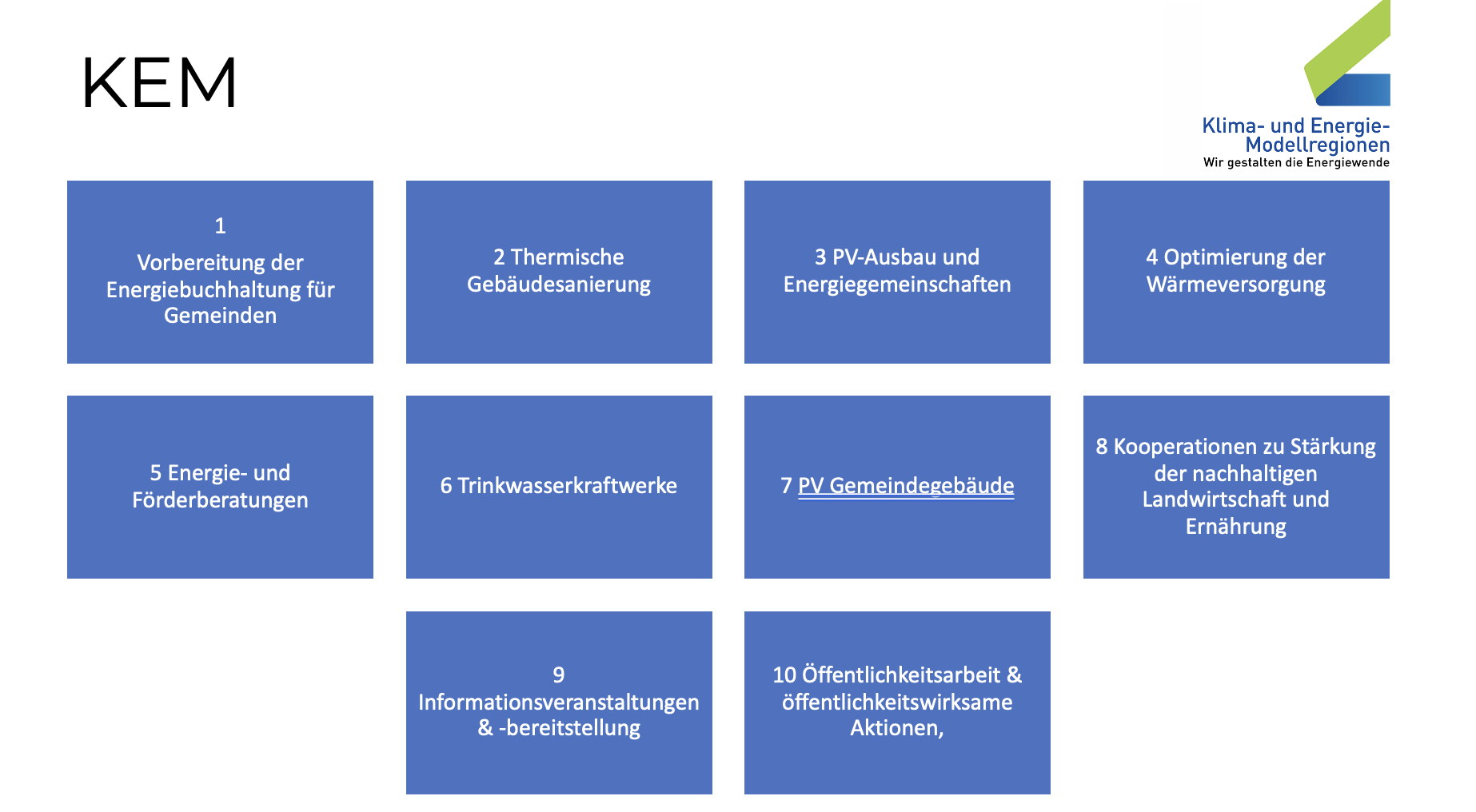
F.acT: In your regional management there was also a climate and energy model region, KEM. Could you tell us what this means and what measures are taken by the KEM?

Melanie Steinbacher: The aim of this initiative was to develop and implement measures for climate protection and the energy transition in the region. However, the coordinating activities of the KEM were discontinued due to the high administrative workload and the comparatively low program output. Instead, the original KEM measures are now being translated into concrete implementation projects in order to bring about tangible changes in the region.

Despite the structural adjustment, a number of important measures have already been implemented as part of the KEM, including

  • Renovation offensive for private households to improve the energy efficiency of existing buildings.
  • Biogas study, which investigated the potential for regional biogas production.
  • "Climate-friendly soils" project in collaboration with the agricultural sector to promote sustainable soil management.
  • Photovoltaic campaign to promote the expansion of renewable energies in the region.
  • Promotion of sustainable nutrition concepts, including through the establishment of food fairs to prevent food waste.
  • Energy monitoring for four municipalities, which served as a pilot project and will subsequently be extended to the entire region.

Even if the KEM is not continued in its original form, climate protection and energy efficiency remain central concerns of the KUUSK regional management. Through targeted implementation projects, we ensure that these issues remain actively anchored in the region.
Melanie Steinbacher

Melanie Steinbacher, Regionalmanagement Kufstein und Umgebung, Untere Schranne, Kaiserwinkl, Prof.-Sinwel-Weg 2, 6330 Kufstein, steinbacher@rm-kuusk.at, 00 43 660 830 89 05

Melanie Steinbacher is a sociologist specializing in agricultural and regional sociology and was previously a research assistant at the University of Innsbruck. As Managing Director of KUUSK Regional Management, she puts her scientific knowledge into practice to implement sustainable development projects in the Kufstein region.

Climate change
Climate neutrality
Crisis management

Prepared for what lies ahead in tourism