

Prepared for what lies ahead in tourism
Stay up-to-date with current, independent statistics and information on tourism in the Alpine region.
 Project
How does crisis communication via social media work in Tyrolean tourism associations? How important is social media monitoring in destination management?
As part of a research project by the Tyrolean Science Funding (TWF), the use of social media in crisis communication and social media monitoring in Tyrolean tourism associations was examined in more detail. This article provides an overview of the core results of the project.
The increasing importance of social media in the communication of tourism associations forms the starting point of this project. While the use of social media channels has already been examined in more detail in an earlier project(for details see here), this project addressed new issues arising from crisis communication during the COVID-19 pandemic as well as the evaluation of these communication channels, their monitoring and the strategic implications of the channels. The objectives of the TWF project "Social Network Analysis of Tyrolean Tourism Associations" were therefore:
(1) to carry out an evaluation of the social media activities of the 34 Tyrolean tourism associations with a focus on crisis communication during the Covid-19 crisis and
(2) to implement social media monitoring and reporting on the online knowledge platform "ttr.tirol - Tirol Tourism Research".
With the start of the Covid-19 project crisis shortly after the start of the project, the focus of the project was placed on the current issue: How and what are Tyrolean tourism associations and tourism companies communicating during the Covid-19 crisis? Which topics are coming to the fore? Which hashtags are dominating the debate? In several publications with a diverse empirical focus, the topics were examined in various sectors (tourism associations, ski resorts, family hotel industry) as well as geographical comparisons. Here you will find an overview of the articles already published:
Part 2 of the TWF project deals with the use of social media monitoring in Tyrolean tourism associations. The aim here is to first understand the initial situation and importance, but also the hurdles in the implementation of social media monitoring in tourism associations, in order to then develop assistance and an overview of the core key figures on the ttr.tirol platform.
The first step was to conduct interviews with eight different tourism associations in order to understand the importance and use of social media monitoring in the daily work of tourism associations. The interviews revealed the following key findings:
Central channels
Key KPIs
Importance of monitoring
Obstacles
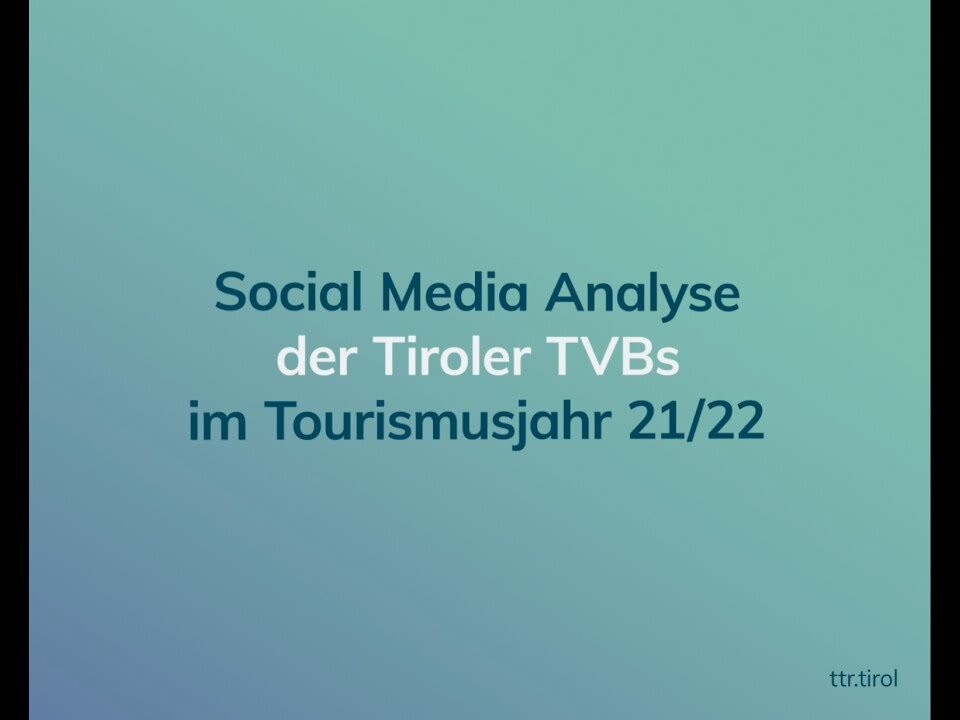
These findings from the interviews were used to develop a social media monitoring report in the form of a poster and short videos for the 2021/2022 tourism year. Facebook and Instagram were selected as the central channels here, and the key figures were selected based on the interviews. The data basis is provided by the Fanpage Karma platform, which offers access to a complete survey of social media insights for all 34 tourism associations twice a year by arrangement.
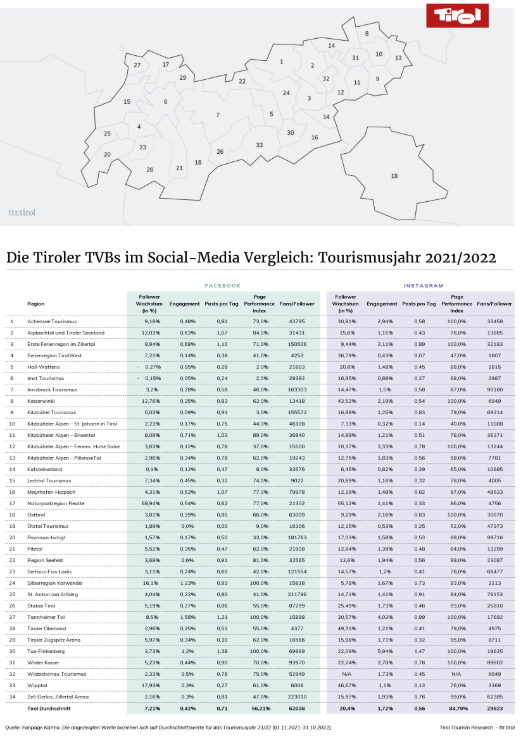
Both parts of the project provide scientific findings on the use of social networks in tourism associations. Part 1 contributed valuable insights into communication in times of crisis and provided scientific insights into the communication work and social media use of tourism service providers in exceptional cases. Part 2, on the other hand, was able to shed more light on the use of social media monitoring in destinations, identify the problems and central issues and, building on this, support tourism associations in their monitoring work and contribute to knowledge transfer with the development of a TTR social media poster. In the next step, the social media monitoring poster will be converted into interactive statistics at TTR. We will keep you up to date on this topic here.
If you have any questions about the research results or do not have access to individual articles at your university or organization, you can contact us by email or via our social media channels(Facebook and Instagram).