


Prepared for what lies ahead in tourism
Stay up-to-date with current, independent statistics and information on tourism in the Alpine region.
 Project
The study was commissioned by Future Mountain International as an AlpNet research project and presented at theAlPS Conference 2016 in Innsbruck. It was developed by the three project partners MCI Tourismus, the German Sport University Cologne and EURAC Research.
After screening over 290 documents, 33 experts from science and practice were asked about the future of winter tourism in the Alps with the help of a Delphi study.
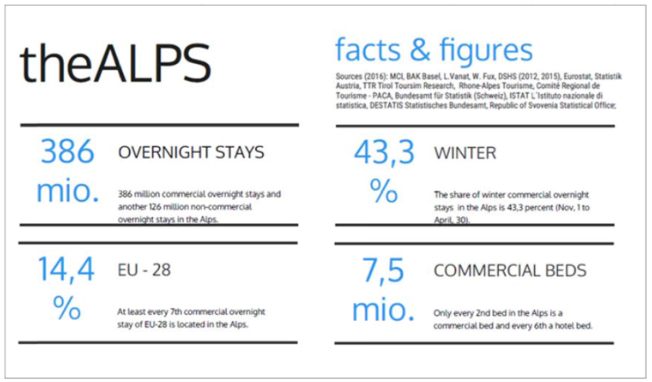
With 386 million commercial overnight stays and a further 126 million non-commercial overnight stays, the Alps are one of the most important tourist destinations in the world. This means that every 7th overnight stay in the European Union takes place in the Alps. In total, there are 7.5 million commercial beds available. However, there are major differences between the individual Alpine countries.
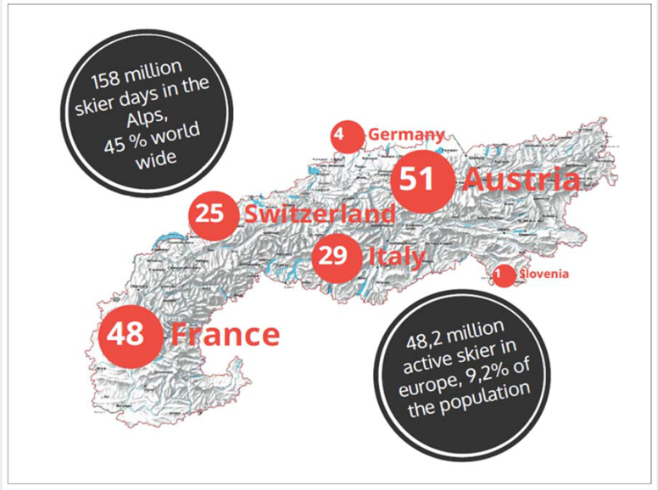
The winter season accounts for 43% of commercial overnight stays in the Alps. The importance of winter sports is correspondingly high. This is where 45% of the world's skiers spend their days, most of them in Austria and France. In total, it is estimated that around 48 million people in Europe actively ski (9% of the population).
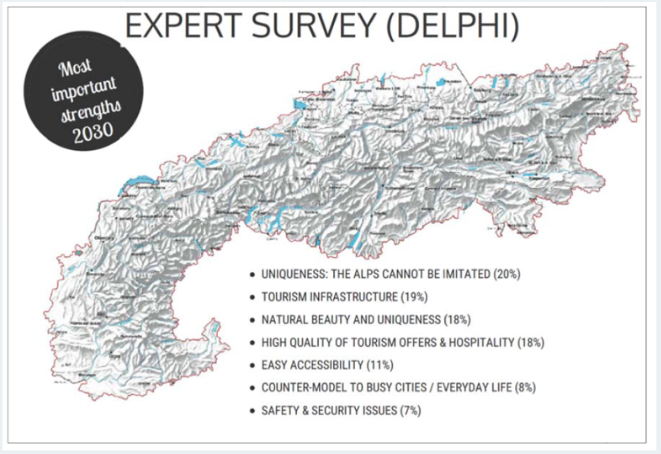
The Delphi study also identified the key strengths and weaknesses of winter tourism up to the year 2030:
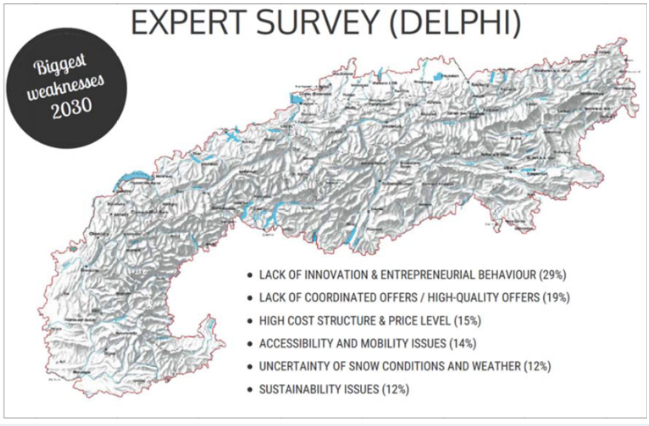
The following areas were defined as the most important challenges: