
Prepared for what lies ahead in tourism
Stay up-to-date with current, independent statistics and information on tourism in the Alpine region.
 Research

F.acT: Why is this topic relevant for the Tyrolean tourism industry?

Luca Klinkhammer: Tyrol relies heavily on nature-based tourism, and the Hohe Tauern National Park is one of the state's key nature attractions. Visitor satisfaction and intentions to return are therefore direct drivers of regional value creation.
My work shows which offers in the national park actually influence satisfaction and which visitor groups react particularly sensitively. These findings help Tyrol to further develop nature-based offers in a targeted manner, steer visitor flows sustainably and use the character of the protected area as a quality feature in tourism.
F.acT: What methodological approach did you use in your work?
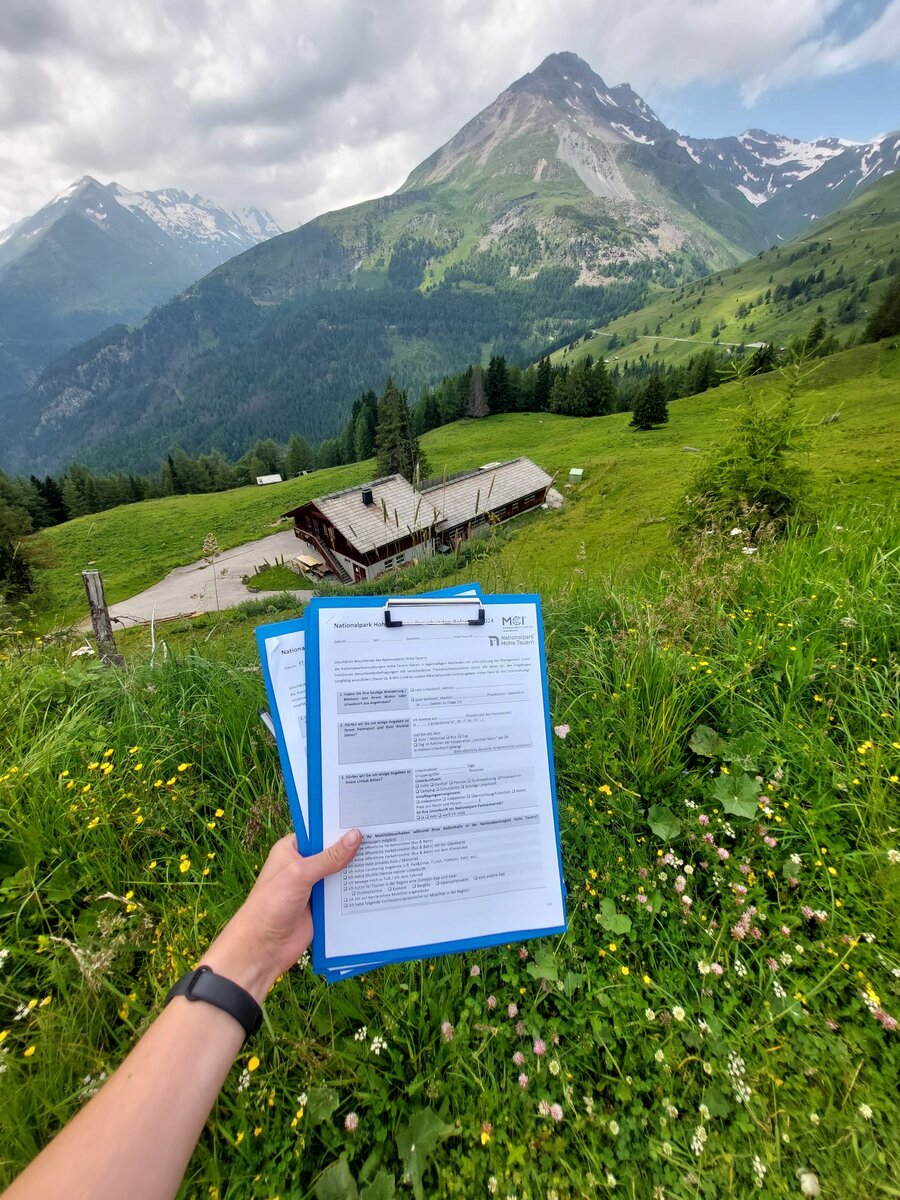
Luca Klinkhammer: The study is based on a quantitative research design that ensures a high degree of comparability with existing studies. A total of 1,153 visitors were surveyed at various locations in the Hohe Tauern National Park (Tyrol, Salzburg, Carinthia). The data was collected using a standardized questionnaire on site, supplemented by a smaller online survey.
Statistical methods in SPSS were used for analysis, including multivariate tests and hypothesis testing. The theoretical foundations were formed by the expectation-confirmation paradigm, the Theory of Planned Behavior and the Place Attachment Theory, which together enable a comprehensive understanding of satisfaction, behavioral intentions and place attachment.
F.acT: What are the core results of your work and what significance do they have for tourist destinations and businesses?
Luca Klinkhammer: The study shows that the offers in the national park are perceived very positively overall and that a high level of satisfaction is achieved. None of the influencing factors examined - such as affinity with the national park, type of accommodation, guest card use or visitor status - has a statistically verifiable influence on satisfaction with the offers. Nevertheless, clear usage trends can be identified, such as repeat visitors making more frequent use of certain offers. The results confirm the importance of nature-based experiences, regional partner businesses and complementary services and show that holistic offer management is key to stable satisfaction and long-term visitor loyalty.
F.acT: What specific recommendations for action do you make in your Master's thesis?
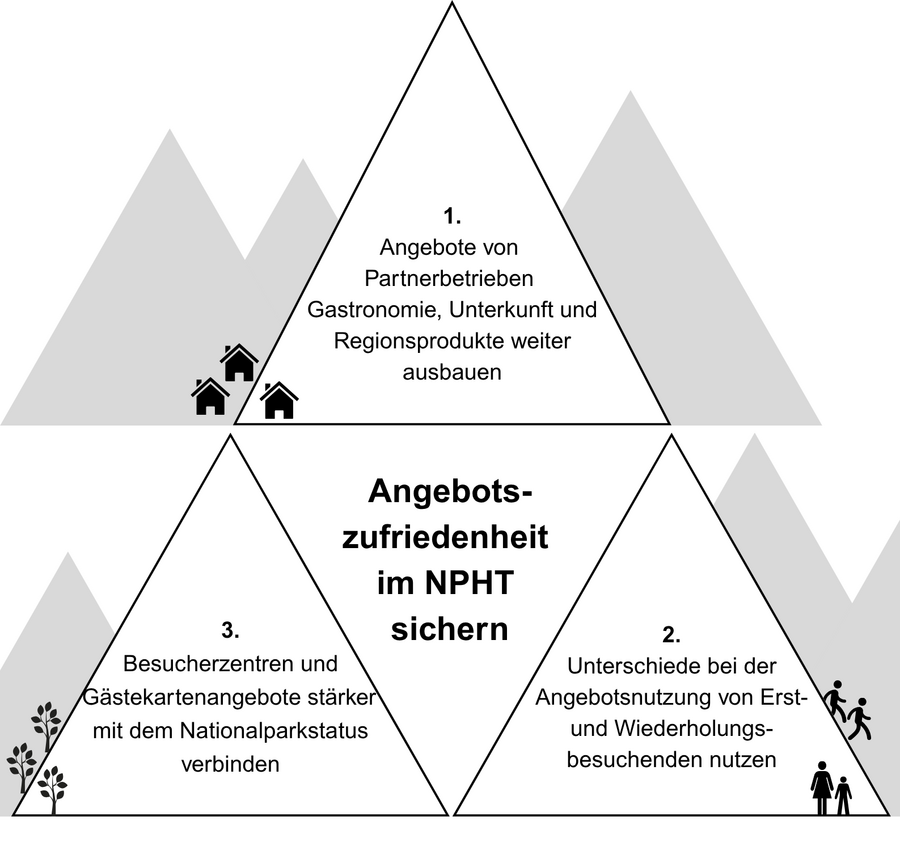
Luca Klinkhammer: The work derives three central recommendations for action for the future design of offers in the Hohe Tauern National Park:
Further strengthen offers from partner businesses: Gastronomy, accommodation and regional products are perceived particularly positively and should therefore be specifically expanded and communicated more visibly. A high standard of quality in these areas has a significant impact on overall satisfaction.
Take advantage of differences between first-time and repeat visitors: As both groups use offers in different ways, a differentiated approach is recommended: first-time visitors benefit from clear orientation and basic information, while repeat visitors are more strongly addressed by in-depth and varied offers.