


Prepared for what lies ahead in tourism
Stay up-to-date with current, independent statistics and information on tourism in the Alpine region.
 Research

F.acT: Why is this topic relevant for the Tyrolean tourism industry?

Anna Hörl: Family businesses account for around 80% of all companies in German-speaking countries (Baumgartner, 2009) and therefore generate a large proportion of economic output. The Tyrolean tourism industry in particular is also characterized by family businesses. In addition, there is a general trend towards more teamwork. As a result, family businesses are increasingly being handed over to several successors. One of the reasons for this is that the increasingly complex conditions of today's business world make it more and more difficult for one person alone to meet all the requirements needed to run the business competitively (Bövers & Hoon, 2020; Cater & Justis, 2010; Jäcke-Wurzer et al., 2017).
What are the key findings of your work and what significance do they have for tourist destinations and businesses?
Anna Hörl: A large number of interviews, both with experts and with siblings who already run their business in tandem or are planning to do so, made it possible to identify the advantages and disadvantages of tandem management. The study also outlines the challenges associated with implementing tandem management among siblings.
The advantages include the following points:
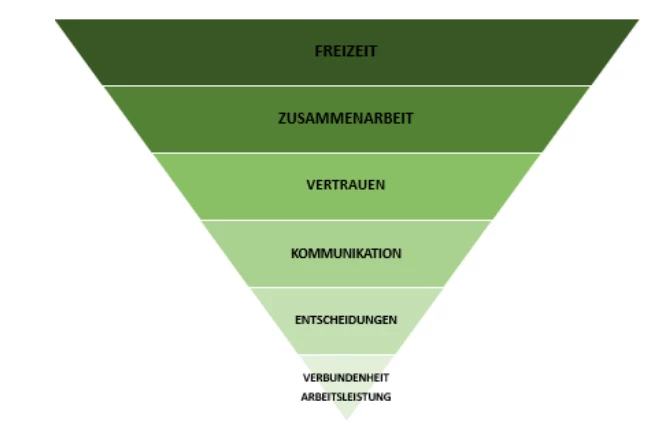
Of course, there are also disadvantages, in particular coordination (tandem leadership is more complicated, more communication is required) was frequently mentioned. The partners were also mentioned as a potential source of danger. Other disadvantages include the fact that decisions take longer and the succession of what happens after the tandem leadership. It should be noted that the siblings clearly stated in the interviews that the advantages outweigh the disadvantages. It can therefore be concluded that tandem leadership is beneficial, provided that the siblings find the right balance between their roles as siblings and business partners and are willing to compromise to a certain extent. A planned and targeted use of tandem leadership can strengthen the company and, as a result, lead to further positive effects in the destination.
[FIGURE 2]
The main challenges when introducing tandem work are the strict separation of tasks, responsibilities and competencies. The goals must also be consistent, and it is difficult to define the consequences of what happens if one person no longer adheres to the common goals. Defining a family constitution was difficult for many siblings, but it paid off later on. Succession is another issue that is not easy for families to clarify.
The results of the study will help to ensure that tandem tours become increasingly established in family-run tourism businesses in the future, which can generate added value for the business and consequently also for the destination.
What specific recommendations for action do you make in your Master's thesis?
Anna Hörl: In order to overcome the challenges mentioned, communication is essential. The master's thesis also shows how important it is for those involved to plan and address the issue of tandem succession in good time. It is also advisable to seek support and advice during this process. Defining a family constitution that is as complete as possible plays a major role, as any ambiguities can lead to problems later on. The more detailed the cooperation is regulated in advance, the more likely it is that conflicts can be prevented.