
Prepared for what lies ahead in tourism
Stay up-to-date with current, independent statistics and information on tourism in the Alpine region.
 Research

F.acT: Why is tourism acceptance relevant for the tourism industry in Tyrol?

Tetiana Mikhieva: Although the study was carried out in Oberpinzgau, the findings can be applied to the tourism industry in Tyrol. The study identified key determinants that influence the population's acceptance of tourism (TA). This revealed which factors - such as personal involvement in tourism or foreign language skills - can be of particular importance. The results provide practical insights into which influencing factors should be considered in a potential TA study in Tyrol and how these findings could support decision-making processes to promote tourism acceptance among the local population.
F.acT: What are the core results of your work?
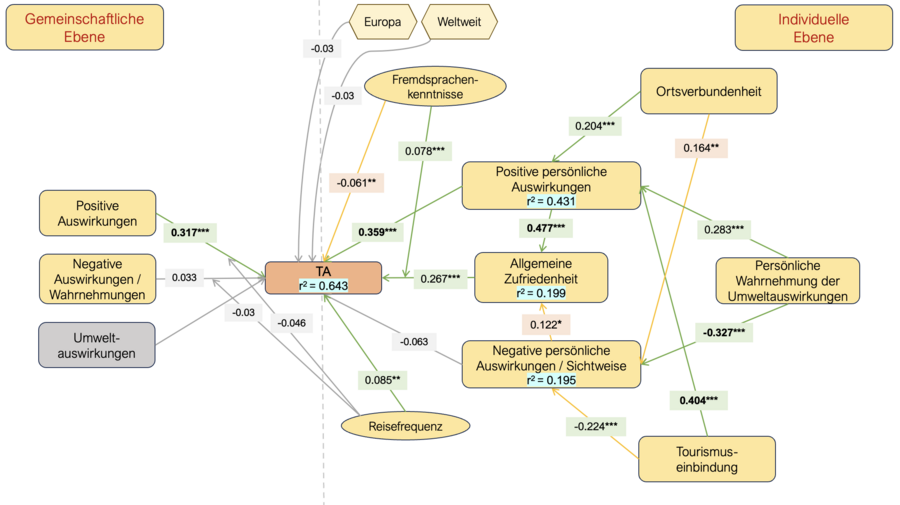
Tetiana Mikhieieva: The analysis showed that the general satisfaction of the population significantly influences TA, with positive personal impacts from tourism increasing satisfaction. Tourism involvement shows the strongest effect on positive personal impacts: The population involved in tourism primarily recognizes the benefits of tourism. At the same time, the perception of negative environmental impacts exerts the strongest negative influence on negative personal impacts/perceptions.
F.acT: What recommendations for action can you derive from this for tourist destinations and companies?
Tetiana Mikhieieva: Based on the results, twelve fields of action were derived that provide valuable insights for destination management organizations and political decision-makers in the region. The most important recommendations are:
F.acT: What are the special features of your study?
Tetiana Mikhieieva: The study is based on a quantitative approach using the Partial Least Squares Structural Equation Modeling (PLS-SEM) method. In addition, text mining (TM) methods were used to analyze open-ended responses from respondents in order to gain deeper insights into the attitudes of the population towards tourism. The model developed was based on Social Exchange Theory (SET), Weber's Theory of Formal and Material Rationality (WSFMR) and Critical Cosmopolitan Social Theory (CCST) and establishes theoretical relationships between the variables.
The application of additional LDV/TM methods also contributes to TA research as it enables the identification and analysis of indigenous people's perceptions through the inclusion of open-ended questions in questionnaires.